
How to Choose a Heavy Duty Lock That Holds Up
A heavy duty lock should do more than look thick, feel weighty, or carry a bold security label. The right lock needs to resist the actual threats around your property, whether that means bolt cutters at a warehouse gate, corrosion on a coastal site, repeated use on a factory door, or unauthorized access to a utility cabinet. In practical terms, the best heavy duty lock is the one that combines strong materials, a protected locking mechanism, suitable weather resistance, controlled access, and correct installation.
That last point matters more than many buyers expect. A premium industrial lock attached to a thin hasp, weak door frame, or poorly fitted chain can still fail quickly. Security works as a complete system. The lock, shackle, door, frame, mounting hardware, access procedure, and maintenance routine all need to support one another. Think of it like a bridge: one strong beam cannot compensate for several weak connections.
This article explains how to choose a heavy duty lock for gates, doors, warehouses, trailers, shipping containers, outdoor cabinets, industrial equipment, and critical infrastructure. It also looks at the difference between mechanical and electronic locks, common buying mistakes, realistic attack methods, and the features that deserve your attention before you place an order.
What Is a Heavy Duty Lock?
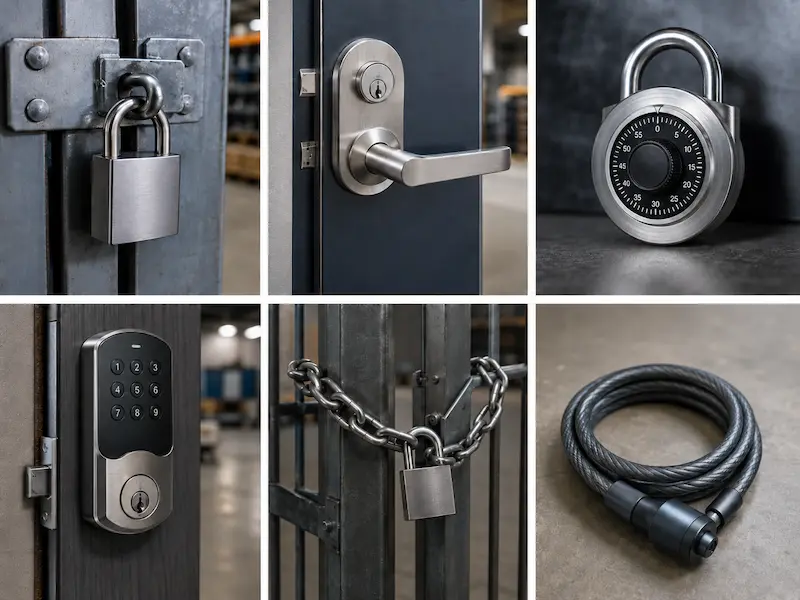
A heavy duty lock is a locking device designed for higher-risk, higher-use, or harsher environments than a basic household lock. It normally has a reinforced body, stronger internal parts, a thicker or better-protected shackle, and greater resistance to cutting, pulling, drilling, prying, impact, weather, or repeated operation. Some models also provide restricted key control, electronic authorization, access records, or time-based permissions.
However, the phrase heavy duty lock is not a single universal security rating. One manufacturer may use it for a large outdoor padlock intended for a garden gate, while another may use it for an industrial locking system designed for telecom towers, power stations, railway equipment, or bank infrastructure. That is why buyers should look beyond marketing language and study the actual construction, test information, materials, dimensions, environmental protection, and intended application.
When you compare heavy duty locks for commercial use, ask a simple question: what problem is this lock designed to solve? A lock built mainly for weather resistance may not offer the best cutting resistance. A lock with a highly secure cylinder may still have an exposed shackle. A strong mechanical padlock may protect a single gate well, but it may become difficult to manage when hundreds of employees and contractors need different levels of access.
What Makes a Lock Heavy Duty?
A genuine heavy duty security lock usually combines several protective features rather than relying on one oversized component. These features may include a hardened steel shackle, a reinforced lock body, double-ball locking, anti-drill plates, protected fasteners, corrosion-resistant materials, a restricted keyway, a sealed electronic mechanism, or a shrouded design that limits access to cutting tools.
The internal locking mechanism is just as important as the visible body. A thick shackle may look reassuring, but the lock can still be vulnerable if the internal bars are soft, poorly secured, or easy to manipulate. In the same way, an advanced cylinder cannot provide complete protection when the surrounding housing can be smashed or pulled apart.
For buyers searching for a heavy duty lock for outdoor commercial use, the definition should also include long-term reliability. A lock that resists one attack but jams after months of rain, dust, salt, or freezing weather is not truly suitable for demanding service. Physical security and environmental durability need to be considered together.
Heavy Duty Does Not Automatically Mean High Security
Large dimensions do not always equal strong protection. Some heavy-looking locks use soft metal, simple pin cylinders, exposed rivets, or long open shackles that give thieves plenty of room to position bolt cutters. In some situations, a smaller closed-shackle lock made from hardened materials can offer better real-world resistance than a much larger low-cost padlock.
This is why experienced facility managers compare measurable features instead of judging by appearance. Shackle diameter, material hardness, locking design, pull resistance, drill protection, key control, and tested environmental performance tell you far more than body size alone. If a supplier makes broad claims but provides no useful specifications, that should make you pause.
Why Standard Locks Often Fail in Demanding Locations
Ordinary padlocks and door locks are usually built for convenience, basic privacy, or low-risk use. They may work perfectly well on an indoor cupboard, personal locker, small toolbox, or garden storage box. Problems begin when the same lock is expected to protect expensive equipment, remote infrastructure, a warehouse entrance, or an outdoor gate that receives constant exposure to bad weather.
The most common weak points include thin shackles, soft body materials, basic cylinders, exposed locking components, poor drainage, and limited corrosion protection. Once moisture and dirt enter the keyway, internal springs and pins may stop moving correctly. The owner may then face two problems at once: the lock becomes difficult for authorized users to open, while the weakened or corroded components become easier for an attacker to damage.
Standard locks can also create management problems in commercial environments. When employees, cleaning teams, maintenance contractors, delivery staff, and security officers all need access, traditional keys may be copied, lost, borrowed, or kept after a person leaves the company. A physically strong lock cannot solve weak key management on its own.
Common Types of Heavy Duty Locks
There is no single best heavy duty lock for every situation. The right design depends on what you are protecting, how often the lock will be used, how many people need access, and which attack methods are most realistic. Understanding the main lock categories will help you narrow down the options without paying for unnecessary features.
Heavy Duty Padlocks
Heavy duty padlocks are widely used for warehouse gates, storage units, shipping containers, trailers, machinery, industrial cabinets, fencing, and chains. Their main advantage is flexibility. You can use the same general lock format across many different applications, provided the shackle dimensions and mounting hardware are compatible.
When comparing a heavy duty padlock for a warehouse or outdoor gate, focus on the shackle material, shackle diameter, body construction, locking mechanism, and amount of exposed shackle. A short shackle reduces the working space available to bolt cutters and pry tools. A shrouded-shackle padlock covers more of the metal loop, while a closed-shackle padlock leaves only a small opening for the hasp or chain.
A strong padlock also needs a suitable hasp. If the hasp is thin, loosely mounted, or attached with exposed screws, an attacker may ignore the padlock completely and break the surrounding hardware instead. For this reason, heavy duty padlocks and heavy duty hasps should normally be selected together.
Heavy Duty Door Locks
Heavy duty door locks include reinforced deadbolts, mortise locks, industrial lever locks, multipoint locking systems, smart access locks, and electronic cabinet locks. They are commonly installed on commercial entrances, plant rooms, warehouse doors, fire doors, server rooms, equipment areas, and restricted internal spaces.
The strength of the door and frame is critical. A high-security lock mounted on a weak timber frame is like installing a steel safe door in a plaster wall. Attackers often target the easiest part of the assembly, which may be the strike plate, hinges, frame, mounting bolts, or surrounding panel rather than the lock itself.
For a heavy duty commercial door lock, examine the bolt throw, strike reinforcement, screw length, door material, frame condition, hinge protection, and frequency of use. A busy warehouse entrance may be opened hundreds of times per day, so durability and smooth operation matter as much as resistance to forced entry.
Heavy Duty Combination Locks
Heavy duty combination locks remove the need for a physical key, which can be useful for shared gates, storage areas, staff lockers, and equipment rooms. Authorized users only need the correct code, and the code can normally be changed without producing new keys.
The convenience comes with a trade-off. Shared codes can spread quickly through a workplace. Employees may write them on a wall, save them in an unsecured phone note, or send them to contractors through a casual message. When someone leaves the company, the code may remain unchanged for months.
For a heavy duty combination lock for outdoor use, look for a weather-resistant body, protected dials, a large number of possible combinations, and a design that is difficult to manipulate by touch. The organization should also have a clear schedule for changing the code and controlling who receives it.
Heavy Duty Electronic Locks
Heavy duty electronic locks are useful when physical strength needs to be combined with better access control. Depending on the system, a user may open the lock with an authorized smart key, card, PIN, fingerprint, mobile credential, or managed electronic token. Permissions can often be assigned by person, time, location, department, or task.
This type of system is especially valuable for companies managing many locks across multiple locations. Instead of carrying a large ring of mechanical keys, an authorized employee may use one smart key to open multiple locks according to pre-set permissions. If the credential is lost, administrators can blacklist or cancel it without replacing every lock in the system.
Access records add another layer of control. The system may record who accessed a lock, which lock was opened, and when the event occurred. This is useful for telecom cabinets, utility infrastructure, railway equipment, medicine storage, data centers, industrial facilities, and any location where accountability matters.
Before selecting a heavy duty electronic lock for industrial use, check how the lock receives power, whether it requires wiring, how permissions are updated, what happens during a network outage, how many records can be stored, and whether the lock can operate in the expected temperature and weather conditions. Software support, training, data security, and long-term supplier service should also be part of the decision.
Heavy Duty Chain Locks
Heavy duty chain locks are often used for gates, generators, motorcycles, construction machinery, ladders, tools, trailers, and movable equipment. The strongest chains usually use hardened steel links designed to resist bolt cutters, saws, and twisting attacks.
Link shape can affect tool access. Square or hexagonal links may be harder for bolt cutters to grip than smooth round links. The chain should also be paired with a padlock that offers a similar security level. A premium chain provides little benefit when it is secured by a weak, exposed-shackle lock.
A fabric or plastic sleeve can protect painted surfaces and reduce noise, but it should not be treated as a structural security feature. Buyers should focus on link thickness, steel treatment, usable length, total weight, and the size of the openings that must be secured.
Heavy Duty Cable Locks
Cable locks are lighter, more flexible, and easier to transport than heavy chains. They work well for moderate-risk applications, temporary equipment security, bicycles, portable tools, and situations where low weight matters. However, even a thick cable can often be cut more easily than a hardened steel chain.
For that reason, a heavy duty cable lock is usually best used as a secondary security layer rather than the only defense around a high-value asset. It can slow down theft, secure several items together, or make equipment more difficult to move, but it should be combined with secure storage, alarms, tracking, or a stronger fixed lock when the risk is high.
Heavy Duty Lock Materials Explained
Material choice affects cutting resistance, impact strength, corrosion performance, service life, weight, and price. A well-designed heavy duty lock may combine several materials because the shackle, body, cylinder, pins, springs, and protective cover all perform different jobs.
Do not assume that every part uses the material named in the product title. A product described as a stainless steel lock may only have a stainless outer shell, while the internal mechanism or shackle uses another metal. Ask the supplier which components are stainless, hardened, plated, or reinforced.
Hardened Steel
Hardened steel is commonly used for shackles, locking bolts, chains, and internal pins because it offers good resistance to cutting, sawing, and deformation. Heat treatment changes the metal structure and makes it more difficult for hand tools to bite into the surface.
Hardness alone is not enough. Metal that is extremely hard but too brittle can crack under severe impact. Reliable manufacturers balance hardness with toughness so the component can resist both cutting and sudden force. When possible, look for test information rather than relying on a general claim that the shackle is hardened.
Stainless Steel
Stainless steel is a strong choice for heavy duty outdoor locks used in wet, humid, coastal, food-processing, marine, or chemically exposed environments. Its main advantage is corrosion resistance, which helps protect both appearance and long-term mechanical performance.
Corrosion is not merely a cosmetic issue. Rust can weaken shackles, block keyways, damage springs, increase friction, and prevent the lock from closing correctly. In a coastal area, a corrosion-resistant heavy duty padlock can remain reliable far longer than an untreated steel model.
Different stainless steel grades offer different levels of corrosion resistance. If the lock will be installed near seawater, exposed to road salt, or cleaned with chemicals, ask the manufacturer which stainless grade is used and whether the internal parts receive similar protection.
Brass
Brass is naturally resistant to corrosion and is commonly used in lock bodies, cylinders, and internal components. It is easy to machine accurately, which supports smooth cylinder operation. However, brass is generally softer than hardened steel, so a solid brass body does not automatically provide the highest resistance to cutting or impact.
Many effective outdoor locks combine a brass body with a hardened steel shackle. This arrangement provides good weather performance while maintaining stronger resistance at the main cutting point. The final security level still depends on the body shape, locking mechanism, shackle protection, and installation.
Zinc Alloy and Protective Coatings
Zinc alloy is often used for lock housings, handles, keypad bodies, and protective covers. It can be formed into complex shapes and finished with plating, powder coating, or paint. A zinc alloy exterior may provide good corrosion performance, but its strength depends heavily on the internal reinforcement and alloy quality.
Chrome plating, nickel plating, black oxide, powder coating, and other finishes can improve corrosion resistance and appearance. Still, coatings wear over time, especially where chains, hasps, or tools repeatedly contact the surface. A coating should support a strong base material, not hide a weak one.
How to Evaluate Heavy Duty Lock Security
The most practical way to compare locks is to imagine how someone would try to defeat them. Could an attacker cut the shackle, grip it with a tool, drill the cylinder, pull the body apart, pry the hasp, remove the mounting screws, or copy the key? Once you identify the likely attack path, you can look for features that make that path slower and more difficult.
No portable lock is completely impossible to break. Given enough time, noise, privacy, and power tools, almost any physical barrier can be defeated. The purpose of a heavy duty lock is to increase the time, skill, equipment, and risk required, while making the target less attractive than the alternatives.
Shackle Diameter and Exposure
A thicker shackle usually provides greater resistance to bolt cutters and hand saws, but diameter should not be considered alone. The metal treatment, cross-sectional shape, locking method, and exposed working space are equally important.
Choose the shortest shackle that fits the hasp or chain comfortably. Long shackles may be easier to install, but they give cutting and prying tools more room. A closed-shackle or shrouded-shackle design can reduce access further by covering the sides of the shackle.
Double-locking shackles secure both ends. If one side is cut, the shackle does not simply rotate away from the body. This design can force an attacker to make a second cut, increasing time and noise.
Cylinder Security and Key Control
The cylinder determines how the lock recognizes an authorized key. Basic cylinders may be vulnerable to picking, raking, impressioning, drilling, or unauthorized key duplication. Higher-security cylinders can include complex pin patterns, sidebars, rotating elements, anti-drill plates, hardened inserts, and restricted key profiles.
For a home workshop, a standard key may be acceptable. For a commercial facility, key control deserves much more attention. Who can request a copy? Are duplicate keys restricted? Is there a record of which employee received each key? What happens when a contractor finishes a project but keeps the key?
A heavy duty lock with restricted mechanical keys or managed electronic credentials can reduce these risks. In large organizations, preventing unauthorized duplication may be just as important as resisting physical attack.
Cutting, Pulling, Drilling, and Prying Resistance
A reliable industrial lock should address more than one forced-entry method. Cutting resistance protects the shackle, chain, or bolt. Pull resistance helps prevent the shackle or locking pin from being forced out of the body. Drill resistance protects the cylinder and internal fasteners. Pry resistance reduces the opportunity to use leverage against the door, hasp, or lock body.
Look for clear test information when it is available. A supplier may report tensile strength, shear resistance, impact testing, salt spray performance, temperature range, waterproofing, or cycle testing. Measurable information is more useful than vague phrases such as maximum security or unbeatable protection.
Where Heavy Duty Locks Are Commonly Used
Heavy duty locks are used anywhere valuable assets, dangerous materials, sensitive information, or critical operations need reliable protection. The correct lock for a warehouse may be different from the correct lock for a telecom cabinet or transport trailer, even when both products carry the same general security label.
Warehouses and Industrial Facilities
Warehouses may contain inventory, tools, vehicles, production equipment, chemicals, spare parts, and customer goods. Security may be required at exterior doors, loading bays, storage cages, maintenance rooms, electrical cabinets, and restricted production areas.
A heavy duty lock for a warehouse gate needs physical strength and dependable daily operation. Staff may open it several times per shift, so the mechanism must remain smooth and reliable. If a lock frequently jams, employees may begin leaving the gate open or using an improvised workaround, which defeats the purpose of the security investment.
Large facilities should also consider access management. A master-key system or electronic authorization platform can reduce the number of keys carried by employees while ensuring that each person only accesses the areas required for the job.
Construction Sites
Construction sites are common targets for theft because they contain tools, fuel, machinery, copper cable, generators, and building materials. Many sites are quiet at night and have incomplete fencing, temporary doors, or limited surveillance.
A heavy duty lock for a construction site should resist dust, rain, mud, impact, and rough handling. It may be used on a shipping container, site gate, fuel store, tool cage, or equipment trailer. Because workers and subcontractors change frequently, access control should be reviewed regularly rather than treated as a one-time setup.
Outdoor Gates and Fences
Outdoor gate locks deal with constant exposure to water, dirt, heat, freezing temperatures, and physical movement. Wind can cause a gate to vibrate, while poor alignment can place extra pressure on the shackle or locking bolt.
For a heavy duty outdoor gate lock, choose corrosion-resistant materials, a protected keyway, suitable drainage, and enough clearance for normal movement without leaving excessive space for tools. The lock should not rest on the ground or sit in a position where rainwater collects.
Check the hinges as well. A strong lock cannot secure a gate whose hinge pins can be lifted or whose mounting bolts are exposed from the outside.
Shipping Containers
Shipping containers are often used to store valuable equipment at ports, warehouses, farms, and construction sites. Their exposed locking bars can attract cutting, prying, and grinding attacks, especially when the container is located in a quiet area.
A heavy duty lock for a shipping container should minimize exposed shackle space and fit tightly around the container hardware. Closed-shackle padlocks, container lock boxes, crossbar locks, and concealed locking systems can make tool access more difficult.
For high-value contents, the lock should be combined with lighting, cameras, alarms, tracking, perimeter security, and an inventory process. A container lock is one layer, not the entire security plan.
Trailers and Mobile Assets
Trailer locks face road vibration, rain, dust, mud, salt, and repeated movement. They may protect the coupler, doors, kingpin, toolbox, spare wheel, or cargo area. A poorly fitted lock can rattle, wear quickly, or leave gaps for cutting tools.
When choosing a heavy duty lock for a trailer coupler, measure the coupler design carefully and select a model that fits with minimal movement. For trailer doors, use protected hasps and short shackles. A wheel lock, GPS tracker, alarm, secure parking space, and hitch lock can provide multiple layers of protection.
Telecom, Power, Railway, and Utility Cabinets
Critical infrastructure often includes thousands of outdoor cabinets spread across large areas. Telecom towers, power distribution boxes, railway signal equipment, streetlight controls, and water facilities may be visited by employees, contractors, and emergency teams.
Traditional mechanical keys become difficult to manage at this scale. Technicians may carry large key rings, use the wrong key at a site, or lose a key that opens many locations. Replacing locks across an entire network can be expensive and disruptive.
A heavy duty electronic lock system can allow one authorized smart key to open multiple locks according to assigned permissions. Access can be limited by person, location, role, or time. The system can also provide audit records that help managers review who accessed a cabinet and when.
How to Choose the Right Heavy Duty Lock
The best buying process starts with the application rather than the catalogue. Before comparing models, identify the asset, location, weather, access frequency, number of users, likely attack methods, and consequences of failure. These details determine which features are essential and which are simply optional.
Match the Lock to the Real Threat
A lock for an indoor cleaning cupboard does not need the same level of protection as a lock for an outdoor container holding expensive machinery. Consider the asset value, site visibility, police or security response time, and the tools an attacker could realistically use.
A remote rural site may require stronger cutting and drilling resistance because a thief has more privacy and time. A busy commercial building may need better credential control because hundreds of people pass through the area. A coastal facility may need exceptional corrosion resistance even when the theft risk is moderate.
Spend more where lock failure would cause the greatest financial loss, safety risk, operational delay, or legal problem. This risk-based approach normally provides better value than installing the same lock everywhere.
Measure the Hardware Before Ordering
Measure the hasp opening, chain link size, door thickness, clearance, bolt position, and surrounding space before choosing a lock. A larger model may not fit, while a long shackle may leave too much exposed space.
For a heavy duty door lock, confirm the backset, handing, bolt dimensions, frame depth, door material, and mounting pattern. For a padlock, check both shackle diameter and usable internal clearance. For a chain, make sure the links fit through the anchor point and the padlock shackle fits through the final links.
A few careful measurements can prevent return costs, installation delays, and unsafe modifications to the lock or mounting hardware.
Check the Environmental Conditions
Outdoor locks need suitable protection against water, dust, humidity, salt, chemicals, and temperature changes. A lock used in a freezer, desert, port, mine, car park, or food-processing plant will face very different conditions.
Check the operating temperature range and corrosion test information where available. For electronic locks, review the protection rating of the entire system, including ports, key contacts, battery compartments, fingerprint sensors, and communication modules.
A rubber cover can help protect the keyway, but it cannot compensate for weak seals or unprotected internal parts. Long-term outdoor reliability needs to be built into the lock rather than added as an afterthought.
Choose the Right Access Method
Mechanical keys are familiar, simple, and independent of software. They work well for small sites with a limited number of trusted users. Combination locks remove the physical key but depend on secure code management. Electronic locks offer more flexible permissions and better records, although they require a clear management process.
For one gate used by two family members, a mechanical padlock may be the sensible choice. For hundreds of utility cabinets accessed by employees and contractors, electronic authorization may offer far better control. The right question is not only how the lock opens, but also how access is issued, changed, cancelled, and reviewed.
Review Supplier Experience and Support
EEAT matters when choosing security hardware. A reliable supplier should be able to explain the lock materials, test methods, intended applications, operating limits, installation requirements, maintenance procedure, warranty, and replacement process.
Ask whether the supplier has experience with applications similar to yours. A company that mainly sells indoor luggage locks may not understand the challenges of railway cabinets, industrial gates, marine sites, or remote utility infrastructure. Real project experience can help prevent mistakes that are not obvious from a product data sheet.
For electronic systems, evaluate software updates, training, technical support, spare parts, data export, system integration, and long-term product availability. A lock may remain installed for years, so support should not disappear after the first shipment.
Mechanical vs Electronic Heavy Duty Locks
| Comparison Point | Mechanical Heavy Duty Lock | Electronic Heavy Duty Lock |
|---|---|---|
| Access Method | Physical key or mechanical combination | Smart key, card, PIN, fingerprint, or managed credential |
| Access Changes | May require new keys, rekeying, or lock replacement | Permissions can often be changed or cancelled through software |
| Audit Records | Usually unavailable | Can record user, lock, and access time |
| System Complexity | Simple to deploy and understand | Requires setup, training, and access management |
| Best Use | Small sites, limited users, straightforward access | Multiple sites, many users, changing permissions, audit needs |
Mechanical heavy duty locks are often the best choice when simplicity, independence, and low maintenance are priorities. They do not need charging, network access, software, or user accounts. For small facilities with stable access requirements, that simplicity can be a major advantage.
Electronic locks become more valuable as the number of users, locations, and access changes increases. When an employee changes departments, a contractor finishes a job, or a smart key is lost, permissions can often be adjusted without replacing every lock. Audit records also make it easier to investigate unauthorized access or confirm that a task was completed.
Neither option is automatically more secure in every situation. A poorly managed electronic system can create confusion, while an uncontrolled mechanical key system can leave former employees with permanent access. The strongest solution combines suitable hardware with a disciplined access process.
Common Heavy Duty Lock Buying Mistakes
Choosing by Size Alone
A large lock can still use soft metal, an exposed shackle, or a basic cylinder. Compare construction and test information instead of assuming that the heaviest product is the strongest.
Ignoring the Hasp, Chain, Door, or Frame
Attackers usually choose the easiest target. If the padlock is strong but the hasp uses exposed screws, the hasp may be removed. If the door lock is reinforced but the frame is cracked, the frame may fail first. Evaluate the complete assembly before upgrading one component.
Buying an Outdoor Lock Without Checking Corrosion Resistance
A lock may perform well during a short indoor demonstration but fail after months of rain, dust, and salt. Check whether the shackle, body, cylinder, springs, and internal locking parts are suitable for the installation environment.
Using One Shared Code for Too Many People
A combination lock becomes difficult to control when dozens of employees and contractors know the same code. The code may continue circulating long after access should have ended. Change codes regularly or choose individual electronic credentials for higher-risk locations.
Ignoring Key Duplication
A strong mechanical lock offers limited control when anyone can copy the key at a local shop. For commercial or infrastructure use, consider restricted keys, documented key issuance, or electronic credentials that can be cancelled.
Focusing Only on Purchase Price
The cheapest lock may cost more over time if it rusts, jams, needs frequent replacement, or forces the company to change a large key system after one key is lost. Compare total ownership cost, including installation, maintenance, administration, downtime, and replacement.
Heavy Duty Lock Installation Tips
Install the lock so that the shackle, bolt, and mounting hardware remain as protected as possible. Use reinforced hasps, concealed fasteners, and mounting bolts that cannot be removed from the unsecured side. Keep gaps tight enough to limit access for pry bars and cutting tools.
Do not force a padlock through an opening that is too small. Constant side pressure can damage the shackle, body, or hasp and make the lock difficult to operate. If the gate or door is misaligned, repair the alignment before installing the lock.
After installation, test the complete setup. Pull, twist, and move the locked parts by hand. Check whether the shackle rattles excessively, the hasp bends, the chain reaches the ground, or the door leaves a large pry gap. These simple checks often reveal problems before an attacker does.
How to Maintain a Heavy Duty Lock
Even a well-made lock needs inspection and basic maintenance. Check for rust, cracks, loose fasteners, damaged covers, worn keys, stiff movement, and signs of tampering. Outdoor locks should be inspected more often when they are exposed to salt, dust, chemicals, or frequent temperature changes.
Clean the keyway and follow the manufacturer’s lubrication guidance. Avoid filling the cylinder with thick household oil unless the supplier specifically recommends it. Some oils collect dust and create a sticky paste that interferes with pins and springs. A dry or purpose-made lock lubricant may be more suitable.
Replace the lock when the shackle shows deep corrosion, the body is cracked, the key becomes unreliable, or the mechanism no longer closes smoothly. Do not wait until the lock fails completely and traps equipment, blocks a gate, or prevents emergency access.
Is a More Expensive Heavy Duty Lock Always Better?
A higher price can reflect stronger materials, more precise machining, restricted keys, weather protection, independent testing, electronic authorization, software, warranty, or better technical support. It can also include features that your application does not need.
The best value comes from matching the lock to the risk. An advanced electronic system may be unnecessary for a low-value indoor cabinet used by one person. At the same time, saving a small amount on a lock protecting expensive machinery, controlled medicine, or critical infrastructure may create a much larger financial and operational risk.
Compare security performance, expected service life, access management, installation requirements, warranty, replacement availability, and supplier support. The best heavy duty lock is not automatically the cheapest or most expensive. It is the one that solves the complete security problem without adding unnecessary complexity.
Final Thoughts on Choosing a Heavy Duty Lock
A heavy duty lock should be selected as part of a complete security system, not as an isolated piece of metal. Start by identifying the asset, likely threats, environmental conditions, access requirements, and consequences of failure. Then compare the shackle, body, cylinder, locking mechanism, mounting hardware, key control, and supplier support.
For a single low-risk gate, a well-made mechanical padlock may be all you need. For a warehouse, utility network, telecom site, railway cabinet, or multi-location operation, electronic authorization and audit records may provide better long-term control. In every case, correct installation and regular maintenance are essential.
The goal is not to buy the lock that looks strongest. The goal is to create a setup that remains secure, usable, and manageable every day. When the hardware, environment, and access process are matched correctly, a heavy duty lock becomes a reliable part of your operation rather than a weak point that everyone assumes is safe.
Heavy Duty Lock FAQs
What is the strongest type of heavy duty lock?
There is no single strongest lock for every application. A closed-shackle padlock may provide excellent cutting resistance for a gate or container, while a reinforced multipoint lock may be more suitable for a commercial door. For large infrastructure networks, an electronic lock with managed authorization may provide better overall security because it controls both physical access and credential use. The strongest option is the one designed for the specific threat, environment, and mounting hardware.
Can bolt cutters break a heavy duty padlock?
Large bolt cutters can damage lower-quality padlocks, especially when the shackle is made from soft metal or leaves plenty of exposed space. Hardened steel, a larger shackle diameter, short clearance, shrouded sides, and closed-shackle construction make cutting more difficult. No portable lock is completely resistant to every power tool, but a well-designed heavy duty padlock can greatly increase the time, noise, and effort required.
What is the best heavy duty lock for outdoor use?
The best outdoor lock combines physical strength with corrosion resistance, protected internal parts, suitable operating temperature, and resistance to water and dust. Stainless steel or properly coated models are often suitable for wet or coastal locations. A covered keyway can help, but buyers should also confirm that the springs, pins, locking bars, contacts, and internal fasteners are protected against the expected environment.
Are heavy duty combination locks secure?
A well-built combination lock can provide reliable protection for moderate-risk applications, but security depends on both the hardware and the way the code is managed. Choose a model with a strong body, protected dials, a large number of possible combinations, and good weather resistance. Change shared codes regularly and immediately update them when an employee, tenant, or contractor should no longer have access.
Is a closed-shackle padlock better than an open-shackle padlock?
A closed-shackle padlock normally provides better resistance to cutting and prying because less of the shackle is exposed. However, it requires compatible hasps or chain links and may not fit every application. An open-shackle padlock offers more installation flexibility, but the shortest practical shackle should be selected to reduce tool access.
How thick should a heavy duty padlock shackle be?
The ideal shackle thickness depends on the hasp, chain, asset value, and likely attack method. A thicker hardened steel shackle generally provides more cutting resistance, but material quality and exposed space are just as important. A slightly thinner shackle protected inside a closed body may outperform a thicker long shackle that is easy to reach with bolt cutters.
What is the best heavy duty lock for a shipping container?
A shipping container usually benefits from a closed-shackle padlock, container lock box, crossbar lock, or concealed locking system that limits access to cutting and grinding tools. The lock should fit tightly around the container hardware and use corrosion-resistant materials. High-value contents should also be protected with lighting, cameras, alarms, tracking, and controlled site access.
What is the best heavy duty lock for a trailer?
The best trailer lock depends on whether you need to secure the coupler, doors, kingpin, wheels, toolbox, or cargo compartment. Choose a model that fits tightly, resists vibration and corrosion, and leaves minimal space for tools. For stronger protection, combine a coupler lock with a wheel lock, door lock, alarm, GPS tracker, and secure parking position.
Are electronic heavy duty locks reliable outdoors?
Industrial electronic locks can perform reliably outdoors when they are designed for the expected water, dust, temperature, humidity, and corrosion conditions. Buyers should verify the protection rating, operating temperature, power method, contact design, software support, and emergency access process. A consumer smart lock should not automatically be treated as suitable for telecom, power, railway, or industrial infrastructure.
How long should a heavy duty lock last?
Service life depends on material quality, installation, frequency of use, weather exposure, maintenance, and attack damage. A high-quality indoor lock may remain in service for many years, while a lock exposed to salt, dust, chemicals, or constant rain may need more frequent inspection. Replace the lock when corrosion, unreliable operation, damaged hardware, or lost key control begins to reduce security.
Should I lubricate a heavy duty lock?
Yes, but only with a lubricant suitable for the lock and recommended by the manufacturer. Thick oils can attract dirt and create internal buildup. Clean the keyway first, apply a small amount of suitable lubricant, and operate the key several times. Outdoor locks should also be checked for blocked drainage, damaged covers, and corrosion around the shackle.
When should a company use an electronic lock instead of a mechanical lock?
An electronic lock is usually worth considering when many users need different permissions, access changes frequently, sites are widely distributed, or managers need audit records. Mechanical locks remain practical for smaller sites with stable access and limited users. The decision should be based on management needs as well as physical security.

