
How Does an Electronic Wireless Padlock Actually Work?
An electronic wireless padlock combines a physical locking mechanism with electronic authorization, allowing businesses to control access without relying entirely on conventional mechanical keys. Depending on the product design, authorized users may unlock it through a smart key, a mobile application, or another electronic credential. For industrial facilities managing multiple access points, the main benefit is not simply replacing a metal key. It is gaining better control over who can open a lock, when access is permitted, and how opening activity is recorded. However, different electronic padlocks use different communication and power technologies, so understanding how they work is essential before choosing a system for industrial or commercial use.
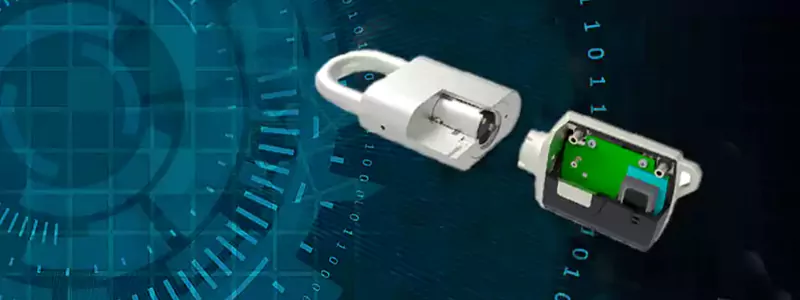
1. What Is an Electronic Wireless Padlock?
An electronic wireless padlock is a portable locking device that uses electronic authentication and a wireless or electronically connected credential system to determine whether access should be granted. Unlike an ordinary mechanical padlock, which opens when the correct physical key operates its cylinder, an electronic padlock generally requires an authorized electronic credential before its locking mechanism can be released.
The term "wireless" requires some clarification. In certain products, it refers to Bluetooth, NFC, or another short-range communication method between the lock and a mobile device or credential. In other systems, wireless connectivity is provided by a smart key that communicates with a management platform, while the lock itself uses a physical electronic contact for authentication and power transfer. These are different technical architectures, even though both may be marketed within the broader electronic padlock category.
For industrial purchasing managers, this distinction matters because communication technology affects installation, access reliability, maintenance requirements, and system integration. A wireless lock designed for occasional indoor storage access may not be suitable for a remote electrical substation where users need reliable authentication, controlled permissions, and dependable operation during network interruptions.
2. How Does an Electronic Wireless Padlock Work?
Most electronic padlocks follow three basic operating stages: credential identification, authorization verification, and mechanical unlocking. The lock or its associated controller identifies the electronic credential, determines whether the credential has permission to operate the lock, and activates or releases the locking mechanism when access is approved.
The internal design varies between manufacturers. Some electronic wireless padlocks contain a battery, communication module, controller, and electromechanical actuator. Others use a passive electronic architecture in which the lock contains no internal battery and receives operating power from a compatible electronic key. Both approaches can support managed access, but they differ substantially in how power and credentials are delivered.
2.1 Wireless Communication and Authentication
Wireless communication allows an electronic credential or management device to exchange information with a compatible lock or access control component. Depending on the product, this communication may use Bluetooth Low Energy, NFC, or another proprietary short-range protocol. During authentication, the system verifies the credential and checks whether the requested action is permitted under its configured access rules.
A well-designed industrial authentication process should do more than recognize a device identifier. It should include secure credential handling, protection against unauthorized credential copying, and appropriate safeguards against replay attacks. Buyers should ask manufacturers how credentials are protected, how communication is secured, and what happens when a key, phone, or other credential is lost.
Wireless communication does not necessarily mean that every padlock maintains a continuous internet connection. Many systems authenticate locally, using permissions previously assigned to the key or stored within the lock. Network access may be needed only when updating credentials, synchronizing records, or communicating with the central management platform.
2.2 How Passive Electronic Padlocks Receive Power
Passive electronic padlocks operate without a battery inside the lock body. Instead, a compatible electronic key supplies electrical power when it connects to the lock. The key and lock then perform an authentication process, and the locking mechanism can be released if the authorization conditions are satisfied. This design eliminates routine lock-battery replacement, which can be particularly valuable when a business operates hundreds or thousands of locks across geographically dispersed facilities.
The advantage is especially relevant to outdoor industrial sites, utility installations, and equipment cabinets that are visited infrequently. Maintenance personnel do not need to inspect each lock for battery charge during routine service. However, the electronic key becomes an important operational component, and its battery, charging process, compatibility, and credential management still require attention.
Passive electronic technology should not automatically be described as fully wireless at the lock interface. Many passive locks receive both power and authentication data through physical electrical contacts. When comparing products, businesses should verify whether wireless communication occurs directly at the lock, through the electronic key, or between the key and management software.
3. What Happens During the Unlocking Process?
The unlocking process is designed to ensure that possession of a credential does not automatically guarantee unrestricted access. In a centrally managed industrial system, authorization can be assigned according to employee responsibilities, approved locations, permitted time periods, or specific maintenance tasks. The exact sequence depends on the lock manufacturer and whether the system uses online or offline credential management.
- Step 1 - Credential preparation: An administrator assigns permissions to an electronic key, mobile credential, or authorized user account.
- Step 2 - User identification: The user presents the credential to the lock or connects an electronic key to the locking interface.
- Step 3 - Authentication: The system verifies the credential and checks whether the user has permission to open that particular lock.
- Step 4 - Mechanical release: After successful verification, the mechanism permits the shackle to be opened according to the product design.
- Step 5 - Activity recording: Supported systems record the unlocking event and associate it with available user, lock, and time information.
- Step 6 - Data synchronization: Where offline records are supported, they may be uploaded to the management platform when the credential device reconnects.
For a maintenance contractor visiting several electrical cabinets, this controlled process can simplify daily operations. Instead of carrying a separate mechanical key for every cabinet, the worker may use one authorized electronic key for multiple compatible locks. The administrator can limit the credential to the locations involved in the assigned job and set an expiration time if the system supports temporary authorization.
4. Battery-Powered vs. Passive Electronic Padlocks
Choosing between a battery-powered electronic wireless padlock and a passive electronic padlock depends on the operating environment, communication requirements, and maintenance strategy. Battery-powered products may offer direct wireless interaction with a phone or nearby controller, while passive products reduce maintenance inside the lock body by transferring the power requirement to a reusable electronic key.
| Comparison | Battery-Powered Electronic Padlock | Passive Electronic Padlock |
|---|---|---|
| Power Source | Internal battery inside the lock | External compatible electronic key |
| Authentication | May use a phone, electronic credential, or controller | Typically uses a dedicated electronic key |
| Communication | May communicate directly through Bluetooth or another protocol | Often uses contacts at the lock and connectivity through the smart key |
| Battery Maintenance | Lock batteries require monitoring and replacement or charging | No lock-body battery replacement; key charging is required |
| Offline Operation | Depends on stored credentials and product design | May operate with locally stored permissions in the key |
| Typical Applications | Storage areas, service access points, and connected facilities | Remote cabinets, industrial infrastructure, and distributed assets |
Neither design is automatically more secure. Security depends on the quality of the authentication system, credential protection, physical lock construction, administrative controls, and maintenance procedures. A passive padlock with weak access policies can be less effective than a properly managed battery-powered system, just as a connected lock with poor credential security may expose unnecessary operational risks.
5. Which Security Features Matter Most?
The most important security feature of an industrial electronic wireless padlock is its ability to prevent unauthorized opening while giving administrators practical control over legitimate access. Physical strength remains important, but electronic credential management becomes equally significant when a business operates multiple locations, employs contractors, or handles sensitive infrastructure.
- Individual user authorization: Assign access to identifiable personnel instead of distributing uncontrolled shared credentials.
- Time-limited permissions: Restrict access to approved working periods or scheduled maintenance windows where supported.
- Lock-specific access rules: Allow users to open only designated cabinets, gates, or equipment enclosures.
- Credential revocation: Remove authorization when employees leave, contractors complete assignments, or credentials are reported missing.
- Audit records: Maintain available opening records for operational reviews, maintenance tracking, and security investigations.
- Secure authentication: Use appropriately designed cryptographic mechanisms and administrative safeguards.
- Physical attack resistance: Evaluate the shackle, body, locking interface, and resistance to cutting, pulling, and environmental deterioration.
Buyers should also distinguish between attempted-access records and confirmed physical lock status. Some electronic padlocks record an authorized unlocking operation without independently verifying that the shackle was subsequently closed. If the facility requires confirmation that equipment has been secured after maintenance, ask whether the product has suitable lock-status detection or whether a separate inspection procedure is necessary.
6. Where Are Electronic Wireless Padlocks Used?
Electronic padlocks are particularly useful where conventional mechanical keys are difficult to distribute, recover, or audit. Industrial organizations often manage access points spread across several buildings, remote service locations, or large geographic areas. In these environments, the administrative burden of traditional keys can become more significant than the initial cost of the locks themselves.
6.1 Utility, Telecommunications, and Remote Sites
Utility companies and telecommunications operators frequently maintain outdoor cabinets, equipment shelters, access gates, and control enclosures. These assets may be serviced by different maintenance teams, external contractors, and emergency technicians. A managed electronic padlock system can help administrators provide access to specific equipment without issuing large collections of permanent mechanical keys.
In power distribution, for example, a maintenance supervisor may authorize a technician to access a particular equipment cabinet for a scheduled inspection. Once the assignment is completed, the permission can expire or be withdrawn according to system capabilities. This reduces the administrative risks associated with uncontrolled spare keys. Nevertheless, an access control padlock is not a replacement for a certified energy-isolation lockout/tagout device or required electrical safety procedures.
Remote infrastructure also creates communication challenges. Cellular signals and internet access may be unavailable in some locations, so buyers should investigate whether their electronic locking system supports offline authorization, how long stored permissions remain valid, and when operational records can be synchronized.
6.2 Warehouses, Cabinets, and Industrial Equipment
Warehouses and industrial facilities often use padlocks to secure tool storage areas, equipment cages, external gates, maintenance cabinets, and restricted service zones. Where multiple departments need periodic access to the same equipment, mechanical keys can be difficult to control. Electronic padlocks allow managers to organize permissions around job roles and operational needs rather than relying solely on possession of a physical key.
Equipment rental operations and logistics facilities may also benefit from controlled access. Staff can receive permissions for assigned storage areas or service equipment, while administrators maintain a record of available access events. For facilities with many locks but relatively few authorized technicians, a reusable electronic key architecture may reduce the number of separate keys that must be carried and managed.
7. How Should Businesses Manage Access Permissions?
Effective access management begins with defining who needs access to each protected asset and under what conditions. A facility should establish a clear authorization policy before installing electronic padlocks. Otherwise, an electronic system may simply reproduce the same excessive permissions and shared-key practices that existed under the mechanical locking arrangement.
A practical starting point is to create an inventory of doors, gates, cabinets, and equipment enclosures, then group them by department, site, and security responsibility. Personnel can subsequently be assigned roles such as maintenance technician, security supervisor, external contractor, or site administrator. Each role should receive only the permissions necessary to perform its designated work.
For organizations considering passive electronic padlocks, systems such as the Vanma electronic locking solution illustrate how compatible locks and managed smart keys can be used together. Authorized keys can be configured for multiple locks, while access permissions and available operational records are managed through the associated software platform. The exact communication method, credential features, and reporting functions depend on the selected hardware and software configuration.
Administrators should establish procedures for lost credentials, employee departures, contractor access expiration, and emergency maintenance. In an offline system, revoking permission in central software may not immediately invalidate a credential that has not synchronized. The organization must understand its chosen system's revocation process and build suitable controls around that limitation.
8. What Should Buyers Check Before Purchasing?
Industrial buyers should evaluate an electronic wireless padlock as part of an access management system rather than as an isolated piece of hardware. A lock may appear suitable when judged by its exterior construction, but the real operating cost and security performance depend on compatibility, credential administration, deployment conditions, and ongoing technical support.
| Buying Factor | Questions to Ask | Why It Matters |
|---|---|---|
| Lock Construction | What are the body and shackle materials? | Determines suitability for physical exposure and attempted attacks. |
| Environmental Protection | What IP rating and operating temperature range are specified? | Helps assess outdoor and industrial reliability. |
| Power Architecture | Does the lock use an internal battery or an external electronic key? | Affects maintenance schedules and failure planning. |
| Access Management | Can permissions be limited by personnel, location, and time? | Supports controlled access across multiple sites. |
| Offline Capability | Can authorized users open locks without internet service? | Important for remote or poorly connected locations. |
| Audit Functionality | What events are recorded, stored, and exported? | Supports accountability and operational review. |
| System Scalability | How many locks, users, and credentials can the system manage? | Determines suitability for future expansion. |
| Vendor Support | Are training, replacement parts, documentation, and technical support available? | Reduces deployment and long-term operating risks. |
Buyers should request technical datasheets, management software demonstrations, and sample equipment where practical. A pilot installation can reveal whether the lock fits existing hasps and cabinets, whether credentials can be assigned efficiently, and whether the system performs reliably under actual site conditions. For a multi-site deployment, testing a small group of representative locks is usually more informative than relying only on marketing descriptions.
9. Installation, Durability, and Maintenance
An electronic wireless padlock should match the mechanical dimensions and environmental conditions of its intended installation. Even a correctly authenticated electronic lock may provide inadequate security if its shackle is exposed, its body interferes with the hasp, or the surrounding mounting hardware is weaker than the padlock. Buyers should verify shackle diameter, clearance, body dimensions, and the compatibility of the locking point before ordering.
Outdoor installations require additional examination. Moisture, dust, salt exposure, temperature changes, and physical contamination can affect electronic connectors and mechanical components. A manufacturer's IP rating provides information about protection against specified dust and water test conditions, but it should not be interpreted as proof of universal corrosion resistance or indefinite performance in every outdoor environment.
Maintenance requirements also differ by architecture. Battery-powered electronic padlocks need a process for checking battery status and replacing or charging batteries. Passive electronic padlocks eliminate lock-body battery replacement but still require functional checks, appropriate cleaning, and maintenance of the compatible electronic keys. Smart keys should have a documented charging and replacement procedure to prevent interruptions during critical maintenance work.
Facilities should maintain an inspection schedule appropriate to operating conditions and manufacturer instructions. Routine checks can include shackle movement, visible corrosion, credential authentication, locking operation, and data synchronization. Any cleaning agents or lubricants must be compatible with the manufacturer's instructions, especially around electronic contact surfaces and seals.
10. Understanding Total Ownership Costs
The purchase price of an electronic padlock is only one part of its total ownership cost. An industrial access control deployment may also require electronic keys, charging equipment, software licenses, administrator training, system integration, spare hardware, and ongoing technical support. The cost structure depends heavily on the number of locks, the number of authorized users, and whether the organization needs centralized management.
Consider a facility with several hundred remote equipment cabinets. With conventional mechanical locks, the organization may spend significant time issuing keys, replacing lost keys, changing cylinders, and investigating unauthorized duplication. A managed electronic locking system may reduce some of these administrative activities, particularly when access permissions can be changed without physically replacing the lock. However, the savings should be compared against the initial electronic hardware and management costs.
When comparing battery-powered and passive systems, calculate the maintenance burden over the expected service life. Battery-powered locks may require periodic battery replacement across the entire installed base. Passive systems shift battery maintenance to a smaller number of electronic keys, although key failures, software management, and replacement equipment remain relevant expenses.
A useful procurement estimate should include the number of installed locks, expected users, required credentials, annual maintenance visits, software charges, and the estimated cost of supporting the system over several years. Rather than assuming that electronic padlocks are always cheaper, buyers should identify where better access administration, lower maintenance effort, or improved accountability could justify the investment.
11. Frequently Asked Questions
11.1 Can an Electronic Wireless Padlock Work Without Wi-Fi?
Yes, some electronic wireless padlocks can operate without Wi-Fi, but this depends on their communication and authorization architecture. A Bluetooth-enabled padlock may communicate directly with a compatible mobile device over a short distance, while a passive electronic padlock may authenticate an authorized smart key using locally stored permissions. Neither arrangement necessarily requires an active Wi-Fi connection at the moment of opening.
However, an offline unlocking function should not be confused with permanent independence from network services. Certain systems still need connectivity to update permissions, retrieve records, register credentials, or complete other administrative operations. Before purchasing, ask whether new credentials can be issued offline, how long existing permissions remain valid, and how the system handles lost keys when remote connectivity is unavailable.
11.2 Does an Electronic Wireless Padlock Need Batteries?
Not every electronic padlock requires an internal battery. Many wireless padlocks use batteries to power their electronic controllers, authentication interfaces, and unlocking mechanisms. Their maintenance plans must account for battery condition, replacement intervals, and the method used to recover access if the battery becomes depleted.
Passive electronic padlocks use a different arrangement. The lock body has no internal battery and receives the electrical power needed for authentication and unlocking from a compatible electronic key. This can be useful for industrial operators managing large numbers of dispersed locks. The electronic key itself still requires power, so reliable charging arrangements and spare-key planning remain important.
11.3 Can Access Permissions Be Changed Remotely?
Remote permission management is possible in electronic padlock systems that provide compatible management software and communication infrastructure. An administrator may be able to assign users to specific locks, define permitted access periods, or revoke authorization without physically visiting every protected location. This can be particularly valuable for utilities, telecommunications operators, and businesses coordinating temporary contractors.
The timing of a permission change depends on the system. An online-connected credential may receive changes through its communication channel, while an offline electronic key may need to reconnect with the management platform before an updated policy becomes effective. Buyers should confirm the actual synchronization and revocation behavior instead of assuming that all access changes take effect immediately at every remote lock.
11.4 Are Electronic Wireless Padlocks Suitable for Outdoor Use?
Electronic wireless padlocks can be suitable for outdoor installations when their construction and environmental ratings match the operating conditions. Industrial models may provide sealed electronic components, corrosion-resistant materials, and protection against water or dust intrusion. However, outdoor suitability must be evaluated using the actual manufacturer's specifications rather than treating all electronic padlocks as equivalent.
Buyers should consider the declared IP rating, operating temperature limits, shackle material, environmental exposure, and expected maintenance intervals. Coastal sites may require additional corrosion protection, while remote utility installations may experience dust, standing water, or substantial temperature variations. Confirm that any electronic keys and accessories used outdoors are also appropriately rated, since the overall access system is only as reliable as its supporting components.
12. Final Considerations for Industrial Buyers
Choosing an electronic wireless padlock requires a clear understanding of the protected asset, the authorization process, and the daily responsibilities of the people who will use the system. Battery-powered wireless padlocks may be appropriate where direct interaction with mobile devices is important, while passive electronic padlocks can offer maintenance advantages at sites with numerous remotely located locking points. The right choice depends on the working environment and management requirements rather than a single technical feature.
Before committing to a large installation, confirm physical compatibility, offline access behavior, credential security, record accuracy, environmental performance, and support arrangements. A well-planned deployment should make authorized access practical while preserving clear administrative control over restricted equipment and facilities. For industrial buyers, the most valuable outcome is a locking system that remains manageable, reliable, and appropriate for the full life of the installation.

