
How Secure Are Safe Electronic Locks for Commercial Use?
Safe electronic locks are increasingly used by businesses that need controlled access to cash, confidential documents, valuable equipment, and restricted storage areas. Compared with conventional mechanical locks, electronic systems can offer programmable credentials, access restrictions, and improved accountability. However, their actual security depends on the locking mechanism, construction quality, authentication technology, installation, and maintenance practices. For purchasing managers and facility security teams, understanding these differences is essential before investing in an electronic locking solution.
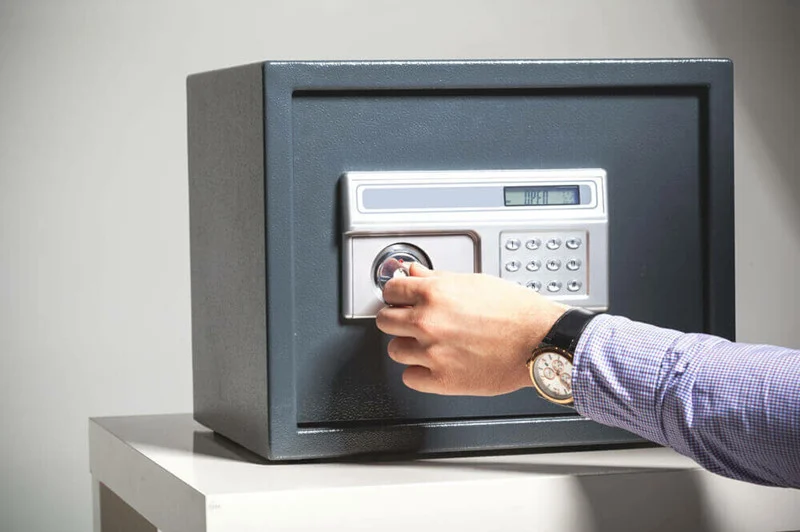
1. What Are Safe Electronic Locks?
Safe electronic locks are electronically controlled locking devices designed to regulate access to safes, secure cabinets, and other protected storage equipment. Instead of relying exclusively on a traditional mechanical key or combination dial, they use an electronic credential such as a PIN, biometric identification, or authorized electronic key. Once the credential is verified, the lock permits the mechanical locking mechanism to be released according to its design.
In commercial environments, these locks are used where access must be restricted to authorized personnel. A retail business may use an electronic safe to protect cash deposits, while an industrial facility may use electronically controlled cabinets to secure maintenance tools or sensitive equipment. The security requirements differ considerably between these applications, which is why electronic safe locks should not be treated as a single interchangeable product category.
A distinction is also necessary between an electronic lock fitted to a certified burglary-resistant safe and an electronic locking system designed for an industrial enclosure. A certified safe may require a specific tested lock and boltwork arrangement. An industrial cabinet may prioritize credential management, environmental resistance, and operational traceability. Buyers should identify the protected asset and the required security classification before comparing products.
2. How Do Safe Electronic Locks Work?
Electronic safe locks work by combining an authentication device, an electronic controller, and a physical locking mechanism. The controller checks whether a submitted credential is authorized. If authentication succeeds and the operating conditions are satisfied, the mechanism allows the user to release the safe door or enclosure. Although the process may take only a few seconds, the reliability of each component influences the security of the entire system.
Electronic Authentication and Locking Mechanisms
Authentication is the process of confirming that a person has permission to operate the lock. A keypad lock typically checks an entered PIN against stored authorization information. A biometric system compares a fingerprint or another supported biometric characteristic with enrolled credentials. An electronic key system may use encrypted communication between the key and lock to verify authorization.
Authentication alone does not determine resistance to physical attacks. The lock case, bolt, actuator, mounting arrangement, and surrounding door structure must also withstand the expected threat. For example, a sophisticated electronic credential system provides limited benefit if the cabinet door can be easily pried open or the locking assembly can be removed without substantial resistance.
What Happens During an Unlocking Request?
A typical unlocking sequence begins when an authorized user enters a code, presents a credential, or connects an electronic key. The controller evaluates the request, checks relevant permissions, and activates or releases the locking mechanism when access is permitted. Some systems also record the operation, including the credential identity and event time, so administrators can review access activity later.
In more advanced commercial systems, permissions may be restricted by employee role, working hours, or authorized location. A maintenance contractor might receive temporary access to a designated equipment cabinet, while a facility supervisor retains broader permissions. These functions are valuable when businesses need to manage multiple users without distributing numerous permanent mechanical keys.
3. Common Types of Electronic Safe Locks
Commercial buyers generally encounter several types of electronic locking technology. Each offers different advantages in daily operation, credential management, and maintenance. The appropriate choice depends on whether the application involves a certified safe, a secure storage cabinet, or a distributed industrial access system.
Keypad, Biometric, and Connected Locks
Electronic keypad locks are widely used on commercial safes because they allow authorized users to enter a numerical code without carrying a physical key. Depending on the model, administrators may be able to configure multiple user codes, opening delays, or restrictions after repeated incorrect attempts. Keypad systems are often practical for locations where employees need predictable access and where user credentials can be changed when staffing changes.
Biometric electronic locks use characteristics such as fingerprints to verify users. They can reduce dependence on memorized codes, but their suitability depends on sensor quality, enrollment procedures, environmental conditions, and fallback access arrangements. Facilities where workers frequently wear gloves or handle oil, dust, or moisture should test biometric performance under actual working conditions before purchasing.
Connected electronic locks may communicate with a management platform to support centralized permissions and event reporting. These systems can be useful for organizations operating multiple facilities, although connectivity introduces additional requirements for cybersecurity, software support, and network reliability. Buyers should verify whether the lock operates independently during communication outages and how access records are preserved.
Passive Electronic Locks for Secure Enclosures
Passive electronic locks provide a different approach to electronic access control. In a passive electronic locking system, the lock body does not require a continuously powered internal battery for its electronic authorization functions. Instead, a compatible smart key supplies the necessary operating power during an authorized unlocking operation. This architecture can be particularly useful for remote industrial cabinets, outdoor equipment enclosures, and distributed infrastructure where replacing batteries inside every lock would create a substantial maintenance burden.
For example, Vanma passive electronic locking systems use programmable smart keys to manage authorized access across compatible lock types. Such systems can support controlled permissions and access records for industrial applications. However, a passive electronic cabinet lock or padlock should not be assumed to meet the burglary-resistance requirements of a certified commercial safe. Compatibility, mounting design, and relevant security approvals must be verified separately.
4. How Secure Are Electronic Locks Compared With Mechanical Locks?
Electronic locks are not automatically more secure than mechanical locks. Their principal advantage is often improved control over who can gain access, rather than inherently greater resistance to physical attack. A high-quality mechanical safe lock may provide excellent protection when installed in a properly constructed safe. An electronic lock may add operational benefits such as individual credentials, audit records, and programmable access restrictions, provided the specific model supports those functions.
The comparison should consider both physical security and administrative security. Physical security concerns resistance to drilling, manipulation, forced entry, and other attacks. Administrative security concerns credential sharing, lost keys, employee turnover, and unauthorized access by people who previously had legitimate permission. Businesses often benefit from electronic systems because they can manage the second category more efficiently.
| Comparison Factor | Electronic Safe Locks | Mechanical Safe Locks |
|---|---|---|
| Access Method | PIN, electronic credential, or biometric authentication | Mechanical key or combination |
| Credential Changes | Often programmable, depending on the model | May require key replacement or combination servicing |
| Access Records | Available on models with audit functions | Generally not available within the lock |
| Power Requirements | Battery, external power, or compatible powered key | Usually no electrical power required |
| Physical Security | Depends on tested construction and certification | Depends on tested construction and certification |
| Maintenance | Electrical and mechanical inspection | Primarily mechanical inspection and servicing |
For burglary-resistant safes, buyers should examine recognized lock and safe classifications rather than relying on product descriptions alone. Standards such as EN 1300 for high-security locks and applicable UL lock classifications can help buyers evaluate tested products. The required standard depends on the market, insurer, application, and complete safe construction. A lock certification is not equivalent to certification of the entire safe.
5. Where Are Electronic Safe Locks Used in Business?
Commercial electronic locks are used in environments where protecting assets and controlling personnel access are both important. The appropriate locking technology varies with the value of stored assets, frequency of access, environmental exposure, and number of authorized users. Understanding the application helps buyers avoid paying for unnecessary functions or selecting a lock that does not satisfy the actual security requirement.
- Retail and financial operations: Electronic safes can protect cash deposits, transaction documents, and restricted financial materials. Features such as opening delays and separate user codes may help businesses implement internal cash-handling procedures.
- Commercial offices: Secure cabinets and safes can protect confidential records, company seals, sensitive documents, and valuable electronic devices. Access management becomes particularly important when employees frequently change roles.
- Industrial facilities: Electronic locks can secure maintenance cabinets, equipment enclosures, tool storage, and designated restricted areas. Environmental durability and authorized technician access may be more important than consumer-style convenience features.
- Utilities and telecommunications: Distributed equipment cabinets often require controlled access for field technicians and external contractors. Passive electronic locking systems can reduce lock-side battery maintenance while supporting managed credentials.
- Healthcare and laboratories: Restricted storage may require accountability, controlled authorization, and documented operating procedures. Specialized regulatory or storage requirements must be evaluated independently of the lock itself.
A company operating one office safe may find a standalone electronic keypad sufficient. By contrast, a utility operator managing hundreds of remote cabinets may place greater value on centrally administered electronic keys and access histories. The purchasing decision should therefore begin with the operating environment rather than a preferred unlocking technology.
6. What Features Should Commercial Buyers Look For?
The most important features of safe electronic locks are those that address identifiable security and operational risks. Buyers should establish minimum requirements before requesting quotations, including physical resistance, credential control, power availability, environmental protection, and service support. A detailed specification also makes it easier to compare suppliers offering different locking technologies.
- Security certification: Confirm whether the lock has been tested against a recognized standard appropriate to the intended safe or secure enclosure.
- Authentication controls: Determine whether the system supports individual credentials, multiple users, and restrictions against repeated incorrect attempts.
- Permission management: For multi-user operations, evaluate whether administrators can issue, modify, suspend, and revoke credentials without replacing hardware.
- Audit capability: Verify what events are recorded, where records are stored, and whether administrators can export information for internal reviews.
- Power continuity: Examine battery monitoring, external power provisions, smart-key power delivery, and documented emergency procedures.
- Environmental durability: Review operating temperature, moisture resistance, corrosion protection, and expected exposure conditions.
- Integration and service: Confirm installation compatibility, replacement parts availability, software support, and supplier response procedures.
Buyers should also distinguish advertised features from verified capabilities. A product described as having encrypted access does not necessarily provide effective credential management or protection against every electronic attack. Ask suppliers to explain the authentication process, credential lifecycle, administrator permissions, and response to lost or compromised credentials. These details are particularly important when the locking system protects multiple locations.
7. How Do Power Failures Affect Electronic Locks?
Power failure is one of the most practical concerns when selecting electronic safe locks. Many standalone electronic safe locks rely on batteries to operate their authentication electronics. When battery power becomes insufficient, the lock may stop accepting credentials until an approved power restoration procedure is completed. The actual behavior varies by model, so buyers should not assume that every electronic lock provides the same emergency access method.
Commercial facilities should ask how the lock indicates low battery conditions, whether authorized credentials remain stored without power, and what happens during complete battery depletion. Some models provide external emergency power contacts, while others require battery replacement through an accessible compartment. Emergency opening procedures should follow the manufacturer's documented instructions and the organization's security policy.
Passive electronic locks address the power issue differently because compatible smart keys provide power during operation. This removes the need for routine battery replacement inside the passive lock body, but it does not eliminate all power-related responsibilities. The smart key still requires adequate power, and organizations must maintain charging procedures, spare authorized keys, and recovery arrangements for damaged or unavailable devices.
For facilities operating in remote areas, power architecture should be included in the total maintenance assessment. A lock that requires regular site visits for battery replacement may generate significant labor and travel expenses over several years. A passive electronic system may reduce those visits for compatible industrial enclosures, although the savings depend on deployment size, operating practices, and system cost.
8. Installation, Maintenance, and Long-Term Reliability
Correct installation is essential to the reliability of electronic locking systems. Even a well-designed lock can perform poorly when installed on an unsuitable door, connected to incompatible boltwork, or exposed to conditions beyond its specifications. Commercial safe locks should be installed and serviced by qualified personnel familiar with the safe manufacturer's requirements, particularly when security certification or insurance conditions apply.
For industrial cabinets and equipment enclosures, installation checks should include mounting dimensions, door alignment, latch engagement, and resistance to vibration. Outdoor installations require additional attention to water ingress, corrosion, temperature changes, and the protection of electrical interfaces. Buyers should request installation drawings and confirm that the supplied lock configuration matches the actual equipment.
Routine maintenance should be based on the manufacturer's recommendations and the frequency of use. A practical inspection program may include checking the physical condition of the lock, confirming reliable credential recognition, reviewing access records, testing approved recovery procedures, and inspecting batteries or smart keys as applicable. Organizations should document faults and recurring problems rather than waiting for a complete lock failure.
Software-supported systems also require administrative maintenance. User permissions should be reviewed when employees leave, contractors complete assignments, or responsibilities change. If the system uses connected software or firmware, updates should be managed through an approved process that includes compatibility checks and a recovery plan. Physical maintenance and credential administration are equally important to dependable long-term operation.
9. Cost Considerations and Supplier Evaluation
The purchase price of an electronic lock represents only part of its total cost. Businesses should also consider installation, credential devices, management software, training, maintenance, replacement components, and technical support. For a single commercial safe, these costs may be relatively straightforward. For a large industrial locking deployment, operational expenses can become a major factor in the purchasing decision.
For example, a company managing several hundred equipment cabinets may need to distribute access among internal technicians and third-party contractors. Traditional mechanical keys can create ongoing expenses related to duplication, collection, replacement, and rekeying. An electronic key management system may simplify permission changes, although it introduces its own costs for smart keys, administration, and supporting infrastructure.
| Purchasing Factor | Questions to Ask Suppliers |
|---|---|
| Initial Equipment Cost | What hardware, credentials, and accessories are included? |
| Installation | Does the lock fit the existing safe or enclosure without modification? |
| Security Requirements | Which certifications and test reports apply to the exact model? |
| Ongoing Maintenance | What components require replacement or scheduled servicing? |
| Access Administration | Can permissions be changed without replacing locks? |
| System Compatibility | Can the equipment integrate with existing management processes? |
| Supplier Support | Are spare parts, technical documentation, and service assistance available? |
When comparing quotations, purchasing managers should request consistent information from every supplier. Product specifications should identify the exact lock model, supported authentication methods, operating conditions, required accessories, and any certification limitations. Demonstrations or pilot installations can help verify usability before a larger purchase, particularly when the equipment will be operated by technicians working in demanding industrial conditions.
For businesses evaluating passive electronic locks for compatible industrial cabinets and equipment enclosures, Vanma offers electronically managed locking options that can be considered alongside conventional mechanical and powered electronic systems. The choice should be based on actual application requirements, installation compatibility, and the organization's access management procedures rather than brand claims alone.
10. Frequently Asked Questions
Are safe electronic locks more secure than mechanical locks?
Electronic safe locks can provide better administrative control through programmable credentials, access restrictions, and audit functions, but they are not inherently more resistant to physical attacks. A certified mechanical safe lock may provide excellent protection, while an uncertified electronic lock may offer limited physical resistance. Buyers should compare tested security classifications, installation quality, and the complete safe construction. Electronic systems are particularly valuable when businesses need to manage multiple authorized users or change access permissions frequently.
Can electronic safe locks be hacked?
Electronic locks can be exposed to cybersecurity or electronic manipulation risks, depending on their design and connectivity. Potential weaknesses may involve poorly protected credentials, insecure communication, weak administrator procedures, or outdated software. However, the presence of electronics does not mean a lock is easily compromised. Businesses should evaluate encryption, credential protection, access restrictions, firmware maintenance, and independent testing where available. Connected locks require additional attention to network security, while standalone systems have different exposure characteristics.
What happens if an electronic safe lock loses power?
The result depends on the lock's power architecture and manufacturer design. Battery-powered electronic safe locks may require battery replacement or an approved external power procedure before they can be operated again. Properly designed systems generally retain stored credentials in nonvolatile memory, but buyers should verify this with the manufacturer. Passive electronic locks used on compatible enclosures obtain operating power from an authorized smart key, which must itself be charged and functional. Emergency access procedures should always be established before installation.
Can passive electronic locks be used on safes?
Passive electronic locks may be suitable for certain secure cabinets, industrial storage enclosures, and specially designed locking applications. However, they should not automatically be considered replacements for certified electronic safe locks. A commercial safe may require a particular lock classification, mechanical interface, and tested boltwork arrangement. Before selecting a passive electronic solution, buyers must verify the equipment's intended application, installation compatibility, and any insurance or regulatory requirements. For high-value cash safes, certified safe locking hardware should remain the primary selection criterion.
11. Final Considerations for Business Buyers
Safe electronic locks can improve commercial security by combining physical locking mechanisms with controlled electronic authorization. Their greatest value often lies in making access easier to manage, particularly where multiple employees, contractors, or departments require different permissions. Nevertheless, the right choice depends on more than whether a lock uses a keypad, fingerprint reader, or electronic key.
Businesses purchasing locks for certified safes should prioritize the required security ratings, approved installation arrangements, and manufacturer support. Organizations protecting industrial cabinets or distributed equipment should additionally evaluate environmental resistance, credential administration, maintenance workload, and the practicality of passive electronic locking systems. By assessing the complete operating requirements and requesting verifiable technical documentation, purchasing teams can select locking equipment that provides dependable protection throughout its intended service life.

