
Securing Railway Maintenance Access During Track Possession Windows: Best Practices and Solutions

Railway maintenance is one of those jobs that looks quiet from the outside — a few workers in hi-vis jackets, a stretch of empty track — but runs on a strict, unforgiving clock. The window closes whether the work is done or not. And if the wrong person opened the wrong cabinet, or the gate was left unlocked after the crew cleared out, there is often no record to prove otherwise. That gap — between what happened and what you can actually show happened — is exactly where passive electronic locks for railway maintenance earn their place.
It’s 01:47. A six-person track maintenance team walks through a lineside fence gate on a section of high-speed railway. They have 38 minutes. Two signal relay cabinets, one traction power box, and the gate itself all need attending to. The crew leader reaches for his key ring, counts through seven keys in the dark, picks one, tries it, tries another. Twenty seconds gone. Nothing catastrophic — yet. But if this happens at every gate on every night window across a 300-kilometre route, the lost time and the absence of any access record starts to add up in ways that matter.
What a Track Possession Window Is — and Why the Clock Never Stops
- Track possession window — the standard term used by Network Rail in the UK and widely understood across European rail networks
- Engineering window — common in UK and Australian rail operations, often referring to overnight or weekend closures
- Maintenance window — the broadest term, used across North America, East Asia, and in general industry contexts
- Work window — informal usage in operations teams; means the same thing
Why Mechanical Keys Are a Liability in Railway Possession Window Management
Mechanical keys have served railways since the 1800s, and there is a reason they stuck around so long — they are simple, they work in any weather, and they require no power. But “works in any weather” is not the same as “works for modern railway maintenance access control.” The gaps are real, and in a possession window environment they get expensive fast.
A mechanical key has no idea what time it is
This sounds obvious when you say it out loud, but it has serious consequences. A mechanical key opens a lock whenever someone turns it. There is no enforcement of the window boundary. A technician who arrives 20 minutes before the possession is officially granted can still open the fence gate. A worker who stays behind after the window closes can re-enter. The lock will not say no.
When something goes wrong, there is no record
Mechanical locks leave no trace. If a cabinet was found open, if a gate was left unlocked, if a piece of equipment was tampered with — you cannot go back and check which key opened which lock at what time. Incident investigations fall back on human memory and paper sign-in sheets, neither of which holds up well. Frankly, this is a liability no serious railway operator should be comfortable accepting in 2025.
Losing a key means replacing locks along an entire route section
On a route where dozens of fence gates and signal cabinets share a common master key, one lost key triggers a cascade. Every lock that key could have opened needs replacing, because you have no way to know whether it was found by the wrong person. The cost — in hardware, in labour, in potential line closures to allow replacements — is disproportionate to the original problem.
Key bundles slow everyone down in a tight possession window
The average track maintenance technician in a complex route section may carry 10 to 15 physical keys for different cabinets and gates. In the dark, in wet weather, in a 30-minute window — finding the right one takes time that the window does not have to give. It is a small friction that compounds across hundreds of shifts per year.
How Passive Electronic Locks Work — and Why Railway Environments Are a Good Fit
Before getting into the step-by-step process, it helps to understand what “passive” actually means here, because it is not a marketing term — it describes something specific about the hardware architecture that matters a lot in outdoor rail applications.
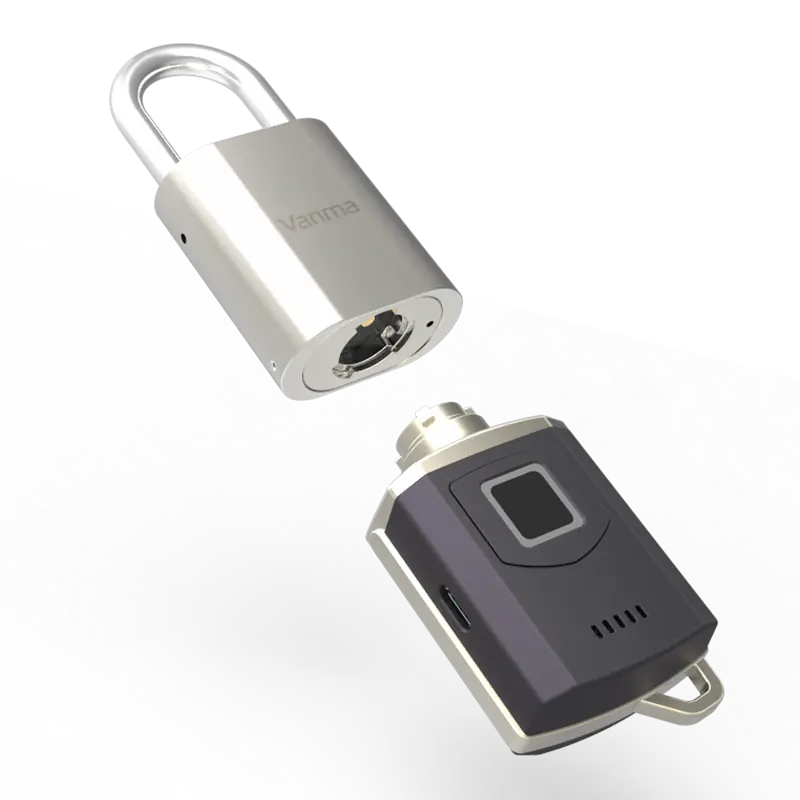
In a passive electronic lock, the lock body contains no battery and no wiring. The lock is completely inert until an authorised electronic key makes contact with it. At the moment of contact, the key supplies a brief burst of power through a single metal touch point, activating the lock’s internal chip just long enough to perform encrypted identity verification. If the key is authorised for that lock within the current time window, the lock opens. The entire exchange — power delivery, authentication, record writing — happens in under a second.
Compare this to an active electronic lock, which needs either a battery (requiring periodic replacement) or an external power connection (requiring wiring). On a trackside environment spanning hundreds of kilometres, neither option is practical at scale. Batteries fail in extreme cold — temperatures of −40 °C are not unusual at altitude or in northern climates. Running power cables to hundreds of lineside cabinets and fence gates is a civil engineering project, not a lock upgrade.
Why passive matters for rail: Vanma’s passive lock system operates from −40 °C to +85 °C with an IP68 rating, meaning it can be fully submerged in water. The lock body has no moving parts that need lubrication, no battery compartment to corrode, and no wiring to vibrate loose on a high-speed line. In theory and in practice, it outlasts the cabinet it is bolted to.

Using Passive Electronic Locks During a Railway Possession Window — Step by Step
Here is how the process works in practice, from window planning through to post-shift reporting.
1. Before the window — set time-bounded permissions in the management system
The maintenance supervisor logs into Vanma’s management platform (web or desktop) and assigns each technician’s electronic key a permission set: which specific locks they can open, from what time, until what time. Permissions are accurate to the minute. When the window closes, they expire automatically — no one has to remember to revoke them.
2. Key collection at the depot — smart key cabinet, no paper forms
Technicians collect their Vanma electronic keys from a smart key cabinet at the depot. The cabinet verifies identity via face recognition or fingerprint, records the issue time, and logs which key went to which person. No paper sign-out sheets. No arguing about who had which key at shift handover.
3. On-site — one key, every authorised lock on the route section
At the fence gate, the technician touches their electronic key to the lock’s contact point. The key powers the lock, verifies its own identity against the lock’s encrypted ID, and checks whether this lock is on the permitted list and whether the current time falls within the authorised window. If all three conditions pass, the lock opens. If any condition fails, it does not — and the attempt is logged.
4. During the window — every unlock recorded automatically
Each open and re-lock event is written to the key’s onboard memory: timestamp, lock ID, key ID, result. Keys with Bluetooth capability upload records in real time via a connected smartphone and the Vanma app. Standard keys store up to 60,000 records locally and sync on return to the key cabinet. Either way, there is no manual logging step.
5. Window closes — permissions expire on their own
When the possession window ends, the time-bounded permissions on each key become invalid. A key that is still out in the field cannot open any further locks. If a technician is running late returning, the system already knows — the key’s last record tells you exactly where it was last used and when.
6. Post-window — audit report is ready to export
Once keys are returned to the cabinet, all records sync to the management platform. The supervisor can generate a complete access report — every lock opened, by whom, at what time — and export it as Excel, CSV, or PDF. This goes straight into the maintenance management record or compliance file, with no manual data entry required.
Railway Applications Where Passive Electronic Locks Make the Biggest Difference
Lineside fence gates and track access points for railway maintenance
This is the first point of entry for any maintenance team. Passive padlocks on lineside fence gates — Vanma’s L35, L40, and L50 series are the most commonly deployed in this application — give operators exactly what a mechanical padlock cannot: a time-enforced permission that records every entry and exit. The gate will not open for an unauthorised key, and it will not open for an authorised key outside the possession window.
Signal control cabinets and relay rooms
Signal equipment is the most safety-sensitive asset in the railway environment. Wrong access at the wrong moment can affect signalling state across multiple trains. Vanma’s swing-handle cabinet locks (MS840L and similar) replace the standard mechanical locks on these cabinets with no structural modification required, while adding full audit trail capability and the option to integrate with five-point interlock safety systems.
Traction power distribution boxes
High-voltage equipment demands that you know, with certainty, who opened what and when. In electrified environments where ATEX-certified equipment is required, Vanma’s locks carry the relevant certifications. Permissions can be structured so that a power cabinet cannot be opened unless the relevant isolation has been recorded upstream — enforcing safe work sequences at the hardware level.
Trackside communication enclosures for electronic key management on railway routes
GSM-R and ETCS lineside units are distributed across hundreds of kilometres of track, often in locations with no mains power and limited mobile coverage. An active electronic lock here is almost impossible to maintain. A passive lock requires nothing from the site infrastructure — it takes its power from the key on every access, works offline, and uploads when the technician returns to a connected environment.
Rolling stock depots and maintenance bays
The same key system that manages lineside possession window access can extend into the depot: tool store cabinets, inspection pit access hatches, workshop equipment locks. One key, one management platform, one consistent audit trail across the whole operation.
Real-World Application: Xi'an Railway Bureau Track Maintenance Fence Gate Management
Xi’an Railway Bureau — Civil Engineering Section, China
The Xi’an Railway Bureau’s track maintenance division — known in Chinese rail operations as the Civil Engineering Section — manages a substantial network of lineside infrastructure across the Shaanxi region. Like most Chinese railway maintenance units, the section operates under a strict possession window system, with maintenance crews required to obtain formal approval for each Maintenance window before entering the track zone.
The section’s existing key management relied on mechanical padlocks for lineside fence gates. The core problem was familiar: no record of who opened which gate, no enforcement of possession window boundaries at the gate itself, and no way to verify that gates had been properly re-locked after crews cleared the track. With dozens of active maintenance windows each month across multiple route sections, managing this manually was not workable.
The section deployed Vanma’s passive padlock system — primarily the L-series padlocks — across their lineside fence gates. Critically, rather than adopting Vanma’s own management platform, the section chose to integrate Vanma’s hardware SDK directly into their own internally developed mobile application. This gave the section’s existing digital workflow — already used for possession window scheduling, crew assignment, and maintenance records — full control over the electronic key data.
The integration meant that when a maintenance supervisor approved a possession window in their app, the relevant key permissions were generated and pushed to the assigned technicians’ keys automatically. The fence gate padlocks enforced those permissions at the physical level. Every opening was logged, every closure recorded, and the data fed back into the section’s own system without requiring a separate platform login.
How Railway Possession Window Management Differs Between China and Overseas Networks
The Xi’an case also illustrates something worth understanding if you are evaluating this technology for rail networks outside China — the operational context shapes what you need from a lock system, even when the physical application (a padlock on a fence gate) looks identical.
🇨🇳 China
— Internal workforce model
- Maintenance is carried out by the railway bureau’s own permanent staff
- The civil engineering section manages the entire process internally
- Possession window approval, crew assignment, and on-site access are all within the same organisational chain
- Lock system feeds into the bureau’s own digital workflow
- Audit records are primarily for internal safety management, not external regulator submission
- Operators tend to want SDK/API integration into their own systems
🇬🇧🇪🇺 UK / Europe
— Contractor-based model
- Infrastructure manager (e.g. Network Rail) formally “grants possession” to engineering teams
- Maintenance is frequently carried out by external contractors and sub-contractors
- Multiple companies’ workers may share a single fence gate during one window
- Personnel must hold certifications (PTS card, COSS qualification) to enter red zones
- Audit records must satisfy external regulatory bodies (ORR in the UK)
- Operators tend to want a standalone platform with multi-organisation permission management
How Railway Possession Window Management Differs Between China and Overseas Networks
There are other passive lock systems on the market, and a few that claim railway-grade capability. What matters in practice comes down to a handful of specifics that make or break the system in real rail environments.
One key, up to 60,000 authorised locks. For a large rail network with hundreds of fence gates, signal cabinets, and depot locks, the ability to manage all of them from a single key per technician is the difference between a workable system and a key ring problem with extra steps.

Blacklist in under 30 seconds. When a key goes missing, the blacklist function propagates the revocation to every lock on the route — no lock replacement, no service interruption. The next time any lock is contacted, it refuses that key’s ID.
No mechanical keyway. Vanma’s lock cylinders have a single electrical contact point, not a mechanical keyhole. That means no technical lock-picking is possible, which matters for unattended lineside equipment that sees little human traffic between maintenance windows.
Third-party integration as standard. The SDK and RESTful API mean the lock layer can feed data into whatever maintenance management system the operator already uses — as the Xi’an Railway Bureau case demonstrates — rather than requiring operators to adopt a separate platform.
Passive Electronic Locks vs. Mechanical Keys vs. Active Locks — Railway Comparison

FAQs About Vanma Locks for Railway Maintenance
Do passive electronic locks work in tunnels and areas with no mobile signal?
How quickly can possession window permissions be configured before a shift?
What happens if a technician loses their key during the possession window?
Can Vanma's system integrate with our existing railway management platform?
Do we have to replace all locks at once, or can we start with a pilot area?
Which padlock models are recommended for outdoor lineside fence gates?
Closing Thoughts
Track maintenance is one of those rare jobs where the time pressure is written into the physical environment — a train is coming, whether the work is done or not. Managing who goes through a fence gate, what cabinet they open, and whether every gate was properly re-locked before the line reopened is not a bureaucratic preference. It is a safety requirement.
Mechanical keys have served that purpose for over a century, and they still work in the narrow sense that they open locks. But they do not record anything, they do not enforce time windows, and a lost key requires replacing hardware across an entire route. The gap between what they do and what a modern railway operation needs is not small.
Passive electronic locks close that gap — not by adding complexity, but by making the record automatic and the enforcement physical. The gate does not open for a key that is not authorised. The key does not work outside the possession window. Every event is logged without anyone having to write it down.
Whether you are running a Chinese railway bureau with an internal maintenance team and your own app, or a European infrastructure manager coordinating a network of external contractors, the problem at the gate is the same. The lock either knows who should be there and when — or it does not.
ith remote access for temporary tasks, integration with surveillance systems, and detailed audit logs, Vanma locks offer a comprehensive security solution that keeps your factory protected, even when employees are away for the holidays.
Share:
Table of Contents
Try Vanma Electronic Lock
You can contact us to request samples, and to experience the convenience of Vanma electronic locks.
Contact Us NowChoose A Trusted Access Control Manufacturer for
Reliable Solutions
As a professional manufacturer of access control systems and electronic locks, Vanma offers high-quality solutions to protect your premises and assets. Contact us by filling out the form below to receive professional consultation and support.
