
Remote Authorization for Field Technicians in Critical Industries

As field operations become more distributed and complex, organizations face a growing challenge: how to grant the right access to the right technician at the right time—without slowing down work or increasing risk. Traditional access methods, such as physical keys, manual approvals, and on-site supervision, are no longer sufficient for modern industries.
This is where remote authorization for field technicians becomes essential. By enabling centralized, real-time control over access permissions, remote authorization helps organizations improve efficiency, reduce downtime, and strengthen security across remote and unmanned sites.
The shift toward remote authorization is also driven by the growing scale of distributed infrastructure. According to the International Energy Agency (IEA), power grids and telecom networks are becoming increasingly decentralized, with more assets located outside traditional staffed facilities. As a result, operators must manage access across hundreds or even thousands of unmanned sites.
Industry analysts note that delays caused by manual access approval are a leading contributor to prolonged outages in critical infrastructure. A report by McKinsey highlights that digitizing field operations—including access authorization—can reduce downtime by up to 30 percent while improving workforce productivity.
Why Remote Authorization Is Becoming Essential for Field Technicians
Field technicians today work in environments that look very different from a decade ago. Telecom cabinets, power substations, utility enclosures, rail infrastructure, and industrial sites are often spread across wide geographic areas and operate without full-time staff on site.
At the same time, expectations for service speed have increased. Customers and regulators expect faster repairs, shorter outages, and clearer accountability. Delays caused by waiting for approvals, lost keys, or unclear permissions can result in service interruptions, financial losses, and safety risks.
Remote authorization for field technicians solves these problems by allowing supervisors or control centers to grant, modify, or revoke access instantly—without physical presence or manual processes. It supports real-time decision-making and enables field teams to respond faster to urgent tasks.
What Is Remote Authorization?

- Telecommunications
- Utilities and power grids
- Oil and gas
- Transportation and rail
- Industrial maintenance
Common Challenges Without Remote Authorization
Delayed Access and Downtime
Lost Keys and Unclear Permissions
Lack of Accountability
These issues highlight why remote authorization for field technicians is increasingly viewed as a foundational requirement, not a luxury.
How Remote Authorization Works in Field Operations
Remote authorization systems typically follow a centralized model:
- Access rules are defined centrally
Roles, permissions, and access conditions are configured in a management platform. - Authorization is issued remotely
When a technician needs access, approval is granted digitally—often based on task assignment or emergency status. - Access is time-limited and task-based
Permissions can expire automatically, reducing long-term risk. - Access events are logged
Every unlock or entry attempt is recorded for traceability.
In many real-world environments, connectivity is unreliable. Advanced systems support offline access with secure synchronization, ensuring technicians can work even when networks are unavailable.
Key Benefits of Remote Authorization for Field
- Faster Response and Reduced Downtime
Remote authorization eliminates waiting times. Technicians can access sites immediately after approval, allowing faster repairs and shorter outages. - Improved Security and Control
By replacing static keys with controlled authorization, organizations gain tighter control over who can access each asset. Permissions can be adjusted instantly if conditions change. - Better Accountability and Audit Trails
Each access event is recorded, creating a clear audit trail. This supports compliance, internal investigations, and performance reviews. - Lower Operational Costs
Remote authorization reduces:- Rekeying expenses
- Travel costs for supervisors
- Administrative workload
- Downtime-related losses
Over time, this significantly lowers the total cost of ownership for access management systems.
Industries That Rely on Remote Authorization
Remote authorization has become a critical part of daily operations in many industries where infrastructure is widely distributed and rarely staffed. Instead of relying on physical keys or on-site approvals, organizations use remote authorization to keep work moving while maintaining strict access control.
Telecom
Telecom operators manage thousands of outdoor cabinets, base stations, and fiber enclosures spread across cities, highways, and rural areas. Field technicians often respond to outages or maintenance tasks on short notice. Remote authorization allows network control centers to grant access instantly, ensuring technicians can open the correct cabinet without waiting for supervisors or spare keys. Every access event is logged, which is essential for troubleshooting and regulatory compliance.
Utilities
Energy
Transportation
Remote authorization has become a critical part of daily operations in many industries where infrastructure is widely distributed and rarely staffed. Instead of relying on physical keys or on-site approvals, organizations use remote authorization to keep work moving while maintaining strict access control.
Industrial Plants
Across all these industries, the core challenge is the same: managing secure access across many remote locations without constant on-site supervision. Remote authorization provides the flexibility, security, and visibility needed to support modern field operations.
Remote Authorization vs Traditional Access Methods
Traditional access methods struggle to scale:
- Physical keys: Easy to lose, duplicate, and misuse
- Paper approvals: Slow and error-prone
- Phone confirmations: Difficult to track and audit
- On-site supervision: Expensive and inefficient
Remote authorization replaces these approaches with centralized control, real-time visibility, and digital accountability—making it better suited for modern field operations.
Best Practices for Implementing Remote Authorization
Organizations planning to adopt remote authorization should follow several best practices:
- Define access roles clearly to avoid over-authorization
- Use time-based permissions instead of permanent access
- Centralize audit logs for compliance and reviews
- Combine remote authorization with strong physical security, such as robust locks and tamper-resistant enclosures
- Train field technicians on access rules and responsibilities
Successful implementation is as much about process design as it is about technology.
How Vanma Enables Remote Authorization for Field Technicians

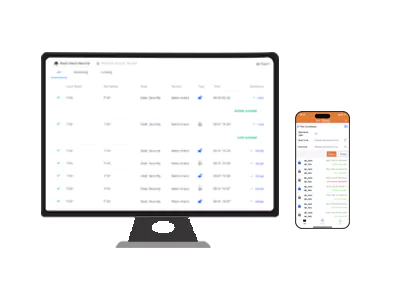

Vanma’s passive electronic lock system is designed to support remote authorization for field technicians in challenging environments.
Key capabilities include:
- Permission-based electronic keys that receive authorization remotely
- No power or wiring required at the lock, ideal for remote sites
- Offline access with secure synchronization, ensuring continuity
- Complete access traceability for audits and investigations
By combining digital authorization with rugged physical locks, Vanma bridges the gap between cybersecurity-style permission management and real-world field access control.
Conclusion: Remote Authorization Is the Future of Field Access
As field operations expand and become more decentralized, traditional access methods no longer scale. Organizations need faster, safer, and more accountable ways to manage access.
Remote authorization for field technicians provides that solution. It improves efficiency, strengthens security, and reduces costs—while giving organizations full visibility into who accesses critical assets.
For industries that rely on remote infrastructure, remote authorization is no longer optional. It is the foundation of modern field access management.
Share:
Table of Contents
Try Vanma Electronic Lock
You can contact us to request samples, and to experience the convenience of Vanma electronic locks.
Contact Us Now