
Pharmaceutical Facility Security: 5 Risks Every Plant Manager Should Know

It usually starts with something small. A key that doesn’t get returned at the end of a shift. A cabinet that’s left unlocked “just for a minute” while someone grabs another batch of vials. A visitor badge that never gets deactivated after the contractor’s job is done. None of it feels like a big deal in the moment — until an inspector asks who accessed the controlled substance cabinet at 2 a.m. last Tuesday, and nobody has a clean answer.
Pharmaceutical facility security doesn’t usually fail because of one dramatic break-in. It fails quietly, one overlooked door or one shared key at a time. And because the stakes are so much higher than in a typical warehouse — regulated substances, batch integrity, patient safety, audit trails — those small gaps tend to turn into very expensive problems.

This article walks through five risks that show up again and again in pharmaceutical plants, distribution centers, and storage facilities, plus what plants are doing differently now to close them. Some of these will sound familiar if you’ve ever sat through a failed inspection debrief. Others are the kind of thing you don’t notice until it’s too late. Either way, understanding them is the first step toward fixing them.
Why Pharmaceutical Facility Security Looks Different From Other Industries
The Regulatory Pressure Nobody Can Ignore
What a Small Gap Actually Costs a Plant
It’s worth sitting with the real cost for a second. A facility that fails an inspection over an access control issue doesn’t just get a warning letter. It loses inspector trust, which means more frequent and more thorough visits going forward. A theft of controlled substances can trigger a state board review that puts a pharmacist’s license on the line, not just the company’s reputation. None of this is proportional to how “small” the original gap felt — a shared key, a paper log nobody double-checked — which is exactly why it’s worth taking seriously before, not after, something happens.
Risk #1 — Weak Access Control Undermines Pharmaceutical Facility Security From the Start
Too Many Keys, Too Little Accountability
The trouble here isn’t usually malicious intent. It’s ambiguity. When ten different people can open the same door, and nobody tracks who actually did, you don’t have controlled access — you have a shared door with extra steps. And once a key has been copied, handed off, or lost, there’s no clean way to know exactly who’s still carrying one.

How This Gap Shows Up in Everyday Operations
What Stronger Pharmaceutical Facility Security Looks Like Here
The fix isn’t complicated in concept: give each person their own credential, tied to specific doors, specific hours, and a record every time it’s used. A maintenance technician might only need access to mechanical rooms during business hours. A quality auditor might need broader access, but only with everything logged. The hard part is doing that without rewiring the whole building or handing IT a six-month project — which is exactly the gap that newer lock technology is starting to fill, as we’ll get into further down.
Risk #2 — Controlled Substance Storage Gaps Threaten Pharmaceutical Facility Security
Why Paper Logs Don't Hold Up
Paper logs get filled in after the fact, sometimes at the end of a shift rather than at the moment of access. Two-person checks turn into one person signing for both, especially during a busy night when a second staff member isn’t immediately available. Controlled substance storage built entirely around trust and handwriting doesn’t hold up well when something actually goes missing — because there’s no independent record to check the story against, only two signatures that might both belong to the same account of events.

The Real Cost When Something Goes Missing
Raising the Bar With Biometric Verification
What’s replacing paper, in a growing number of plants, is a mix of biometric verification and electronic logging — a fingerprint or a coded key instead of a signature, and a digital record that can’t be edited after the fact. It doesn’t remove the two-person rule; it just makes it real instead of theoretical. Some cabinets now require both a fingerprint scan and a physical credential before they’ll open at all, which makes it far harder for one person to quietly bypass the second check.
Risk #3 — Missing Audit Trails Undermine Pharmaceutical Facility Security During Inspections
The Question Every Auditor Actually Asks
A Real Example of the Time It Saves
Facilities that have modernized this part of their operation usually describe the same shift: what used to take a supervisor half a day of digging through paper logs now takes a few minutes pulling a report. One hospital pharmacy that switched to electronic, biometric-verified cabinets for narcotics found that a task which used to take close to eight minutes per retrieval — locating a key, unlocking a cabinet, and manually logging the transaction — dropped to about two minutes once the process became fingerprint-based and self-recording. That’s not just a convenience win. It’s the difference between a system that can defend itself during a review and one that just hopes nothing gets asked.
Turning Recordkeeping Into a Built-In Habit
The best part of this shift isn’t the speed, honestly — it’s that the record gets created automatically, whether or not anyone remembers to write it down. Nobody has to be diligent about logging for the system to work. That takes a huge amount of pressure off staff during busy shifts, and it removes the single biggest reason paper trails fall apart in the first place: people forgetting, or not having time, to fill them in properly.

Risk #4 — Battery-Dependent Locks Put Pharmaceutical Facility Security at Risk
Where Batteries Fail First
Cold storage rooms are a classic example. Low temperatures drain batteries faster than almost anything else, and a dead lock on a temperature-sensitive cabinet is not a minor inconvenience — it’s a compliance incident waiting to happen. Remote warehouse doors, outdoor storage units, and back-corner equipment rooms have the same problem: nobody’s walking past them daily, so a flat battery can sit unnoticed for weeks until someone actually needs to get through that door.
How Battery-Free Locks Change the Equation
A Closer Look at Vanma's Passive Lock Technology
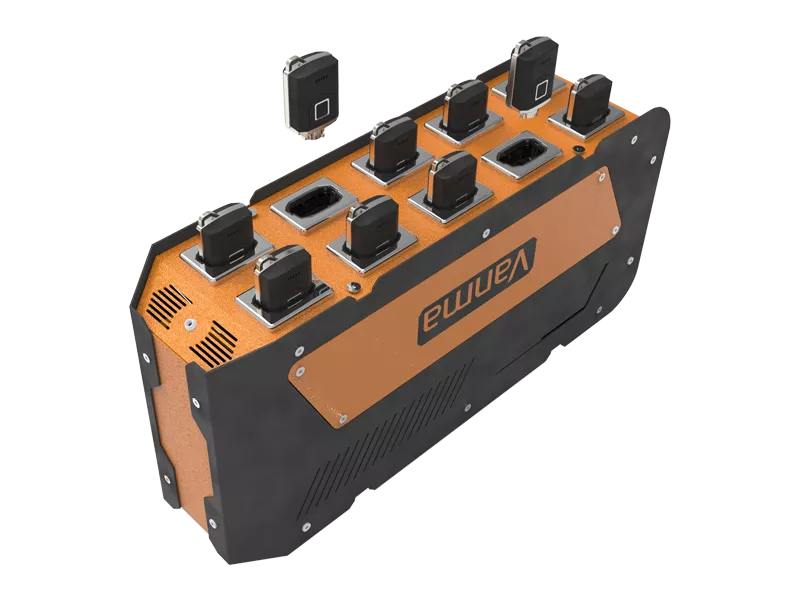
Vanma’s line of passive electronic locks works this way. The lock itself stays completely powered down until a key physically touches it, at which point the two exchange an encrypted handshake — built on a 64-bit hardware ID and AES-256 encryption — before the lock releases. Because there’s no battery inside the lock body, there’s nothing to degrade in a freezer, nothing to swell or leak in a hot storage room, and nothing for maintenance teams to schedule replacements for. The housings are rated IP68 and tested across a working range of roughly -40°C to 85°C, which covers everything from a walk-in cold room to an un-air-conditioned loading dock in summer. Every interaction — who used which key, on which lock, at what time — gets written to the key’s memory and later synced to a management system, so the audit trail exists automatically instead of depending on someone remembering to write it down.
It’s not a magic fix for every security problem a pharmaceutical plant might have, but for the specific failure mode of “the lock stopped working because nobody replaced the battery,” it removes the problem at the source rather than managing around it. That matters more in this industry than most, since the doors that fail quietly tend to be exactly the ones protecting temperature-sensitive or high-value inventory.

Risk #5 — Fragmented Systems Leave Pharmaceutical Facility Security Full of Blind Spots
When Departments Don't Share the Same Picture
Building One Connected System Instead of Three
Facilities that get this right tend to treat locks, keys, and records as one connected system rather than three separate purchases. A rugged padlock secures the outdoor loading dock. A cabinet lock with dual authentication protects the controlled substance store. A cleanroom door uses tiered permissions so only qualified staff can enter during production hours. Different hardware, different situations — but all of it reporting into the same management platform, so a single query answers “who went where, and when” across the entire site instead of three unrelated ones.
What This Looks Like Across a Real Facility
Picture a mid-sized plant with a raw material warehouse, a narcotics vault, a cold room, and a handful of equipment closets. Under a fragmented setup, that’s four separate access logs, four separate sets of rules, and four separate headaches during an audit. Under a connected setup, a single manager can pull one report and see every door that was opened in the building over the past 30 days, by whom, and whether any of it fell outside an approved schedule. That’s really the direction the industry is heading: not one perfect lock that solves everything, but a set of locks that all speak the same language and feed the same record. It sounds unglamorous, but it’s usually the difference between a five-minute answer during an audit and a five-day scramble.
Final Thoughts on Strengthening Pharmaceutical Facility Security


Electronic Key
Passive Lock
Management Software
Smart Key Locker
- Infrared sensing
- IP65
- Basic Electronic Lock
- Bluetooth Electronic Lock
- Fingerprint Electronic Lock
- Stainless steel lock body
- No wire require
- IP68
- Audit trail
- Lost key management
- Authorization management
- Reminder of forgetting lock
- Prevent nauthorized access
- Access Trail
- Key charging
A Quick Self-Check Worth Running This Week
If there’s one takeaway worth sitting with, it’s this: the strength of pharmaceutical facility security isn’t measured by how solid your locks feel when you push on them. It’s measured by whether you can answer, calmly and quickly, exactly who accessed what, and when — on any given day, for any given door. Walk through your own facility and pick five doors at random. For each one, ask who can open it, whether that access is actually tracked, and how long it would take to pull a clean record if someone asked tomorrow.
That’s a fair thing to check on your own facility before someone else checks it for you. If the answer isn’t as clean as you’d like, it might be worth a conversation about which parts of your current setup — the keys, the cabinets, the records, or all three — are due for a rethink.
Share:
Table of Contents
Try Vanma Electronic Lock
You can contact us to request samples, and to experience the convenience of Vanma electronic locks.
Contact Us Now