

In physical security, keys may look simple but play a big role. For places like banks, government offices, telecom towers, or warehouses, the right lock and key system can mean the difference between safety and risk.
The global physical security market was valued at about USD 147.36 billion in 2024 and is projected to reach USD 216.43 billion by 2030, growing at a compound annual growth rate (CAGR) of 6.5 %. This dramatic growth reflects increasing demand for advanced access control, surveillance, and perimeter systems across all sectors.
Meanwhile, the enterprise key management market—which overlaps closely with secure key systems—was estimated at USD 2,841.7 million in 2023 and is expected to grow to USD 9,824.2 million by 2030, at a CAGR of 19.4 %. This signals that organizations are placing greater emphasis on not just physical security, but intelligent, managed key solutions.
For years, Medeco keys have been known as one of the best mechanical options. Their special design, limited duplication, and resistance to picking have made them reliable. But as companies grow and manage many sites, the limits of traditional key duplication become clear.
This is where Vanma passive electronic locks stand out. They remove the idea of duplication completely. Instead, they use software-based authorization—administrators decide who can open which locks and when. One key can open many locks, or many keys can open the same lock, all based on permissions.
In this article, we compare Medeco and Vanma keys, look at their strengths and weaknesses, and explain why many industries are moving from duplication to authorization.
What is a Medeco Key?

A Medeco key is not your average house key. Manufactured by Medeco, a U.S.-based company known for high-security locks, these keys incorporate patented angled cuts and uniquely designed pins that interact with sidebars inside the lock. This makes them:
- Difficult to pick – the angled cuts and sidebar technology resist lockpicking.
- Resistant to bumping – a common method for opening standard locks.
- Restricted for duplication – key blanks are not widely available, and duplication requires authorization through Medeco’s network of certified locksmiths.
Medeco keys are widely used in government buildings, correctional facilities, banks, and commercial operations where physical strength and duplication control are crucial.
The Duplication Process for Medeco Keys
The defining feature of Medeco is how it handles duplication:
- Authorization required – a registered owner must present proper authorization to duplicate a Medeco key.
- Controlled blanks – only certified locksmiths with official Medeco blanks can create duplicates.
- Tracking system – many Medeco systems keep a record of authorized duplications.
This creates strong control, ensuring unauthorized individuals cannot simply walk into a hardware store and copy a Medeco key.
The Limitations of Medeco Duplication Control
Even with its strengths, the Medeco key still has limits because it is a physical system:
- Duplication takes time
Even with controls, making a copy needs a locksmith, paperwork, and waiting. For companies with hundreds or thousands of locks, this slows things down. - Lost key means rekeying
If a Medeco key is lost, locks must be rekeyed or replaced to stay secure. This is costly and takes time. - No record of use
Medeco keys leave no digital trail. You cannot see who used the key or when, making accountability hard. - Hard to scale
In industries like power or telecom, workers may need access to hundreds of sites. Carrying many Medeco keys is not practical.
In short, Medeco blocks easy duplication, but it cannot give real-time control, tracking, or flexible management at a larger scale.
What is a Vanma Electronic Key?

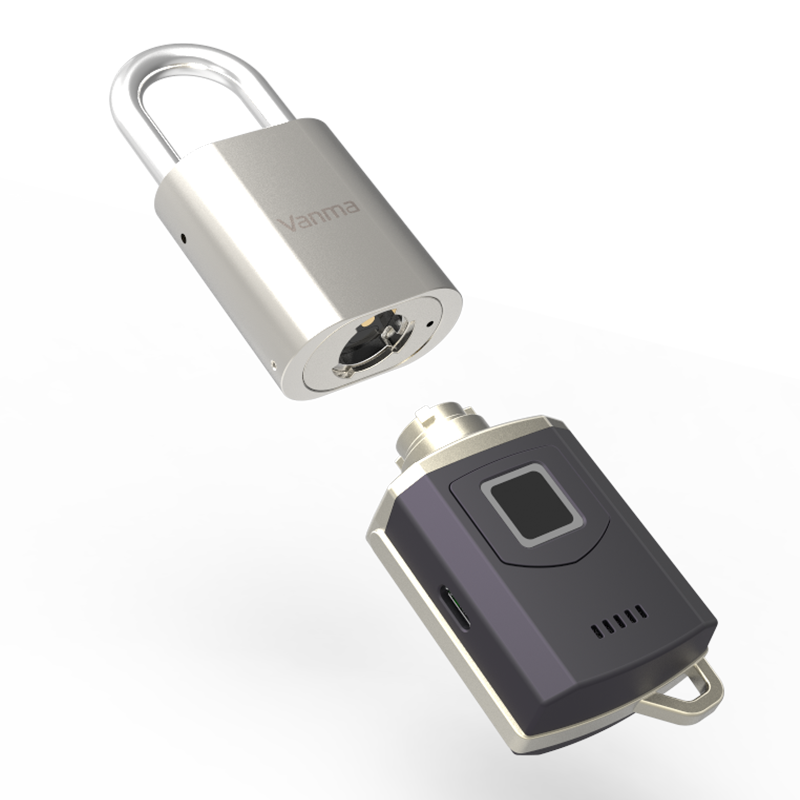
The Vanma electronic key takes a fundamentally different approach. Instead of relying on physical duplication, Vanma uses software-based authorization to manage access.
Key Features of Vanma Electronic Keys
- Passive lock design – the lock itself has no battery. Power comes from the rechargeable electronic key.
- AES256-bit encryption – all communications between key and lock are encrypted, preventing cloning.
- Permission-based access – administrators assign which locks a key can open, and at what times.
- Audit trail – every unlock attempt is stored in the key and uploaded to the system, providing accountability.
- Blacklist function – if a key is lost, it is simply added to the blacklist in the software. Locks remain unchanged.
In practice, this means that Vanma keys are not “duplicated.” Instead, new permissions are granted digitally.
Software-Based Authorization: How It Works
Unlike mechanical duplication, authorization in Vanma works through the management platform:
- One key, many locks: A single Vanma key can be programmed to open thousands of locks across multiple sites.
- Many keys, one lock: A single lock can accept multiple keys, each with different permission levels.
- Time-based access: Permissions can be temporary—for example, granting a technician access for a 4-hour maintenance window.
- Instant updates: Administrators can revoke or modify access remotely without changing any physical hardware.
This model eliminates the need for physical duplication and makes lost key management simple.
Medeco Duplication vs Vanma Authorization: Key Differences
| Feature | Medeco Key (Mechanical) | Vanma Key (Electronic) |
|---|---|---|
|
Duplication |
Controlled, requires locksmith |
No duplication possible |
|
Access Management |
Fixed once key is cut |
Flexible, software-defined |
|
Audit Trail |
None |
Every unlock recorded |
|
Lost Key |
Requires rekeying locks |
Disabled via blacklist |
|
Scalability |
Limited to physical keys |
Enterprise-wide, thousands of locks |
|
Flexibility |
Scalability |
Scalability |
Real-World Use Cases of Vanma Authorization

Telecom Sites in Peru
- Each engineer carries a personal electronic key.
- They request authorization remotely when needed.
- The system logs every unlock event, ensuring accountability.
Wind Farms and Power Substations in China
Managing multiple locks across substations was previously inefficient, with staff juggling dozens of mechanical keys. With Vanma:
- One key opens all authorized locks.
- Permissions are set according to job role and schedule.
- Operations are faster, safer, and more compliant with industry standards.
Logistics and Rail Transport in Kenya
Cargo containers on trains require secure, timed access. Vanma enables:
- Specific tasks downloaded to a key for each destination.
- Local staff can open containers only within authorized time frames.
- Audit records prove compliance and prevent theft.
These examples illustrate how software-based authorization solves problems mechanical systems cannot.
Why the Future of Key Management is Authorization, Not Duplication
Mechanical systems like Medeco remain reliable for small-scale, static applications. However, industries today face new challenges:
- Scale – enterprises manage thousands of access points across cities and countries.
- Compliance – energy, telecom, and transport sectors require audit records for security and regulation.
- Efficiency – downtime and administrative delays caused by lost keys or rekeying are no longer acceptable.
Authorization-based systems like Vanma address all these challenges:
- Lost keys do not require rekeying—just blacklist them.
- Managers can instantly modify permissions to adapt to emergencies.
- Every action is traceable, improving accountability and compliance.
For industries where uptime, accountability, and security matter, authorization is the future.
Conclusion
The Medeco key is a proven, high-security solution in the mechanical lock world. Its patented designs and duplication restrictions make it a strong choice for protecting individual facilities where physical duplication is the main risk.
But in an era of distributed operations, compliance requirements, and digital transformation, Medeco’s mechanical approach shows its limitations. Rekeying costs, lack of audit trails, and the burden of managing multiple physical keys create inefficiencies.
Vanma electronic keys offer a new model. By removing duplication entirely and replacing it with software-based authorization, Vanma enables flexible, scalable, and accountable access control. One key can open thousands of locks, permissions can be changed instantly, and every action is logged for traceability.
For organizations that want to move beyond simply preventing duplication and instead achieve full control over access, Vanma is not just an alternative—it is the next step.
Share:
Table of Contents
Try Vanma Electronic Lock
You can contact us to request samples, and to experience the convenience of Vanma electronic locks.
Contact Us Now