
If you are searching for how to cut off a padlock, the first thing to know is simple: only remove a padlock that you own or have clear permission to remove. A padlock may look like a small piece of metal, but it often protects private property, rented space, tools, vehicles, equipment, gates, or business assets. Cutting it without permission can create legal trouble, property disputes, and safety risks. So before you think about bolt cutters, grinders, or any other tool, ask yourself one question: do I have the legal right to remove this lock?
This article is written for homeowners, facility managers, farmers, trailer owners, warehouse staff, maintenance teams, and business owners who need to remove their own damaged, rusted, jammed, or forgotten padlock. It does not provide advice for breaking into property or bypassing someone else’s security. Instead, it explains the responsible way to handle a stuck padlock, when to try non-destructive options, when to call a locksmith, what safety issues to consider, and how to choose a better replacement lock afterward.
The safest way to deal with any locked padlock is to confirm permission before anything else. This may sound obvious, but it is the step many people skip when they feel frustrated. Maybe the key is missing. Maybe the lock is rusted. Maybe the gate needs to be opened today. Even then, permission matters. A lock is a physical sign that something is being protected, and removing it without authority can be treated as damage, trespass, or unauthorized entry.
If the lock is on your own garden shed, private toolbox, farm gate, trailer coupler, storage cabinet, or old chain, the situation is usually straightforward. If the lock is on a rented storage unit, apartment gate, shared warehouse area, jobsite entrance, electrical room, parking barrier, or business facility, the situation is different. In those cases, get approval first. For businesses, written approval is better than a casual conversation because it creates a clear record of who authorized the removal and why it was necessary.
Most people do not plan to cut off a padlock. They search for this topic because something has already gone wrong. The key may be lost, the lock may be jammed, the shackle may be frozen by rust, or the person who controlled the key may no longer be available. In a home setting, this can be annoying. In a business setting, it can delay work, block access to equipment, or create a safety issue.
The real reason matters because it helps you choose the right solution. A lock with a lost key is not the same as a lock damaged by corrosion. A lock on a low-value storage box is not the same as a lock on a fuel cabinet, machine guard, trailer, or facility gate. Before cutting, take a moment to understand the problem. You may find that a spare key, lubricant, lock owner approval, or locksmith service is a better answer than cutting.
Lost keys are probably the most common reason people ask how to cut off a padlock. A key can disappear in a drawer, vehicle, toolbox, office, coat pocket, or old key ring. In a company, the key may leave with an employee. On a farm or worksite, several people may use the same lock, and nobody remembers who had the key last. It is frustrating, but it is also a reminder that key control is part of security.
Before removing the lock, check all reasonable places for spare keys. Ask the people who may have used the lock. Look for key tags, lock numbers, key cabinets, maintenance logs, storage records, and old equipment files. If the padlock is part of a business system, there may already be a key control record. Spending ten minutes looking for the right key can save money, avoid damage, and keep the surrounding hardware intact.
Outdoor padlocks live a hard life. Rain, dust, mud, road salt, snow, humidity, and temperature changes can all damage the lock over time. A lock on a farm gate, trailer, shed, yard fence, marine storage box, or outdoor equipment cabinet may look fine from the outside while the inside parts are already corroded. The key may go in, but the cylinder may not turn. The shackle may move slightly, then stop.
In this situation, cutting should not be the first move. Try a lock-safe lubricant first. Apply it into the keyway and around the shackle area, then give it time to work. Move the key gently rather than forcing it. If the key begins to bend, stop. A broken key inside the cylinder makes the job harder. If the lock protects something valuable, or if the surrounding gate or hasp is expensive, calling a locksmith can be cheaper than damaging the whole setup.
Sometimes a padlock blocks access to something that cannot wait. This may include emergency tools, animal feed, service equipment, electrical access, construction materials, machinery controls, or business inventory needed for urgent work. In these cases, the pressure is higher. Still, the person removing the lock should be authorized to do so. Fast access does not remove the need for responsibility.
For companies, farms, warehouses, and facilities, emergency lock removal should be part of a written process. Who can approve it? Who should witness it? Should photos be taken before and after removal? How should the removed lock be recorded? These details may feel small, but they protect the business and the employees involved. Good security is not just about strong locks. It is also about clear procedures.
Cutting off a padlock is permanent. Once the shackle or body is damaged, the lock is finished. That is why non-destructive options should come first whenever time and safety allow. In many real cases, the lock does not need to be cut at all. It needs the right key, a little lubricant, a phone call, or a locksmith who can remove it with less damage.
Think of the padlock as the last link in a small security system. Around it there may be a chain, hasp, gate latch, storage door, trailer coupler, tool cabinet, or machine guard. If you rush and damage those parts, the repair cost may be much higher than the cost of the lock. Slow down, check the simple options, and choose the least damaging route.
The most practical first step is to look for a spare key. This sounds too simple, but it works more often than people expect. Check office drawers, maintenance rooms, vehicle glove boxes, toolbox trays, storage cabinets, key hooks, and labeled envelopes. Ask coworkers, family members, tenants, site supervisors, or previous users. In a business, check whether the lock has a number or tag that matches a key log.
If you run a company and this problem happens often, it may be time to improve key management. A padlock is only useful if the right person can open it when needed. Poor key control turns a security tool into an access problem. For work sites, warehouses, farms, rental yards, and equipment storage areas, keeping duplicate keys in a controlled location can prevent future lock removal.
If the key is available but the padlock will not open, the problem may be dirt, moisture, or corrosion. A lock-safe lubricant can help free the internal parts. Apply it carefully into the keyway and near the shackle openings. Wait long enough for the lubricant to move inside. Then insert the key and turn it gently. Do not use heavy force, because the key can snap.
This method is most useful when the lock is stiff rather than fully broken. If the lock has been outdoors for years, has visible corrosion, or protects important property, do not keep forcing it. A locksmith may be able to open or remove it while reducing damage to the surrounding hardware. If the lock does open after lubrication, replace it soon. A lock that almost failed once may fail again when you least want it to.
If the padlock is on managed property, contact the person responsible for that property before doing anything. This includes storage units, rental homes, commercial buildings, apartments, construction sites, shared warehouses, parking areas, utility rooms, and jobsite gates. Many properties have specific lock removal rules. Some require identity checks. Some require staff to be present. Some require written approval.
Following the proper process may feel slower, but it protects you. It also prevents disputes after the lock is removed. If you are a business owner or facility manager, this is especially important. Employees should not guess whether they can cut a lock. They should know exactly who to call, what to record, and what replacement lock should be used afterward.
Different padlocks require different removal methods, and not every tool is suitable for every situation. A small luggage-style lock is very different from a hardened steel security padlock. A lock on a loose chain is different from a lock tight against a hasp. A lock in an open yard is different from a lock near fuel, paint, dry grass, cardboard, or other flammable materials.
This section gives a general overview of common tools people associate with padlock removal. It is not a recommendation to force entry or remove locks without permission. The safer choice is usually to call a locksmith when the lock is high-security, when the location is sensitive, or when cutting tools could damage nearby property.
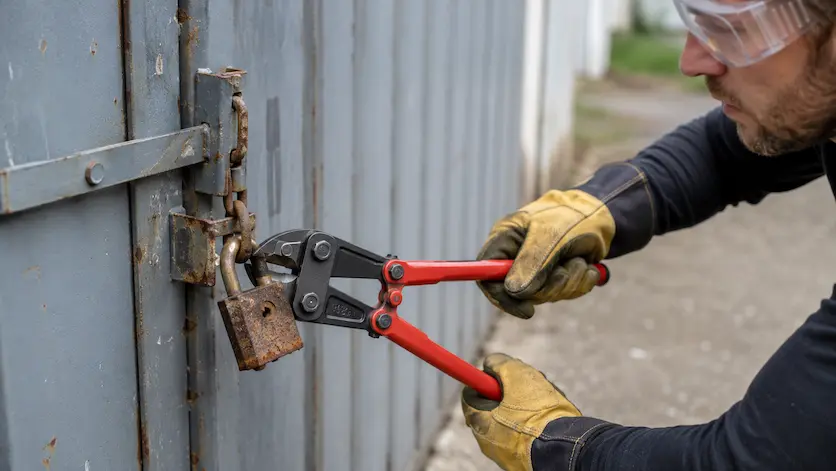
Bolt cutters are often associated with cutting light-duty padlocks, chains, and soft metal shackles. They apply strong pressure through hardened jaws. However, they do not work well on every lock. Many better padlocks use hardened steel shackles that are designed to resist simple cutting. The thicker and harder the shackle, the more difficult it becomes.
Another issue is space. Bolt cutters need room to open and close properly. If the padlock sits close to a gate latch, hasp, recessed box, trailer coupler, or tight chain loop, it may be hard to position the tool safely. Poor positioning increases the chance of slipping, damaging the hardware, or injuring your hands. If the lock is protecting valuable property, a locksmith may be the more sensible option.
An angle grinder can cut many metal parts, including some padlock shackles, but it brings serious safety concerns. It can throw sparks, produce sharp metal fragments, create heat, and damage the surface around the lock. It should never be used carelessly, and it should not be used near fuel, chemicals, dry grass, sawdust, paper, packaging, vehicles with exposed fuel areas, or enclosed spaces without proper controls.
If a grinder is considered for authorized lock removal, the work area must be safe first. People should stand back. Eye protection, gloves, hearing protection, long sleeves, and closed-toe shoes are important. The surrounding material should be checked before and after cutting. For many homeowners and business users, hiring a locksmith is safer than trying to control sparks and metal dust around valuable property.
A hacksaw may work on some small or low-security locks, but it is usually slow and tiring. Many padlocks are made to resist sawing, especially those with hardened shackles. A hacksaw also requires patience and a stable work position. If the lock moves while you are cutting, the blade can slip and injure your hand or scratch nearby surfaces.
For this reason, a hacksaw is rarely the best option for a serious lock. It may be useful in a controlled situation with a light-duty lock and clear permission, but it is not ideal for heavy-duty outdoor locks, trailer locks, commercial padlocks, or industrial security hardware. If the lock is important enough to protect valuable property, it is usually important enough to remove properly.
A licensed locksmith is often the best answer when you need to remove a padlock safely, legally, and with less risk of damage. Locksmiths handle stuck, lost-key, damaged, and high-security lock situations every day. They can also help document the work, which can be useful for businesses, landlords, storage facilities, and property managers.
Calling a locksmith is especially wise when the lock is attached to a valuable gate, trailer, tool cabinet, industrial cabinet, storage unit, or commercial property. The locksmith may be able to open or remove the lock while protecting the hardware around it. Afterward, they can recommend a better replacement lock based on the real use environment.
If you are authorized to remove the lock and cutting is truly necessary, safety should guide every decision. Many injuries happen because people treat padlock removal as a quick task. They hold the lock by hand, rush the tool, stand too close, forget eye protection, or ignore sparks. The lock may be small, but the tool used to remove it can be dangerous.
Before removing a padlock, inspect the area. What is behind the lock? What is nearby? Is there fuel, paint, plastic, cardboard, dry grass, dust, or a vehicle surface close to the work area? Could the lock swing or fall after removal? Could someone walk into the work zone? A few safety checks can prevent a small job from becoming an accident.
Protective gear is not optional when cutting metal. At a minimum, use safety glasses, durable gloves, long sleeves, and closed-toe shoes. If power tools are involved, hearing protection is also a smart choice. Metal fragments can fly farther than expected, and sparks can land on clothing, skin, or nearby surfaces.
Good protective gear does not make the job risk-free, but it gives you a safer margin. If you do not have the right gear, do not improvise. A padlock removal job can wait, or a locksmith can handle it. It is not worth an eye injury, hand injury, burn, or damaged equipment.
A moving lock is harder to control. If the padlock swings, twists, or shifts during removal, the tool can slip. That is why stability matters. Avoid holding the lock in a way that puts your fingers near the cutting area. Keep hands, clothing, and loose items away from the tool path.
This is also why tight spaces are risky. If the lock is tucked inside a hasp, recessed latch, chain loop, or trailer coupler, there may not be enough room to work safely. In that case, do not force the situation. A locksmith or maintenance professional may have a safer way to remove the lock without damaging the surrounding part.
People, pets, and bystanders should stay away from the work area. If a power tool is used, sparks and fragments can travel in unexpected directions. Remove flammable materials nearby. Check for dry leaves, packaging, fuel containers, oily rags, plastic covers, and other items that can catch fire or melt.
After the lock is removed, inspect the area again. Do not walk away immediately if sparks were created. Make sure nothing is smoldering, hot, or damaged. This extra check is especially important on farms, construction sites, workshops, warehouses, and outdoor storage yards.
There are many situations where cutting the lock yourself is the wrong choice. If the lock is on someone else’s property, do not cut it. If the lock is on rented or managed property, do not cut it without approval. If the lock protects electrical access, hazardous materials, commercial equipment, emergency systems, vehicles, storage units, or shared facilities, involve the responsible person or a licensed professional.
You should also avoid cutting the lock yourself if you are not comfortable with the tool required. There is no shame in calling a locksmith. In fact, it is often the smarter and cheaper decision. Damaging a gate, trailer latch, machine cabinet, or storage door can cost much more than professional lock removal.
Removing the padlock solves the immediate access problem, but it does not solve the reason the problem happened. After the lock is gone, take a few minutes to look at the bigger picture. Was the key lost because too many people used it? Did the lock rust because it was not made for outdoor conditions? Was the lock too weak for the value of the property? Was the hasp already damaged?
A replacement lock should not be chosen only by price. It should match the real environment and risk level. A lock for an indoor locker does not need the same features as a lock for a farm gate, trailer, equipment yard, warehouse door, or utility cabinet. The goal is to avoid repeating the same problem in a few months.
If the old lock failed outdoors, choose a weather-resistant padlock with a suitable body and shackle material. If the lock was easy to damage, choose a stronger model with a hardened shackle and solid body. If the problem was lost keys, improve key control or consider a lock system that better fits your access management needs.
For businesses, the best lock is not always the strongest lock. It is the lock that fits the job, the users, the environment, and the security process. A warehouse gate, fleet trailer, tool crib, storage cage, and maintenance cabinet may all need different lock choices. Good security starts with asking what the lock needs to protect and who needs access.
A padlock is only as strong as the hardware around it. After removal, inspect the hasp, chain, latch, bracket, hinge, gate, trailer coupler, or cabinet door. If the surrounding hardware is thin, cracked, loose, bent, or rusted, a new padlock alone will not improve security very much.
Think of the whole setup like a chain. The weakest link decides the real strength. A strong padlock on a weak hasp is like a heavy front door with a loose frame. It may look secure, but it will not perform well under stress. Replacing damaged hardware at the same time as the lock is often the better long-term fix.
The first mistake is cutting a padlock without clear permission. That can turn a simple access issue into a legal issue. The second mistake is using the wrong tool in the wrong place. For example, using a spark-producing tool near fuel, dry grass, packaging, or painted surfaces can be dangerous. The third mistake is ignoring the surrounding hardware and damaging something more expensive than the lock itself.
Another common mistake is replacing the failed lock with the same type of cheap lock. If the first lock rusted, jammed, or failed under normal use, the replacement should be better suited to the environment. If keys were lost, the access process should be improved. A lock problem is often a sign of a system problem, not just a hardware problem.
For businesses, repeated padlock removal is usually a sign that key control and access management need attention. If employees often lose keys, share keys casually, leave with keys, or use different locks without records, access becomes messy. That can slow down work, create security gaps, and lead to unnecessary lock replacement costs.
A simple lock management process can help. Record which locks are used, where they are installed, who has keys, where spare keys are stored, and what to do when a key is lost. For higher-risk areas, consider stronger locks, controlled key systems, audit-friendly access processes, or professional security advice. The point is not to make access difficult. The point is to make access clear, controlled, and reliable.
Learning how to cut off a padlock is really about making the right decision when a lock blocks access. If the lock is yours and you have the legal right to remove it, start with the least damaging options first. Look for spare keys, try lubricant if the lock is jammed, contact the responsible person if the property is managed, and call a locksmith when the lock or surrounding hardware is valuable.
If cutting becomes necessary, treat it as a safety task, not a quick shortcut. Wear protective gear, keep people away, check the surrounding area, and avoid risky conditions. After the padlock is removed, choose a better replacement and inspect the hardware around it. A padlock is small, but the way you handle it says a lot about how seriously you take safety, property rights, and long-term security.
It is legal only when you own the padlock or have clear permission from the owner or responsible person. If the lock is on rented property, shared property, business property, a storage unit, a jobsite, or a managed facility, do not remove it without approval. When in doubt, contact the property manager, landlord, employer, storage facility, or a licensed locksmith before taking action.
Before cutting off a padlock, look for spare keys, check key records, ask previous users, and try lock-safe lubricant if the key is available but the lock is stuck. If the padlock is on managed or rented property, contact the responsible person first. Cutting should be the last option because it destroys the lock and may damage nearby hardware if done poorly.
No, bolt cutters cannot cut every padlock. Light-duty padlocks may be easier to remove, but many security padlocks use hardened steel shackles that are designed to resist cutting. The available space around the lock also matters. If the lock is close to a hasp, chain, gate, or trailer part, bolt cutters may be difficult or unsafe to use.
You should call a locksmith if the lock is high-security, the surrounding hardware is valuable, the property is commercial or rented, or you are not comfortable using cutting tools. A locksmith can often remove the padlock with less damage and can recommend a better replacement. For businesses, locksmith service also helps create a more professional and accountable process.
At minimum, safety glasses, work gloves, long sleeves, and closed-toe shoes are recommended when removing a padlock by force. If any power tool is used, hearing protection and extra care around sparks are important. Keep people away from the work area and remove flammable materials nearby. If you do not have the right safety gear or experience, hire a locksmith instead.
A padlock can get stuck because of rust, dirt, moisture, worn internal parts, a bent shackle, or long outdoor exposure. This is common for locks used on gates, sheds, trailers, farms, yards, and storage areas. A lock-safe lubricant may help if the lock is only stiff. If the key starts bending or the lock still will not open, stop forcing it and consider professional help.
Choose the replacement padlock based on where it will be used. For outdoor use, look for weather-resistant materials and a strong shackle. For higher-value property, choose a stronger security padlock with a solid body and hardened shackle. For business use, also think about key control, spare key storage, user access, and how the lock fits your daily operation.
Use a simple key control system. Label keys clearly, store spare keys in a controlled place, record who has access, and avoid giving the same key to too many people without tracking it. For companies, farms, warehouses, and rental yards, a basic key log can prevent many future problems. If access is frequent, consider a more organized lock and key management process.

