
A shipping container padlock should do more than close a door. For ports, warehouses, energy sites, construction yards, telecom bases, and outdoor storage areas, the real question is whether the lock can handle weather, forced entry attempts, frequent staff changes, and access management problems over time. A cheap padlock may look acceptable on the first day, but it can become a weak point when containers hold tools, spare parts, cables, fuel equipment, maintenance materials, or high-value inventory.
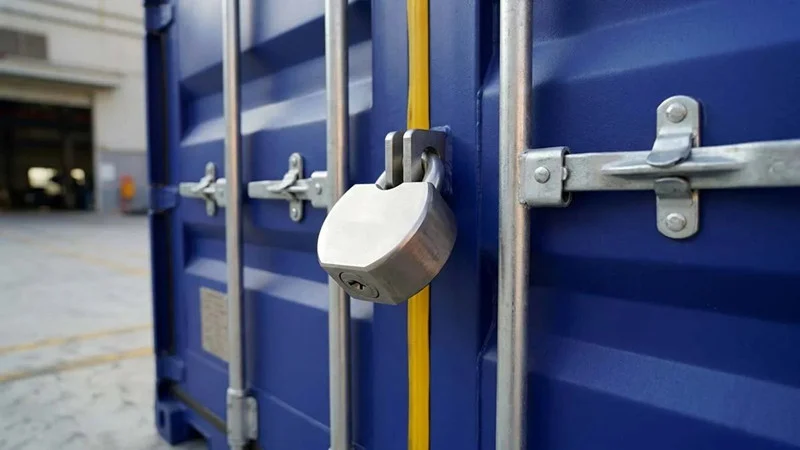
For B2B buyers, choosing the right shipping container padlock is not only about shackle size or price. It is about reducing unauthorized access, keeping responsibility clear, avoiding lost-key problems, and making container security easier to manage across many locations. This article explains how purchasing managers, facility managers, security managers, and project owners can evaluate container padlocks from a practical industrial-use point of view.
Shipping containers are often placed in exposed, busy, and hard-to-monitor areas. They may sit at a logistics yard, outside a warehouse, beside a construction project, near a power substation, or inside a temporary storage zone. In these places, the lock faces more than normal daily use. It may face rain, dust, salt air, vibration, rough handling, attempted cutting, and access by different workers, contractors, or third-party service teams.
A standard household-style lock is not designed for this kind of environment. Even a strong-looking mechanical padlock can create management issues when keys are copied, shared, lost, or not returned after a contractor leaves. For one container, this may seem manageable. For dozens or hundreds of containers across multiple sites, key control can become a serious security and operations problem.
A shipping container padlock needs to fit the physical structure of container doors while also resisting outdoor damage and forced opening. Many containers use lock boxes or hasp systems that limit the space available for the lock body and shackle. If the lock is too large, it may not fit. If it is too small, it may leave the shackle exposed and easier to attack.
The best option depends on how the container is used. A storage container at a construction site may need strong resistance to cutting and impact. A container used by a logistics company may need faster authorized access for multiple employees. A container storing spare parts for telecom or power infrastructure may need a clear record of who opened it and when. That is why buyers should evaluate both physical strength and access control, not just the visible lock body.
The right padlock choice starts with the operating environment. A container placed indoors at a controlled warehouse has different requirements from one placed near a port, mine, solar farm, railway site, or coastal facility. Before choosing a model, buyers should confirm the container door structure, exposure level, user group, access frequency, security risk, and expected service life.
A strong lock body helps reduce damage from prying, impact, and rough site handling. For outdoor industrial use, buyers should look for solid construction, corrosion-resistant materials, and a design that protects the locking mechanism from dirt and moisture. Stainless steel, hardened alloy, and reinforced engineering materials are often considered for harsh environments, depending on the security level and budget.
The shackle is one of the most attacked parts of a container lock. A short, protected, or hidden shackle usually provides better resistance than a long exposed shackle. When the container has a lock box, a suitable padlock should sit inside the protected space with minimal exposed metal. This makes bolt cutter access harder and helps reduce casual theft attempts.
Weather resistance matters because containers are often used outdoors for years. Rain, humidity, dust, freezing temperatures, heat, and salt spray can damage weak locks. A shipping container padlock for ports, energy facilities, and construction sites should be designed to keep working in harsh conditions. Buyers should pay attention to waterproof and dustproof ratings, corrosion resistance, and temperature tolerance.
Key control is often the hidden cost of container security. If one mechanical key can be copied freely, the company may lose control without knowing it. If the key is lost, replacing locks across a site can be expensive and time-consuming. For companies managing many containers, access permission should be controlled by role, time, area, or task, especially when contractors and temporary workers are involved.
A mechanical shipping container padlock can be enough for simple storage with low access frequency and low security risk. It is familiar, easy to buy, and simple to use. However, mechanical locks become harder to manage when a company needs access records, temporary permissions, lost-key control, or centralized management across different sites.
A passive electronic padlock gives companies another option. The lock itself does not need a battery or wiring. The authorized electronic key powers the lock during operation and records access activity. This type of system can help industrial users manage container access without changing the basic physical use of a padlock. Vanma, for example, provides passive electronic lock solutions that are more suitable for B2B sites where many locks and many users need to be managed together.
Shipping container padlocks are used in more places than sea freight. Many companies use containers as flexible, movable, and durable storage units. Because containers can be placed almost anywhere, the lock must match the security level of the site rather than the container alone.
- Ports and logistics yards that store cargo, spare parts, tools, and temporary goods.
- Construction sites that store machines, cables, generators, fuel-related equipment, and building materials.
- Warehouses that use containers for overflow storage or outdoor inventory protection.
- Telecom and power projects that store maintenance tools, cabinets, components, and emergency spare parts.
- Oil, gas, mining, and utility sites where containers may be placed in remote or harsh locations.
- Retail, event, and public facility operators that use containers for temporary storage during seasonal operations.
Most container security failures are not caused by the container itself. They are caused by weak locks, poor key management, unclear access responsibility, and delayed response after incidents. A buyer should think about how the lock will be managed after installation, not only how strong it looks when new.
Lost keys can turn into a long-term security risk. In many industrial sites, keys pass between employees, guards, contractors, and maintenance teams. If the company cannot confirm who still has a key, the container is not truly controlled. Replacing locks is possible, but it costs time and may interrupt daily operations.
When valuable goods are missing, many companies first ask the same questions: who opened the container, when did it happen, and was that access approved? A traditional padlock cannot answer these questions. Without access records, security teams may spend more time checking cameras, interviewing staff, and reviewing manual logs.
A lock that fails because of rust, water, dust, or freezing conditions can delay work and create extra maintenance cost. In remote sites, even a small lock failure can become a serious problem because workers may need to cut the lock, replace it, and report the incident. For sites with many containers, lock durability has a direct effect on operating efficiency.
Access control helps companies move from “who has a key” to “who is allowed to open this lock at this time.” This difference is important for industrial sites because access needs often change. A contractor may need access for one day. A maintenance team may need access only during a service window. A warehouse supervisor may need access to several containers but not all of them.
With a passive electronic padlock system, permissions can be adjusted through software instead of distributing many physical keys. The system can support temporary authorization, user-based access rights, and opening records. For container security, this means managers can reduce uncontrolled key circulation while keeping daily work practical.
Purchasing managers should avoid choosing a shipping container padlock based only on the lowest unit price. The real cost includes lock replacement, key replacement, downtime, incident investigation, maintenance trips, and possible theft loss. A slightly better lock may save more money if it reduces these risks over several years.
- Confirm whether the padlock fits the container lock box or hasp structure.
- Check whether the lock is suitable for outdoor temperature, dust, rain, and humidity.
- Ask how lost keys are handled and whether permissions can be revoked.
- Review whether access records are needed for security audits or internal responsibility.
- Compare the cost of one lock with the total cost of managing many locks over time.
- Ask whether the supplier can support future expansion to more containers, sites, or users.
Facility and security managers usually care less about the purchase order and more about daily control. They need a lock that staff can use correctly, guards can supervise, and managers can review when something goes wrong. A strong lock that is difficult to manage may still create trouble if workers bypass procedures or share keys informally.
For high-risk containers, managers should consider a system that supports controlled authorization and audit trails. This is especially useful for containers storing high-value tools, maintenance equipment, telecom parts, electrical components, fuel-related accessories, or sensitive materials. The lock should help the site reduce risk without slowing down approved work.
Durability is not just a product feature; it is a maintenance decision. A container padlock that works well in an office storage room may not survive years of outdoor use. Ports may expose locks to salt air. Construction sites may expose locks to dust, mud, and impact. Energy and telecom sites may expose locks to heat, cold, and long service intervals.
For buyers, durability should be checked through material, sealing design, weather resistance, and supplier experience in industrial environments. If a site is remote, the cost of sending someone to replace a failed lock may be much higher than the price difference between a low-cost lock and an industrial-grade lock.
Vanma can be considered when a company needs more than a simple mechanical shipping container padlock. Its passive electronic lock system is designed for industrial access control scenarios where many locks, many users, and outdoor conditions need to be managed together. The lock does not require internal battery power, while the electronic key supports authorization and access record management.
This type of solution is more suitable for logistics yards, telecom sites, power facilities, industrial warehouses, and project-based storage areas where managers want to know who opened which lock and when. It is not necessary for every low-risk container, but it can be valuable when the cost of unauthorized access is high.
The cheapest lock is not always the lowest-cost lock. For a single low-value container, a basic lock may be enough. But for companies operating many containers, the long-term cost includes key management, lock replacement, downtime, theft investigation, and staff time. These costs are often hidden until something goes wrong.
A better purchasing approach is to classify containers by risk level. Low-risk storage may use basic mechanical locks. Medium-risk storage may need stronger weatherproof padlocks. High-risk or frequently accessed containers may benefit from passive electronic padlocks with authorization and audit records. This gives buyers a more balanced budget instead of applying the same lock to every situation.
A practical selection framework helps teams avoid overbuying or under-protecting. Start by identifying what the container stores, where it is located, who needs access, and what happens if unauthorized access occurs. Then match the lock type to the risk level and daily workflow.
- For low-value indoor storage, choose a reliable padlock that fits the container hasp correctly.
- For outdoor storage, choose a weather-resistant shipping container padlock with better corrosion protection.
- For high-value tools, spare parts, or sensitive assets, consider stronger physical protection and access records.
- For multiple sites or many users, choose a system that supports permission control and lost-key management.
- For remote industrial sites, prioritize durability and reduced maintenance visits.
The best shipping container padlock for industrial use depends on the site risk, container structure, and access management needs. For simple storage, a heavy-duty mechanical padlock with a protected shackle may be enough. For ports, warehouses, telecom sites, power facilities, and construction yards, buyers should consider weather resistance, anti-cutting design, key control, and whether access records are required. If many people need controlled access, a passive electronic padlock may be a better long-term choice.
Yes, waterproof and dustproof performance is important for most outdoor containers. Containers are often exposed to rain, humidity, dust, mud, and temperature changes. If the lock mechanism corrodes or jams, workers may need to cut the lock and replace it, which causes downtime. For outdoor industrial sites, buyers should choose a padlock designed for harsh environments instead of a basic indoor lock.
A hidden or protected shackle is usually better because it reduces the exposed area that can be attacked by bolt cutters or cutting tools. Many shipping containers use lock boxes that help cover the padlock. However, the padlock must fit the lock box correctly. Before buying in bulk, buyers should test the lock with the actual container door hardware.
With mechanical padlocks, companies usually need to replace the lock or reissue keys when a key is lost. This can become expensive when many containers are involved. With a passive electronic lock system, managers can revoke or adjust user authorization through software, depending on the system design. This helps reduce the risk of uncontrolled access after staff turnover or contractor changes.
Access records are not necessary for every container, but they are very useful when the container stores valuable goods, tools, spare parts, or sensitive equipment. An audit trail helps managers check who opened the lock, when it was opened, and whether the access was authorized. This can reduce disputes, improve accountability, and support internal security reviews.
With a traditional mechanical system, one master key can open multiple locks, but this creates risk if the key is copied or lost. With a passive electronic system, one authorized electronic key can open different locks based on permissions. The advantage is that access can be controlled by user, lock, time, and task. This is more suitable for companies that manage many containers across different locations.
A shipping container padlock should be chosen according to real site risk, not just appearance or price. For industrial buyers, the most important factors include fit, shackle protection, weather resistance, durability, key control, access responsibility, and long-term maintenance cost. A basic mechanical padlock may work for low-risk storage, but higher-risk containers often need stronger access management.
For companies managing many containers, outdoor storage areas, contractor access, or high-value equipment, passive electronic padlocks can provide a more controlled way to manage security. Vanma is one option for industrial users who want container locks that support authorization, audit records, and practical daily operation without putting batteries inside the lock body. The right choice is the one that protects assets while keeping approved access simple, traceable, and manageable.

