
Electronic locks for home are designed for convenience first, but facility security is judged by control, durability, accountability, and long-term operating risk. That is why a purchasing manager should not choose a lock for an industrial cabinet, telecom site, warehouse gate, utility room, or equipment enclosure only because it looks modern or works well on a residential front door. A home lock may unlock by PIN, fingerprint, app, or card, yet it may still lack the functions a business site needs every day: authorization by role, access records, outdoor protection, lost-key control, and clear responsibility after an incident.
For B2B buyers, the better question is not simply whether electronic locks for home are smart enough. The real question is whether the lock can survive the working environment and support your access management process. A warehouse door, outdoor cabinet, fuel station equipment box, power distribution room, or telecom enclosure has different risks from a house. More people may need access. Contractors may come and go. Keys may be shared without approval. Doors may be exposed to rain, dust, vibration, heat, or cold. In those conditions, the wrong lock can create hidden costs that only appear after the first service delay, missing key, or unauthorized opening.
The phrase electronic locks for home usually points to residential door locks, but many business buyers use the same search terms when they are still learning the category. They may start with familiar consumer products, then discover that an industrial site needs a stronger access control model. This article explains that gap in practical terms, so procurement teams can compare home-style electronic locks with commercial and industrial electronic locking systems before making a purchase decision.
This distinction matters because home locks and industrial locks solve different problems. A home lock helps a family avoid carrying keys and allows simple access for trusted people. An industrial locking system must manage many users across many locks, support temporary permissions, record who opened which lock and when, and keep working in harsher environments. If your site involves distributed assets, shared maintenance teams, or outdoor equipment, the purchase decision should be based on operational control rather than consumer convenience.
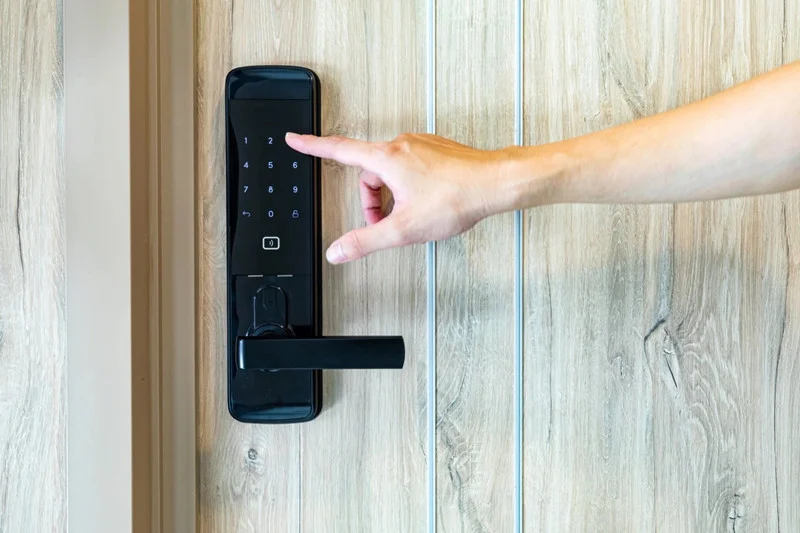
Electronic locks for home are good at making daily entry easier. Most residential models are built around simple user experience, such as entering a PIN code, using a fingerprint, opening through a mobile app, or connecting with a smart home platform. For apartments, private houses, small offices, and low-risk indoor rooms, these features can be useful. They reduce dependence on mechanical keys and make it easier to give short-term access to family members, cleaners, guests, or tenants.
They also have a lower learning curve. A homeowner usually wants a product that can be installed quickly and managed from a phone without training. That is why residential electronic locks often focus on appearance, app control, voice assistant compatibility, and simple password management. These benefits are real, but they do not automatically make the lock suitable for a facility with strict access rules, many users, and assets that require traceable management.
Convenience means people can open a door more easily. Access control means the right person can open the right lock at the right time, and the manager can prove what happened later. This difference is easy to overlook during purchasing. A lock may feel advanced because it has a keypad or fingerprint reader, but if the same code is shared among several workers, the site still has weak accountability. If a contractor leaves the project and the code is not changed in time, the risk remains.
For industrial and commercial use, access control should support management rules, not just unlock methods. A security manager needs to know whether permissions can be issued by department, work order, time period, or site area. A facility manager needs to know whether access history can be checked after a fault, theft, or inspection. A project owner needs to know whether the system can scale from one room to hundreds of locks without creating a heavy maintenance burden.
Electronic locks for home often fall short when they are used in sites with multiple users, outdoor exposure, and strict accountability requirements. The issue is not that residential locks are poor products. The issue is that they are made for a different environment. A residential lock may be expected to open a front door several times a day. An industrial lock may need to protect a remote cabinet, a substation gate, a warehouse zone, or a fuel-related equipment box where unauthorized access can cause financial loss, service interruption, or safety concerns.
The biggest weakness is usually management depth. Many home-style locks can store several fingerprints or PIN codes, but they may not offer clear audit trails, centralized permission control, or reliable lost-key response. In a business setting, that can become a serious problem. If a lock only tells you that a code was used, but not which authorized person opened the lock under which task, it may not provide enough evidence for internal review or compliance needs.
Shared PIN codes are convenient at first, but they can weaken access control very quickly. In a small home, one code may be acceptable because the user group is limited and trusted. In a warehouse, telecom station, school facility, bank equipment room, or utility site, a shared code can spread beyond the approved team. Once a code is copied into a message group or told to a subcontractor, it becomes difficult to know who actually entered the area.
A better business-grade system should allow each user to have separate authorization. When a person leaves the company, changes roles, or finishes a temporary task, the manager should be able to remove or adjust that permission without replacing the lock. This is one reason many industrial buyers look beyond ordinary electronic locks for home and consider passive electronic locks, cabinet locks, access control padlocks, or centralized lock management systems.
Battery-powered residential locks can work well on a front door because the owner is nearby and can replace batteries when needed. In distributed industrial sites, battery management becomes more complicated. A facility team may manage locks across outdoor cabinets, remote gates, telecom shelters, power equipment rooms, or storage areas. If every lock requires local battery replacement, maintenance planning becomes harder and lock failure can delay field work.
This is where passive electronic locks offer a different approach. A passive lock has no battery inside the lock body. The electronic key supplies power during unlocking, so the lock itself can remain sealed and simple. For outdoor and distributed assets, this can reduce battery maintenance at the lock point and improve reliability in places where regular battery checks are difficult. Vanma, for example, focuses on passive electronic lock systems for industrial access management, where one electronic key can be authorized to open many assigned locks under controlled permissions.
Industrial sites need a lock system that supports daily operations, not just a lock that opens without a mechanical key. A purchasing manager should look at how the lock will be used by real people in real work conditions. Who needs access? How often do they open the lock? Is the site indoors or outdoors? Is the lock installed on a door, cabinet, gate, meter box, telecom enclosure, storage cage, or equipment room? Are contractors involved? Is an access record required after each visit?
These questions shape the final choice. A lock used on a private office door may not need the same durability as a lock used on a power cabinet. A warehouse internal room may not need the same weather protection as a remote telecom site. A fuel station equipment box may need stricter permission control than a general storage closet. When buyers compare electronic locks for home with business-grade solutions, the most important difference is whether the lock system fits the operating process.
Outdoor durability should be discussed before price, because the cheapest lock can become expensive if it fails in rain, dust, heat, cold, or vibration. Residential electronic locks are usually designed for protected doors, and some models are only suitable for indoor or sheltered use. Industrial locks may face wider temperature changes, direct rain, dust, corrosion risk, repeated operation by different workers, and physical impact during maintenance work.
For facility buyers, the specification sheet should be checked carefully. Look for waterproof and dustproof ratings, operating temperature range, lock body material, corrosion resistance, and the way the electronic parts are protected. A lock used on outdoor cabinets or gates should not be selected only by appearance. It should be selected by whether it can keep working in the specific environment where the asset is located.
Audit trails are one of the biggest reasons business buyers move beyond simple electronic locks for home. In many facilities, the manager does not only need to open or close a lock. The manager needs to know who opened it, when it was opened, which lock was opened, and whether the activity matched an approved task. This information is valuable after equipment loss, safety checks, service disputes, or internal inspections.
Without audit records, access management depends too heavily on trust and memory. If several people know the same code, it is difficult to prove responsibility. If mechanical keys are copied or lost, the risk becomes even harder to control. A lock management system with access logs gives security managers a clearer basis for review. It also helps purchasing teams justify the investment because the system supports both security and operational accountability.
Business and industrial buyers often need electronic locking solutions for assets that are more complex than a home entrance. These assets may be spread across large sites or remote locations, and they may be opened by different departments, contractors, or inspection teams. In these scenarios, the lock becomes part of the facility management process rather than a single piece of hardware.
Typical applications include telecom cabinets, power distribution boxes, railway equipment rooms, warehouse storage zones, server cabinets, streetlight control cabinets, fuel station equipment boxes, utility rooms, and outdoor gates. These sites usually need controlled access, durable lock bodies, and records that can be checked later. A home-style electronic lock may help with entry, but it may not provide enough control for these distributed and higher-risk assets.
Telecom cabinets and remote communication sites often require access by internal technicians, outsourced maintenance teams, and emergency service staff. The challenge is not only preventing unauthorized access. It is also managing who can open which cabinet and when. If the site uses ordinary keys, keys may be copied, shared, or kept after a contractor leaves. If it uses a simple home-style electronic lock, the system may still lack centralized permission control and reliable audit records.
A passive electronic lock system can be a better fit for this type of environment because permissions can be assigned to the electronic key, while the lock remains passive and durable. The manager can authorize access for specific areas or time periods, and opening records can support later review. This is especially useful when assets are widely distributed and regular physical supervision is difficult.
Power and utility facilities need locks that support safety and accountability. A distribution cabinet, meter box, substation gate, or pump room may be opened for inspection, repair, emergency handling, or meter reading. If the wrong person enters or if access is not recorded, the result can be equipment damage, service disruption, or unclear responsibility after a problem occurs.
For these sites, buyers should pay attention to access authorization, outdoor protection, and operation records. A lock should help managers reduce uncontrolled key circulation and make every opening traceable. This is where industrial electronic locks have more value than ordinary electronic locks for home, because the purpose is not just easy entry. The purpose is controlled, recorded, and manageable entry across many assets.
Warehouses need access control because inventory movement, tool storage, spare parts, and restricted areas all create responsibility issues. A residential lock may work on a small office door inside a warehouse, but it may not be enough for storage cages, loading areas, high-value goods rooms, or outdoor containers. In these places, multiple people may need access during different shifts, and management needs to reduce the risk of unauthorized entry or unclear responsibility.
When selecting locks for warehouse use, buyers should consider how access will be assigned to employees, supervisors, temporary workers, and third-party service teams. A lock system that supports different permission levels and access records can help warehouse managers maintain better control without slowing down daily work. The goal is to make access practical, traceable, and easier to manage as the operation grows.
A practical comparison should start with risk, not product names. Electronic locks for home are usually enough when the risk is low, the user group is small, and the environment is controlled. Industrial electronic locks are better when the site has many users, many locks, outdoor exposure, valuable assets, or strict responsibility requirements. The correct choice depends on the real use case rather than whether the lock is described as smart.
Purchasing teams can use a simple decision method. First, list the assets that need protection. Second, identify who needs access and how permissions should be approved. Third, check the environment where each lock will be installed. Fourth, confirm whether audit records are required. Fifth, estimate the maintenance workload over several years. This process helps buyers avoid choosing a lock that looks cost-effective at the beginning but becomes difficult to manage later.
- Will the lock be used indoors, outdoors, or in a harsh environment?
- How many users need access today, and how many may need access in the future?
- Can permissions be issued, changed, or removed quickly?
- Does the system record who opened the lock, when, and which lock was opened?
- What happens if a key, code, card, or phone is lost?
- Does the lock need batteries, wiring, or regular local maintenance?
- Can the system support multiple locks across different areas or sites?
- Is the lock body strong enough for the actual installation environment?
These questions help buyers move past surface-level features. A fingerprint reader or app function may look attractive, but it is only one part of the decision. For commercial and industrial use, the stronger value often comes from permission control, audit visibility, long service life, and lower management risk.
Passive electronic locks are worth considering when a site needs electronic access control without putting batteries into every lock. The lock body has no built-in power source, so it can be designed with fewer electronic maintenance points. The electronic key provides power during unlocking and carries authorization rules. This structure can be useful for outdoor cabinets, distributed equipment, remote sites, and areas where replacing lock batteries would be inconvenient.
Vanma passive electronic lock systems are designed for industrial and facility management scenarios rather than ordinary residential use. The system can support controlled authorization, access records, and one-key-to-many-locks management under assigned permissions. For buyers comparing electronic locks for home with industrial access solutions, this type of system offers a different path: keep the lock durable and passive, while moving intelligence into the electronic key and management platform.
One electronic key can reduce the burden of carrying many mechanical keys, but it should not reduce security control. In a passive electronic lock system, the key can be authorized for specific locks, areas, users, and time periods. This is different from handing one master key to a worker without clear restrictions. If permissions are managed correctly, the same key can support daily work while keeping access under control.
This is especially useful for maintenance teams that visit many cabinets, rooms, gates, or remote assets. Instead of issuing large key rings or changing locks after every personnel change, managers can adjust electronic permissions. For procurement teams, this can reduce long-term operational friction and make the lock system easier to scale across more sites.
Lost-key control is often underestimated during lock purchasing. With traditional mechanical keys, a lost key may force the site to replace cylinders or accept the risk that someone else can still open the lock. With shared PIN codes, the manager may need to change codes across multiple locks and inform all approved users. Both options can be slow and messy when many locks are involved.
A managed electronic system can make lost-key response more practical. If an electronic key is lost, the manager can remove or blacklist its access rights through the system, depending on the product configuration. This does not remove every security responsibility, but it gives the organization a clearer response method than simply hoping a lost mechanical key will not be misused.
The lowest purchase price is not always the lowest cost. A residential-style electronic lock may appear cheaper at first, but the total cost can rise if it creates more battery maintenance, weak accountability, repeated code changes, lock replacements, or security incidents. Industrial buyers should look at the full use cycle, including installation, user management, maintenance, failure handling, permission changes, and future expansion.
A stronger lock system may cost more at the beginning, but it can save time when managing many users and many locks. For example, if a facility needs to update access after staff turnover, contractor changes, or emergency tasks, centralized permission management can reduce manual work. If audit records help resolve disputes or identify improper access, the value may be much higher than the hardware price difference.
Electronic locks for home may still be enough for low-risk indoor spaces with a small number of trusted users. A small office, private meeting room, staff lounge, or low-value storage room may not need a full industrial lock management system. If the lock is installed in a protected indoor environment and access records are not important, a residential or light-commercial product may be a reasonable choice.
The key is to avoid using a home lock where the risk level is clearly higher. If the lock protects critical equipment, outdoor assets, inventory, service infrastructure, or areas accessed by contractors, the buyer should review business-grade options. A lock that is acceptable for a home entrance may not be acceptable for a facility where access responsibility affects safety, cost, and service continuity.
Before choosing between electronic locks for home and industrial electronic locks, procurement teams should create a checklist based on the site. This helps avoid decisions based only on product photos, app features, or unit price. The checklist should connect the lock specification with the actual operating environment and management process.
- Define the asset type: door, gate, cabinet, meter box, equipment room, warehouse cage, or outdoor enclosure.
- Confirm the risk level: low-risk access, controlled storage, critical infrastructure, or high-value equipment.
- Map user roles: employees, supervisors, contractors, inspectors, emergency staff, or third-party service teams.
- Check environmental conditions: rain, dust, salt air, temperature, vibration, impact, and installation exposure.
- Review access management: temporary access, role-based authorization, remote approval, and permission removal.
- Review records: whether the system can provide opening logs for internal review and responsibility tracking.
- Estimate maintenance: batteries, wiring, software support, spare parts, and field service workload.
- Plan for scale: whether the solution can grow from a pilot project to multiple departments or sites.
A checklist also makes supplier discussions more productive. Instead of asking only for a quotation, buyers can ask suppliers to explain how the system handles real problems: a lost key, a former contractor, an outdoor cabinet failure, an emergency repair, or an internal audit. The supplier’s answers will often reveal whether the product is only a lock or a true access management solution.
Vanma is more relevant when the buyer needs industrial access control rather than a typical residential door lock. Its passive electronic lock approach is designed for sites where locks may be installed across cabinets, gates, equipment rooms, and outdoor assets. The lock itself does not rely on an internal battery, while the electronic key and management system support authorization and access records.
This does not mean every buyer searching for electronic locks for home should choose an industrial system. A homeowner looking for a smart front door lock may not need Vanma. But a facility manager, telecom operator, warehouse owner, utility company, or project contractor who starts with that keyword may quickly realize that the real requirement is stronger access control. In that case, Vanma can be considered as part of a business-grade lock management strategy.
Electronic locks for home are usually not the best choice for industrial sites unless the area is low-risk, indoor, and used by a small number of trusted people. Industrial sites often need stronger durability, centralized authorization, access records, and better lost-key control. If the lock protects outdoor cabinets, utility rooms, telecom equipment, warehouse storage, or critical assets, a business-grade electronic lock or passive electronic lock system is usually more suitable.
The main difference is management depth. Home electronic locks focus on convenient entry for families or small user groups. Industrial electronic locks focus on controlled access across many users, many locks, and many locations. They may support role-based permissions, time-limited access, audit trails, stronger lock bodies, outdoor protection, and better response when a key or credential is lost. For a facility buyer, these management features often matter more than the unlocking method itself.
Audit trails matter because they help managers verify who opened a lock, when it was opened, and which asset was accessed. This is important after missing inventory, equipment damage, service disputes, safety incidents, or routine inspections. Without audit records, the organization may know that a lock was opened but not who opened it. For B2B facilities, that lack of accountability can create operational and financial risk.
Passive electronic locks can be better for distributed or outdoor industrial assets because the lock body does not need an internal battery. The electronic key supplies power during unlocking, which can reduce battery replacement work at each lock point. Battery-powered locks can still be useful in offices or controlled indoor spaces, but they may require more maintenance when installed across many remote cabinets, gates, or equipment rooms.
Yes, one electronic key can open many locks safely if permissions are managed properly. The key should not work like an uncontrolled master key. It should only open locks assigned by the manager, and access should be limited by user role, site area, or time period when needed. A system with audit records can also show where and when the key was used. This approach can reduce key-carrying problems while still keeping access under control.
Purchasing managers should check the installation environment, user structure, permission management method, audit record function, maintenance workload, lock body material, waterproof and dustproof protection, and future expansion needs. They should also ask how the system handles lost keys, staff turnover, temporary contractors, and emergency access. These details show whether the lock can support real facility operations, not just basic unlocking.
Electronic locks for home can be useful for simple indoor access, but they should not be treated as a universal solution for commercial and industrial facilities. A business site needs more than convenient unlocking. It needs permission control, durable hardware, access records, lost-key response, and a system that can match real work processes. When assets are valuable, remote, outdoor, or shared by many users, the safer decision is to evaluate industrial electronic locks instead of relying on residential-style products.
For buyers managing telecom cabinets, power facilities, warehouses, equipment rooms, and distributed outdoor assets, passive electronic locks offer a practical alternative. Vanma can be considered when the goal is to reduce uncontrolled keys, improve access traceability, and manage many locks through a structured authorization system. The best lock is not simply the smartest-looking product. It is the one that fits the site, the users, the risk level, and the way your team actually works.

