
How Does an Electronic Lock Improve Industrial Security?
An electronic lock gives industrial operators more control over who can enter a restricted area, when access is allowed, and how each opening event is recorded. That makes it more than a replacement for a mechanical key. For a purchasing manager, facility manager, or security manager, the real value lies in reducing uncontrolled key circulation, improving accountability, and supporting consistent access policies across many locations.
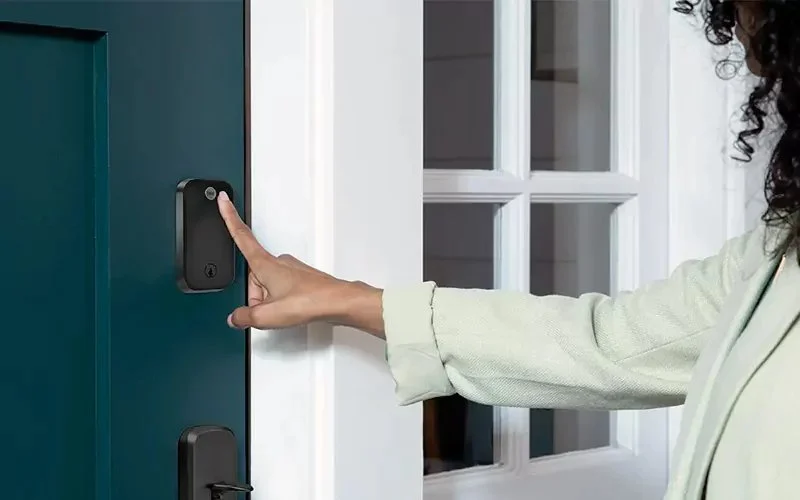
Industrial access is rarely limited to one office door. A company may need to secure electrical cabinets, telecom shelters, warehouse gates, utility rooms, equipment enclosures, server racks, railway facilities, or remote energy assets. These locations create very different operating conditions. Some have stable power and network connections, while others are exposed to rain, dust, vibration, temperature changes, and infrequent maintenance. Choosing the right electronic lock therefore requires a practical review of the site, the users, the operating process, and the expected service life.
What Is an Industrial Electronic Lock?
An industrial electronic lock is a locking device that uses an electronic credential or authorization process to control access. Depending on the design, the credential may be a smart key, card, PIN, fingerprint, mobile application, or a combination of several methods. The electronic component verifies whether the person has permission before the mechanical locking mechanism is released.
The word “electronic” does not mean every lock works in the same way. Some models contain an internal battery. Some connect to a wired access control network. Others use passive lock cylinders that receive power from an authorized electronic key only when access is requested. The correct choice depends on whether the site has power, how often users visit, how quickly permissions must change, and how much maintenance the operator can support.
For industrial buyers, a lock should not be judged only by how it opens. It should also be evaluated by how it manages permissions, records activity, responds to lost credentials, survives outdoor conditions, and fits existing security procedures. A strong lock body is important, but control over the full access lifecycle is equally important.
How Does an Electronic Lock Work?
An electronic lock works by checking a credential before allowing the locking mechanism to move. The process usually includes identity verification, authorization checking, physical unlocking, and event recording. The exact steps vary between wired, battery-powered, biometric, and passive electronic systems, but the basic security logic remains similar.
Credential Verification
The first step is confirming that the user has an accepted credential. This credential may contain a unique digital identity linked to a person, department, contractor, or job role. The system then checks whether that credential is valid for the specific lock, location, date, and time.
This is a major difference from a conventional mechanical key. A copied mechanical key may continue to work until the cylinder is changed. An electronic credential can usually be modified, suspended, expired, or blacklisted without replacing every lock. For sites with many contractors or rotating maintenance teams, this gives security managers much tighter control.
Lock Activation and Access Recording
After authorization is confirmed, the lock activates its release mechanism. In a battery-powered lock, the internal battery powers the electronic components and actuator. In a wired system, power comes from the building or access control network. In a passive electronic lock, the authorized smart key supplies power to the lock during contact.
Many industrial electronic lock systems also create an audit record. The record may include the user, lock ID, access time, authorization result, and opening event. This information helps managers investigate incidents, verify completed tasks, and review whether access procedures were followed. Audit records are particularly useful in utilities, transportation, telecom, warehousing, and critical infrastructure operations where access must be traceable.
Why Are Industrial Sites Replacing Mechanical Locks?
Industrial sites are replacing mechanical locks because traditional keys become difficult to control as the number of users, locations, and contractors increases. A mechanical lock may work well on a single storeroom, but the management burden grows quickly when hundreds or thousands of assets are involved.
Lost keys, copied keys, unreturned contractor keys, and large key rings all create operational risk. Rekeying several locations can also become expensive and slow. An electronic lock system addresses these problems by separating physical access from permanent ownership of a mechanical key.
Better Control Over Distributed Access
Distributed industrial assets are difficult to secure with conventional keys. A telecom operator, for example, may manage cabinets and shelters across a wide geographic area. A utility company may have substations, meter enclosures, control rooms, and remote equipment sites. Sending a different key for every location is inefficient, while issuing one mechanical master key creates serious risk if that key is lost.
An electronic lock can allow one authorized credential to operate multiple locks according to assigned permissions. Access can be limited by region, job role, time window, or maintenance task. This reduces the number of physical keys in circulation while helping field workers reach the locations they are responsible for.
Clearer Accountability for Every Entry
Mechanical locks cannot normally show who opened them. When several employees and contractors share the same key, responsibility becomes unclear. If equipment is damaged, inventory is missing, or a restricted cabinet is left open, managers may have no reliable access history to review.
An electronic lock with audit capability creates a stronger chain of accountability. Managers can compare access records with work orders, maintenance schedules, visitor logs, or security footage. This does not replace good operating procedures, but it gives supervisors better information when checking compliance or investigating an abnormal event.
Common Electronic Lock Types for Industrial Use
The best electronic lock is not the model with the longest feature list. It is the one that matches the physical environment, access frequency, maintenance capacity, and security process of the site. Buyers should understand the main categories before requesting quotations.
Battery-Powered Electronic Locks
Battery-powered electronic locks contain an internal power source. They are commonly used where wiring is unavailable but electronic access is still required. Depending on the model, users may unlock them through a PIN, card, fingerprint, Bluetooth connection, or mobile application.
These locks can be convenient for moderate-traffic locations, but battery planning is essential. Buyers should ask how long the battery lasts under actual operating conditions, how low-power warnings are delivered, whether emergency power is available, and how the lock behaves when the battery is fully discharged. A battery life estimate based only on standby time may not reflect frequent access, extreme temperatures, or wireless communication.
Wired Electronic Locks
Wired electronic locks connect to a power supply and often communicate with a central access control system. They are suitable for buildings where cabling is practical and real-time centralized control is required. Common applications include factories, offices, data centers, controlled production areas, and high-traffic internal doors.
The main advantages are continuous power, immediate communication, and integration with broader building systems. The tradeoff is installation complexity. Cable routes, control panels, emergency exit rules, fire safety requirements, backup power, and network protection must all be considered. For existing industrial sites, retrofitting can be more expensive than installing the same system during construction.
Passive Electronic Locks
A passive electronic lock has no battery and normally requires no power cable inside the lock. The lock receives temporary power from an authorized smart key when the user connects the key to the lock. The same smart key can carry permissions for multiple locks, while the management software controls which locations the user may access.
This structure can be useful for remote cabinets, telecom sites, utility facilities, outdoor gates, equipment enclosures, and other locations where battery replacement or wiring would be difficult. Because the lock itself has no battery, maintenance teams do not need to visit every site simply to replace lock batteries.
Systems such as the Vanma passive electronic lock solution combine passive locks, authorized smart keys, and management software. Permissions can be assigned by user, time, and location, while opening records can be returned for review. This type of system is worth considering when an operator manages many dispersed assets and needs controlled access without installing power at every lock point.
Biometric and Multi-Factor Locks
Biometric electronic locks verify a physical characteristic such as a fingerprint. They can reduce dependence on shared cards or PINs, but performance depends on sensor quality, user conditions, and environmental protection. Dirty hands, gloves, moisture, oil, dust, and cold weather may affect recognition in industrial environments.
For higher-risk areas, buyers may choose multi-factor access. A system might require a smart credential plus a fingerprint, or a card plus a PIN. This raises the level of identity assurance, but it can also increase access time and administration. Multi-factor authentication should be applied where the security benefit justifies the extra operational steps.
Where Can an Electronic Lock Be Used?
An electronic lock can protect almost any industrial access point when the lock body, credential method, and environmental rating match the application. Common uses include factory gates, warehouse doors, electrical cabinets, telecom shelters, server racks, meter boxes, traffic control cabinets, railway equipment rooms, energy facilities, medicine cabinets, tool storage, fleet compartments, and outdoor infrastructure.
The application should determine the lock design. A cabinet lock may need a compact cam or swing-handle structure. A perimeter gate may require a weather-resistant padlock. A server enclosure may need a rack-compatible lock with detailed audit records. A remote utility site may favor a passive electronic lock to avoid local battery service. Standardizing the management platform can be helpful, but the physical lock should still fit each asset.
Access frequency also matters. A warehouse entrance used hundreds of times per day has different requirements from an electrical cabinet opened once per quarter. High-frequency access may favor a wired system with fast credential checks, while low-frequency outdoor access may be better served by a passive system that requires minimal lock-side maintenance.
What Should Buyers Check Before Purchasing?
Before purchasing an electronic lock, buyers should create a site-based requirement list rather than starting with a product catalog. The list should identify the number of locks, user groups, access frequency, environmental conditions, current key problems, required audit detail, integration needs, installation limits, and expected expansion.
Environmental Resistance and Lock Construction
Industrial lock performance depends heavily on the environment. Outdoor locks may face rain, dust, salt air, direct sunlight, freezing temperatures, heat, and condensation. Factory locks may be exposed to vibration, metal particles, grease, chemicals, or repeated impact. A lock designed for an indoor office may not provide reliable service under these conditions.
Ask suppliers for the ingress protection rating, operating temperature range, lock body material, corrosion testing, shackle strength, and relevant test methods. Stainless steel, zinc alloy, and hardened steel may all be appropriate in different parts of a lock, but material names alone do not prove complete durability. The finished product, seals, electronic contacts, mechanical parts, and installation method must work together.
Authorization and Audit Functions
Authorization functions should match how the organization actually works. A simple system may only allow or deny a credential. A more advanced industrial electronic lock system may support permissions by employee, contractor, department, lock group, geographic area, date, and time window.
Buyers should also check how temporary access is issued. Contractors may need permission for one shift, one site, or one maintenance task. When the task ends, the credential should expire without requiring every lock to be replaced or manually reprogrammed.
Audit records should be easy to retrieve and understand. Confirm which events are recorded, where records are stored, how long they are retained, and whether reports can be exported. It is also important to know whether records are collected in real time, during synchronization, or when a smart key returns to the management system.
Integration and System Compatibility
An electronic lock should fit the wider security and operating environment. Some buyers only need standalone lock management. Others need to connect access data with a visitor system, work order platform, CCTV system, asset management system, or security operations center.
Before asking for an API, define the actual information exchange. The system may need to receive employee data, send access records, trigger a workflow, or link a lock event to a maintenance ticket. Clear integration requirements reduce development costs and prevent buyers from paying for functions they will not use.
Cybersecurity should also be reviewed. Ask how credentials are protected, how administrator accounts are managed, whether communication is encrypted, how software updates are delivered, and what happens when a device is lost. Physical security and digital security should be evaluated as one system.
Electronic Lock vs Mechanical Lock
A mechanical lock is simple, familiar, and inexpensive at the point of purchase. It may be the right choice for a low-risk location with very few users and no need for access records. However, the apparent simplicity can become costly when keys are copied, lost, shared, or not returned.
An electronic lock usually costs more initially, but it provides stronger control over credential lifecycle. Permissions can be changed without replacing the lock cylinder, and access events can be associated with specific users. This is valuable for organizations managing contractors, remote sites, restricted equipment, or regulated access procedures.
- Mechanical locks usually have a lower purchase price but limited access visibility.
- Electronic locks support configurable permissions and may provide audit records.
- Mechanical key loss may require rekeying multiple locks.
- Electronic credentials can often be suspended or blacklisted.
- Electronic systems require software, credential management, and user training.
- Passive electronic locks can reduce battery maintenance at remote lock points.
The decision should not be based on technology alone. A mechanical lock may remain suitable for non-critical storage. An electronic lock becomes more valuable when the cost of uncontrolled access, rekeying, missing records, or operational delay is higher than the cost of the system.
Electronic Lock Cost and Total Ownership
The real cost of an electronic lock includes more than the hardware price. Buyers should calculate installation, software, credentials, training, system administration, battery replacement, spare parts, technical support, integration, and future expansion. A low-priced lock may become expensive if it requires frequent site visits or works only with costly proprietary components.
For battery-powered locks, estimate how many batteries will be replaced each year and how long technicians need to reach each site. At a remote facility, labor and travel may cost more than the battery itself. For wired locks, include cable installation, power supplies, control panels, network equipment, and construction work.
Passive electronic locks may have a higher initial unit cost than basic mechanical locks, but they can reduce recurring lock-side maintenance because no battery is installed in the lock. The financial benefit becomes clearer when many remote or widely distributed assets are involved.
Buyers should also consider the cost of security incidents. Unauthorized access, theft, downtime, damaged equipment, and emergency rekeying can be difficult to predict, but they should not be ignored. A total ownership review should compare both direct operating costs and the risk reduction created by better access control.
Installation and Maintenance Planning
Reliable operation starts with correct installation. Even a well-designed electronic lock can fail if the door is misaligned, the cabinet handle places too much pressure on the lock, seals are damaged, or the locking point is exposed to standing water. A site survey should identify mechanical fit, user access, emergency requirements, and environmental exposure before installation begins.
Maintenance requirements depend on the lock type. Battery-powered units need battery inspections and replacement planning. Wired systems require checks of power supplies, cables, controllers, and backup systems. Passive locks reduce lock-side electrical maintenance, but the smart keys still need charging, software management, and periodic inspection.
Administrators should also review users and permissions regularly. Former employees, expired contractors, transferred staff, and inactive credentials should be removed. Audit records should be checked for unusual access attempts, repeated failures, or openings outside expected work periods.
Training should cover more than how to open the lock. Users need to understand credential protection, lost-key reporting, proper lock closure, and the limits of their authorization. Supervisors need clear procedures for emergency access, temporary permissions, software administration, and incident review.
Electronic Lock Procurement Checklist
A structured procurement checklist helps buyers compare suppliers on the same basis. It also reduces the risk of selecting a product that performs well in a demonstration but does not match real field conditions.
- Define every door, cabinet, gate, enclosure, and equipment type that requires protection.
- Record whether each location has power, network access, and indoor or outdoor exposure.
- List employees, contractors, visitors, and emergency users who require access.
- Define permissions by person, role, site, lock group, date, and time where needed.
- Confirm whether access records are required and how quickly they must be available.
- Check ingress protection, operating temperature, corrosion resistance, and mechanical strength.
- Compare battery-powered, wired, passive, biometric, and multi-factor options.
- Review software licensing, data ownership, administrator roles, and cybersecurity controls.
- Ask how lost credentials are blocked and how emergency access is handled.
- Calculate hardware, installation, maintenance, training, integration, and expansion costs.
- Request samples or a pilot installation under real working conditions.
- Confirm warranty terms, spare-part availability, technical support, and expected delivery time.
A pilot project is particularly useful for large deployments. It allows the company to test lock fit, credential speed, outdoor reliability, user behavior, audit reporting, and software administration before committing to a wider rollout. The pilot should include normal users, contractors, security staff, and system administrators so that operational issues can be identified early.
Frequently Asked Questions About Electronic Locks
Is an electronic lock more secure than a mechanical lock?
An electronic lock can provide stronger access control because permissions can be assigned to specific users and changed without replacing the lock. Many systems also record opening events and allow lost credentials to be blocked. However, security still depends on lock construction, credential protection, installation quality, software management, and operating procedures.
Does every electronic lock need a battery?
No. Battery-powered locks use an internal battery, and wired locks receive power from a building system. Passive electronic locks have no internal battery and receive temporary power from an authorized smart key. Passive models are often considered for remote industrial assets where routine battery replacement would be inconvenient.
Can one electronic key open several locks?
Yes, some industrial systems allow one authorized smart key to open multiple locks. The key only operates locks included in its permission profile. Access may also be limited by time, location, or user role. This approach reduces large mechanical key rings without giving every user unrestricted access.
What happens when an electronic key is lost?
In a properly managed system, the lost credential can be suspended or added to a blacklist. A replacement credential can then be issued with the required permissions. The exact blocking process depends on how the locks and credentials receive updated authorization data, so buyers should confirm this workflow before purchasing.
Can an electronic lock work at an outdoor industrial site?
Yes, provided the product is designed for the environment. Buyers should check the ingress protection rating, operating temperature, corrosion resistance, lock material, sealing method, and test documentation. An indoor electronic lock should not be assumed suitable for rain, dust, salt air, or extreme temperatures.
Does an electronic lock automatically relock after opening?
Not every model does. Some door locks use spring latches or motorized mechanisms that relock automatically. Many passive electronic padlocks and cabinet locks require the operator to close and lock them manually with the authorized key. Buyers should confirm the closing process and train users to verify that the lock is fully secured after completing a task.
Can electronic locks be used without an internet connection?
Yes. Some electronic lock systems operate offline and store permissions or records in the credential, lock, or local management device. Internet access may only be required for remote administration, cloud synchronization, or real-time reporting. For remote sites, buyers should ask exactly which functions remain available when the network is unavailable.
How often does an electronic lock need maintenance?
Maintenance frequency depends on the power source, environment, access volume, and lock construction. Battery-powered locks require battery monitoring. Wired systems need electrical and controller inspections. Passive locks avoid internal battery replacement but still require mechanical checks, cleaning, key charging, and permission management. Outdoor locks should be inspected more often when exposed to salt, dust, ice, or heavy rain.
Can an electronic lock integrate with existing access control software?
Some systems provide APIs or integration tools, while others operate only within the supplier's platform. Buyers should define which data needs to move between systems, such as user information, access permissions, opening records, alarms, or work-order references. Integration should be tested before a large purchase is approved.
How should a company choose between wired and passive electronic locks?
A wired system is often suitable for high-traffic buildings where power, cabling, and real-time centralized control are available. A passive electronic lock is often more practical for distributed cabinets, gates, utility sites, and outdoor assets where wiring and battery replacement are difficult. Many organizations use both types in different parts of the same security program.
Final Purchasing Considerations
The right electronic lock should solve a defined access problem rather than simply add technology to an existing door. Start by identifying where mechanical key control is failing, which users need access, how permissions should change, and what evidence managers need after an opening event.
For a single indoor door, a basic electronic lock may be sufficient. For a large industrial network, buyers should look beyond the lock body and evaluate the complete system, including credentials, software, audit records, administration, environmental protection, support, and lifecycle cost.
A well-selected electronic lock can reduce uncontrolled key circulation, simplify contractor access, improve accountability, and lower maintenance across distributed sites. The strongest purchasing decision is based on real field conditions, a clear access policy, and a pilot test that proves the system can perform reliably before wider deployment.

