
High-Risk Workplace Safety in Oil and Gas: How to Cut Preventable Accidents at Remote Sites
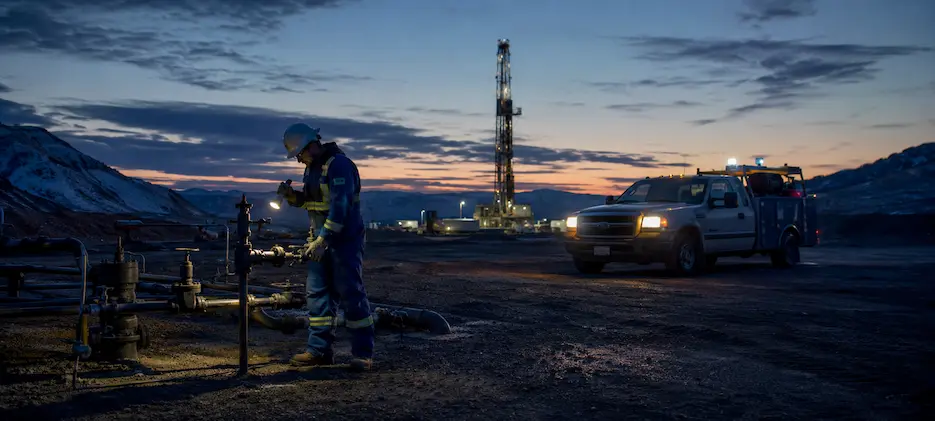
It’s 4 a.m. at a well pad three hours from the nearest town. One technician, one truck, no cell signal, and a valve that needs checking before sunrise. If something goes wrong out here, help isn’t five minutes away. It’s an hour, maybe more.
This is the everyday reality of oil and gas work, and it’s exactly why high-risk workplace safety in oil and gas looks so different from safety in a factory or an office building. The hazards aren’t hypothetical. Pressure, heat, flammable gas, heavy machinery, and long drives down empty roads all stack up against workers who are often alone and far from backup. The frustrating part is that a lot of what goes wrong out there isn’t some freak accident nobody could have seen coming. It’s something that was missed, skipped, or left unmanaged. A lock that should have kept someone out didn’t. A valve that needed checking twice a shift only got checked once. A vehicle that should have been pulled from service stayed on the road one trip too long. These are the accidents that, looking back, almost everyone agrees could have been prevented.
This article walks through why remote oil and gas sites carry extra risk, what kinds of accidents show up again and again, and what operators can actually do about it — including a look at how access control technology, like passive electronic lock systems, fits into the bigger safety picture.
Getting high-risk workplace safety right at a remote site isn’t about adding more paperwork. It’s about closing the small, practical gaps that turn an ordinary shift into an emergency.
Why High-Risk Workplace Safety in Oil and Gas Is Harder at Remote Sites
Isolation Means Slower Emergency Response
When something happens on a busy industrial site, there’s usually a supervisor, a coworker, or a camera nearby. On a remote well site or along a stretch of pipeline, that’s often not true. According to CDC research on the Fatalities in Oil and Gas Extraction (FOG) database, roughly 20% of worker deaths in the industry between 2014 and 2019 involved someone working alone at the time of the incident (CDC/MMWR). When there’s no one to call for help, or no one even notices right away, minutes turn into hours, and a survivable injury can turn fatal.
Offshore platforms add another layer to this. Workers there live and work close to equipment full of flammable hydrocarbons, in a setting where evacuation simply takes longer (CDC/MMWR).
Harsh Environments Wear Down Equipment Faster
Fewer Eyes on Site Means More Room for Error
Fewer workers per site also means fewer checks and balances. If one person skips a step, there may be no one around to catch it. That’s not a knock on the workers themselves — it’s just what happens when staffing is lean and the work is spread across huge distances. OSHA notes that roughly three out of every five on-site fatalities in oil and gas extraction come from struck-by, caught-in, or caught-between incidents (OSHA) — the kind of accident that’s much easier to prevent when someone’s watching, and much easier to miss when no one is.
The Most Common Preventable Accidents That Undermine High-Risk Workplace Safety
Not every hazard in this industry can be engineered away. But a surprising number of incidents that threaten high-risk workplace safety trace back to a handful of repeat offenders
Unauthorized Access to Hazardous Equipment
Missed or Skipped Inspections
A pump that’s supposed to be checked every shift gets checked every other shift instead. A patrol route gets shortened because the weather’s bad. None of it feels like a big deal in the moment. But inspection gaps are exactly how small problems — a slow leak, a loose fitting, a corroded line — turn into big ones before anyone notices.
Lock and Key Failures in Extreme Weather
This one doesn’t get talked about enough, but it matters more than people think. A standard padlock left out in salt air or freezing rain doesn’t last. It seizes up, rusts through, or just stops turning. When that happens at a site that’s hours from the nearest hardware store, workers improvise — they cut the lock, prop the door, or skip the access control step altogether because they have no other choice. That “quick fix” undoes the entire point of having a lock there in the first place.
Building a Safety Culture That Strengthens High-Risk Workplace Safety in the Field
Training That Matches Real Site Conditions
Clear Accountability for Every Action
Here’s an uncomfortable truth: if nobody can tell who opened a valve, who skipped a check, or who left a gate unlocked, then nobody is actually accountable for any of it. Good safety culture isn’t about blame — it’s about being able to look at an incident afterward and know exactly what happened, when, and who was involved, so the same mistake doesn’t repeat itself next month with someone else.
Why Access Control Is the First Line of Defense in High-Risk Workplace Safety
The Problem with Traditional Mechanical Keys
How Battery-Powered Electronic Locks Fall Short Outdoors
Electronic locks sound like the obvious upgrade, and in a lot of ways they are — until you put them outside in the kind of weather oil and gas sites actually see. Batteries lose capacity in the cold, sometimes failing right when they’re needed most. Wiring an electronic lock into a remote, unmanned site means running cable across terrain that may not have power infrastructure nearby at all, which gets expensive and complicated fast.
A Better Fit: Passive Electronic Lock Systems
This is where passive, battery-free electronic lock systems have started filling the gap. Vanma’s lock system, for example, works on a simple idea: instead of putting a battery inside the lock itself, the smart key supplies a brief burst of power the moment it touches the lock. That contact triggers identity verification and records the action, then the connection ends and the lock goes back to drawing zero power. There’s no battery to die in the cold, no wiring to run across a field, and nothing to maintain once it’s installed.
In practice, this fits oil and gas applications fairly naturally — well-pad valves, pipeline inspection points, storage tank access, and remote equipment cabinets are exactly the kind of unmanned, weather-exposed locations where keeping a battery alive or running power lines just isn’t realistic. Every time a key touches a Vanma lock, the system logs who opened it, when, and where, and that record can sync to a management platform once the key is back in signal range. If a key goes missing, it can be blacklisted remotely, so a lost key doesn’t turn into an open door. Field teams have also used the system to build in step-by-step inspection sequences — lock A has to be opened before lock B will respond — which makes it much harder to skip a step in a patrol route without it showing up in the log.
To be clear, a lock system isn’t a substitute for training, supervision, or good judgment on site. What it does is close one specific gap: knowing, after the fact, exactly who had access to something and when. That single piece of information turns out to matter for a lot of the accident types described earlier in this article.

Practical Steps to Reduce Preventable Accidents and Improve High-Risk Workplace Safety in Remote Operations

Audit Your Current Access and Inspection Process
Match Equipment to the Environment, Not Just the Budget
Build Redundancy Into Emergency Response
Conclusion
High-risk workplace safety in oil and gas isn’t something that gets solved by luck or good intentions alone. It takes a mix of realistic training, clear accountability, equipment that’s actually built for the environment it’s used in, and tools that close the gaps human attention can’t always cover on its own. Passive electronic lock systems like Vanma’s aren’t a silver bullet, but they’re one solid piece of the puzzle — turning “we think someone was out there” into “we know exactly who, when, and where.”
If there’s one place to start, it’s this: take an honest look at your current access control and inspection process at your most remote sites, and ask what would happen if something went wrong there tonight. The answer to that question usually points straight at what needs fixing first.
Share:
Table of Contents
Try Vanma Electronic Lock
You can contact us to request samples, and to experience the convenience of Vanma electronic locks.
Contact Us Now