
How Can a Container Lock Prevent Theft in Storage and Equipment Yards?

Management personnel stated that traditional locks cannot meet the security management requirements of modern shipping containers.
A storage yard may look secure with fences, cameras, lighting systems, and security staff, but many companies still face unexpected losses because the weakest point often remains the container access point. According to the International Maritime Organization (IMO), container security management requires effective procedures to reduce risks throughout transportation and handling processes.

When I talk with businesses that manage containers and outdoor equipment areas, I often find that their biggest concern is not only preventing physical damage. They also want to know who accessed a container, when the access happened, and whether the person had proper authorization.
This is where a reliable container lock becomes more than a simple locking device. A suitable container lock helps companies control access, reduce unauthorized entry risks, and create better management records for valuable assets.
Many traditional locks only provide physical protection. They can stop casual access, but they cannot answer basic management questions:
- Who opened the container?
- Was the person authorized?
- When did the equipment get accessed?
- Was the lock opened during an approved working period?
For companies operating container yards, equipment storage areas, construction sites, ports, and industrial facilities, these questions directly affect security management and operational costs.
Modern electronic locking solutions provide a different approach. Instead of depending only on a physical key, companies can combine a secure lock structure with authorization management and operation records. Vanma passive electronic lock systems follow this concept by combining a lock body, smart key, and management software to help businesses manage multiple locking points with better control. The system uses unique identification technology, access permission management, and operation records to improve visibility across different application areas.
In this article, I will explain how a container lock helps prevent theft in storage and equipment yards, what problems traditional locks create, and what companies should consider when selecting a security solution.
Why Container Lock Security Matters in Storage and Equipment Yards
Security planning for industrial facilities should also consider employee access control, asset protection, and operational procedures. The Occupational Safety and Health Administration (OSHA) highlights the importance of workplace safety management and hazard control in industrial environments. These locations usually operate across large outdoor spaces where hundreds or thousands of assets may exist at the same time.
Unlike indoor facilities, outdoor storage areas face additional challenges:
Multiple employees need access.
- Contractors may require temporary entry.
- Containers may stay unattended for long periods.
- Equipment locations may be spread across different areas.
- Weather conditions can affect locking devices.
A strong security plan needs to address not only the strength of the lock but also access management and accountability.
A container lock plays an important role because it protects the physical entry point while supporting better control over who can access stored assets.
Common Security Risks in Container Yards
1. Unauthorized Access
One common problem in container yards is unauthorized access. A traditional key can easily move between employees, contractors, drivers, and maintenance workers. Once a key leaves the manager’s control, it becomes difficult to confirm who can open the container.
For businesses managing many containers, this situation creates a management gap. Even if the lock itself remains strong, poor key control can create security risks.
2. Lost or Duplicated Mechanical Keys
Mechanical keys create another challenge because companies often need to provide access to multiple workers. Over time, the number of physical keys increases, making management more complicated.
- A lost key may require:
- Replacing the lock;
- Distributing new keys;
- Updating internal records;
- Informing multiple users.
For large storage yards, these small tasks can become a continuous operational burden.
3. Lack of Access Records
Traditional locks cannot record opening activities. After a security incident, managers often have limited information.
They may know that a container was opened, but they cannot confirm:
- The person who opened it;
- The exact time;
- Whether the access followed company procedures.
For logistics and industrial companies, this lack of information makes investigation more difficult.
Vanma electronic lock systems address this issue by recording operation information through smart keys. The system can record access-related data and provide management records for later review.
4. Outdoor Environment Challenges
Many containers and equipment yards operate outdoors. Locks must handle conditions such as:
- Rain;
- Dust;
- Humidity;
- Temperature changes;
- Long-term exposure.
A locking solution designed only for indoor environments may not perform well in these locations.
For this reason, businesses often look for industrial-grade locks with strong protection levels and suitable materials. Vanma lock products include outdoor-oriented designs with protection features such as IP68 protection on certain models, stainless steel components, and environmental resistance suitable for demanding applications.
Traditional Container Locks Cannot Solve Every Security Problem
Problems with Traditional Padlocks for Containers
|
Security Requirement
|
Traditional Lock
|
Business Challenge
|
|---|---|---|
|
Access authorization
|
Limited
|
Anyone with the key may open the lock
|
|
User identification
|
Not available
|
Difficult to identify the operator
|
|
Operation records
|
Not available
|
No access history after incidents
|
|
Permission changes
|
Manual process
|
Time-consuming key management
|
|
Multi-site management
|
Difficult
|
More complex as locations increase
|
Why Outdoor Equipment Yards Need More Than Physical Protection
A stronger lock body can improve resistance against physical attacks, but security management requires more layers.
A complete protection strategy should answer three questions:
- Who can access the asset?
- When can the person access it?
- How can the company review the access history?
This is why many industrial users are moving from simple locking devices toward electronic access management.
The purpose is not to replace the basic function of a lock. Instead, it adds information and control around the locking process.
A container lock with electronic authorization allows companies to connect physical security with daily management procedures.
5 Practical Ways a Container Lock Helps Prevent Theft
1. Control Who Can Access Containers and Equipment
The first step in preventing loss is controlling access.
In many traditional systems, companies share keys among employees because multiple people need to enter the same area. This creates uncertainty because the company cannot easily confirm responsibility.
An electronic container lock changes this approach by connecting access rights with specific users.
Businesses can define:
- Which employee can open a lock;
- Which area they can access;
- When the permission remains valid.
Vanma systems use unique identification technology between locks and keys. The management system allows administrators to configure access rights according to business requirements.
For logistics companies, this means a driver, maintenance worker, warehouse employee, or supervisor can receive different access permissions instead of sharing one physical key.
2. Create Clear Records of Every Unlock Operation
A container lock becomes much more valuable when it creates a record of activity.
When a security problem occurs, managers need facts instead of assumptions.
An access record can help answer:
- Which lock was opened?
- Which authorized key was used?
- When did the operation happen?
Vanma smart keys store operation records, allowing companies to review access activities and improve responsibility management.
This function is especially useful for:
- Container terminals;
- Equipment rental companies;
- Construction sites;
- Industrial storage areas.
A clear record can also help companies improve internal procedures because managers can identify unusual access patterns.
3. Reduce Risks Caused by Lost Keys
A container lock becomes much more valuable when it creates a record of activity.
When a security problem occurs, managers need facts instead of assumptions.
An access record can help answer:
- Which lock was opened?
- Which authorized key was used?
- When did the operation happen?
Vanma smart keys store operation records, allowing companies to review access activities and improve responsibility management.
This function is especially useful for:
- Container terminals;
- Equipment rental companies;
- Construction sites;
- Industrial storage areas.
A clear record can also help companies improve internal procedures because managers can identify unusual access patterns.
4. Protect Containers in Harsh Outdoor Environments
Many containers and equipment yards operate in locations where environmental conditions are challenging.
Typical examples include:
- Ports near coastal areas;
- Construction sites;
- Mining areas;
- Outdoor warehouses;
- Energy facilities.
In these environments, locks must handle moisture, dust, temperature changes, and long-term outdoor exposure.
A suitable electronic container lock should consider:
- Lock body material;
- Protection level;
- Temperature range;
- Corrosion resistance;
- Maintenance requirements.
Vanma passive electronic locks use a design where the lock body does not require an internal battery. The smart key provides power when it connects with the lock, allowing the lock to complete authentication and data exchange. This design reduces dependence on batteries inside each lock point.
For outdoor applications, this structure can reduce maintenance work because companies do not need to regularly replace batteries across a large number of containers.
Some Vanma lock models use SUS304 stainless steel components and provide IP68 protection, making them suitable for demanding industrial environments.
5. Improve Security Management Across Multiple Locations
Large companies rarely manage only one container or one storage area.
A logistics company may operate:
- Multiple container yards;
- Different warehouses;
- Several equipment storage locations;
- Remote service areas.
Managing every location with separate mechanical keys creates additional complexity.
A container lock system allows companies to connect multiple locking points under one management structure.
Managers can handle:
- Lock information;
- Key permissions;
- User access;
- Operation records.
Vanma provides a complete system that includes Vanma Lock, Vanma Key, Vanma Manager, and related software solutions. The system allows administrators to manage locks, keys, and access rights through centralized management.
For companies with distributed assets, this type of management reduces confusion and creates a clearer security process.
How Vanma Container Lock Systems Support Asset Protection
When companies search for a container lock solution, they usually look beyond the lock itself. They need a system that can help them manage access, reduce risks, and support daily operations.
Vanma approaches container and equipment security through three main parts:
- Physical lock protection;
- Smart key authorization;
- Management software.
This combination allows businesses to move from simple locking to controlled access management.
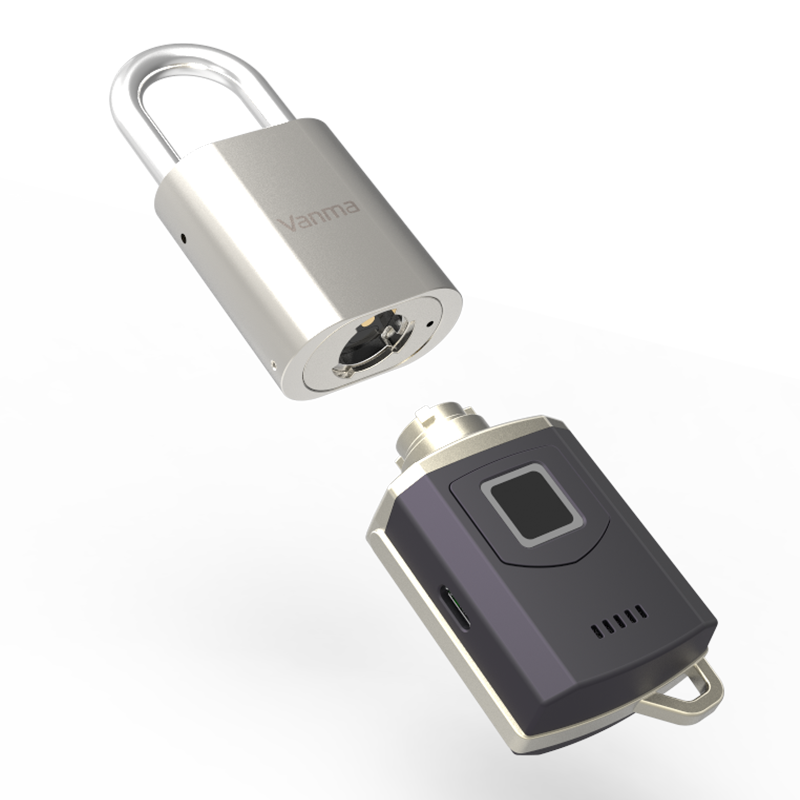

Vanma Lock: Passive Electronic Lock Without Internal Power
The main difference between Vanma passive electronic locks and traditional electronic locks is the power structure.
Many electronic locks require batteries inside the lock body or external wiring. In outdoor areas, these designs may create additional maintenance requirements.
Vanma passive electronic locks use a different structure:
- The lock body does not contain an internal battery;
- The smart key provides temporary power during operation;
- Authentication and data exchange happen during the connection process.
This design makes the lock suitable for locations where power access is difficult or where long-term maintenance should be minimized.
Typical application areas include:
- Containers;
- Equipment cabinets;
- Distribution boxes;
- Industrial facilities;
- Outdoor infrastructure.
Vanma also provides different lock types, including padlocks, cable locks, valve locks, handle locks, and other customized locking solutions to match different working environments.
Vanma provides different industrial lock structures for different applications, including padlocks, cable locks, handle locks, and valve locks.
Vanma Smart Key: Authorized Access Management
The smart key acts as the connection between the user and the lock.
Unlike a traditional mechanical key, a Vanma smart key can support:
- User authorization;
- Operation recording;
- Different access permissions;
- Optional fingerprint or Bluetooth functions depending on the model.
For example, a company may assign:
- A maintenance worker: access only to assigned equipment;
- A supervisor: access to multiple areas;
- A temporary contractor: limited access during a specific period.
This approach helps companies avoid giving every worker unlimited access to all containers or equipment.
Vanma Manager: Centralized Lock Management
Managing many locks manually creates unnecessary workload.
Vanma Manager helps companies organize:
- Lock information;
- Key information;
- Access permissions;
- Operation records.
The system supports permission management and record review, helping managers understand the status of their locking points.
For logistics and industrial companies, centralized management is especially useful because security responsibilities often involve multiple departments.
Choosing the Right Container Lock for Your Business
Selecting a container lock requires more consideration than simply choosing the strongest physical lock.
Companies should evaluate security requirements, working conditions, and future management needs.
Check Security Features
A suitable container lock should provide more than physical locking.
Important features include:
Access Authorization
The system should allow companies to decide who can open specific locks.
Operation Records
The system should create records showing access activities.
Permission Management
Different employees should receive different access levels according to their responsibilities.
These functions help companies move from uncontrolled key sharing toward organized access management.
Consider Environmental Conditions
Before selecting a container lock, companies should evaluate the installation environment.
Important questions include:
- Will the lock stay outdoors?
- Is the area exposed to rain or humidity?
- Does the location have dust or corrosive conditions?
- Is regular maintenance difficult?
For outdoor container yards, protection level and material selection are especially important.
Vanma lock products include industrial designs using materials such as SUS304 and provide protection features suitable for outdoor applications.
Evaluate Long-Term Management Cost
Many buyers focus only on the initial purchase price of a lock.
However, the actual cost also includes:
- Key replacement;
- Lock replacement;
- Manual record keeping;
- Security investigation after incidents;
- Employee management time.
A container lock system with access records and permission management may reduce these hidden management costs.
For companies managing many assets, improving daily management can be as important as improving physical protection.
Container Lock Applications Beyond Shipping Containers
Logistics and Transportation
Logistics companies use containers, trailers, and storage areas to protect valuable goods.
A container lock can help:
- Control driver access;
- Record loading and unloading activities;
- Reduce unauthorized opening risks.
Vanma lists logistics vehicles and containers among its application areas, supporting access management for transportation-related security needs.
Construction Sites
Construction projects often store:
- Tools;
- Spare parts;
- Equipment;
- Materials.
Because many workers and contractors enter construction areas, controlling access becomes important.
A container lock system can help managers know who accessed storage containers and when.
Industrial Equipment Storage
Factories and industrial companies often keep valuable equipment in outdoor areas.
Electronic lock management can support:
- Equipment protection;
- Maintenance access control;
- Operation records.
This is especially useful when multiple teams share the same facility.
Energy and Infrastructure Facilities
FAQ About Container Lock Security
What is a container lock?
Can an electronic container lock work outdoors?
What is the difference between a traditional padlock and an electronic container lock?
When comparing a traditional padlock to an electronic container lock, the main differences lie in security management, record-keeping, and access control.
Traditional Padlock
- Physical protection: Yes
- User authorization: Limited
- Access records: No
- Permission control: Manual
- Multi-user management: Difficult
Electronic Container Lock
- Physical protection: Yes
- User authorization: Available
- Access records: Available
- Permission control: Digital management
- Multi-user management: Easier
Why do companies use container locks for equipment yards?
Protect Your Assets with the Right Container Lock Solution
A container yard security problem is rarely caused by only one factor. The lock itself matters, but access management, user control, and operation records also influence overall protection.
Traditional locks can still work for simple applications, but companies managing valuable assets across multiple locations often need more control.
A modern container lock solution helps businesses understand:
- Who accessed an asset;
- When the access happened;
- Whether the person had permission.
Vanma passive electronic lock systems combine secure locking hardware, smart keys, and management software to help companies improve container and equipment security.
When choosing a container lock, I recommend looking beyond the purchase price and considering the complete management process. The right solution should fit the working environment, support daily operations, and provide better control over valuable assets.
Share:
Table of Contents
Try Vanma Electronic Lock
You can contact us to request samples, and to experience the convenience of Vanma electronic locks.
Contact Us NowChoose A Trusted Access Control Manufacturer for
Reliable Solutions
As a professional manufacturer of access control systems and electronic locks, Vanma offers high-quality solutions to protect your premises and assets. Contact us by filling out the form below to receive professional consultation and support.
