
Electronic Lock Safe for Better Security and Control
An electronic lock safe is no longer just a metal box with a keypad on the front. For many buyers, it has become a practical answer to a real business problem: how do you protect valuables, sensitive items, tools, medicine, cash, keys, documents, or restricted equipment without losing control over who opened the safe, when it happened, and whether the access was actually authorized? That is the real reason more companies are moving away from basic key locks and fixed mechanical combinations. They want a locking method that gives stronger control, clearer records, and less room for human error. If you manage security for a facility, warehouse, telecom site, utility room, hospital, office, or any place where access matters, choosing the right electronic lock safe can reduce risk in a very visible way.
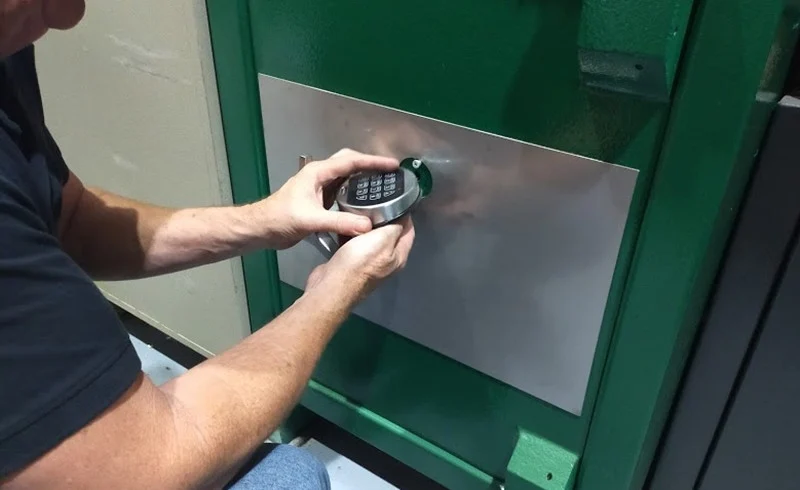
The biggest advantage of an electronic lock safe is not only convenience. It is visibility. With a traditional safe, you may know who should have access, but you often do not know who actually opened it unless someone tells you. With an electronic locking system, access can be tied to a code, a fingerprint, a card, a mobile credential, or an electronic key. In more advanced cases, the action can also be recorded and reviewed later. That changes the conversation from guesswork to proof. For procurement teams and security managers, this matters because every weak point in access control can turn into loss, downtime, compliance trouble, or internal disputes. A well-chosen electronic lock safe helps close that gap while also making day-to-day use easier for approved staff.
What Is an Electronic Lock Safe
At its simplest, an electronic lock safe is a safe that opens through an electronic authentication method instead of relying only on a physical key or a mechanical dial. That sounds straightforward, but the real value lies in what electronic authentication makes possible. Instead of passing one key from person to person, you can define access by user, by shift, by department, or by time period. Instead of changing the entire lock after a key is lost, you can often disable a credential and issue a new one. Instead of trusting a paper log or someone’s memory, you can review recorded activity. That is why the phrase electronic lock safe often shows up in searches from buyers who are looking for more than theft protection. They are looking for better control over operations.
A modern electronic lock safe may be used in homes, offices, hotels, retail shops, banks, server rooms, hospitals, or industrial environments. The use case changes, but the core purpose stays the same: store something valuable behind controlled access. In a home, that may mean cash, jewelry, passports, or personal files. In a business, it could mean petty cash, legal documents, restricted tools, backup drives, medicine, meter keys, test devices, or sealed assets. In technical environments, the word safe may even extend beyond the classic office safe and include protected lockable compartments or special secure storage units where access control and records matter more than appearance. So when someone searches for the best electronic lock safe, what they often really want is a safe that fits their daily access workflow without creating new management headaches.
How an Electronic Lock Safe Works
Authentication Comes First
The working logic of an electronic lock safe is easy to understand once you look at it step by step. First, the user presents some form of authorization. That may be a PIN code, a fingerprint, an RFID card, a Bluetooth command, a mobile app approval, or an electronic key. Second, the system checks whether that credential is valid. Third, if the credential matches the allowed permissions, the locking mechanism releases. In more advanced systems, that action is also logged with time, user identity, and sometimes location or task status. This is why an electronic lock safe is often a better fit for businesses with multiple users. It turns access into a managed process instead of a simple physical action.
This also explains why the quality of the authentication method matters so much. A cheap keypad safe may work fine for a low-risk office drawer, but it may not be ideal for a high-value storage point used by multiple staff members across different shifts. Shared PIN codes are easy to spread. Written codes end up on sticky notes. Fingerprints add a stronger tie to a real person, but they depend on sensor quality and the environment. Card-based access is convenient, but lost cards need immediate cancellation. Electronic key systems can offer a stronger balance in industrial settings because the key itself becomes a managed credential rather than just a piece of metal. So when comparing electronic lock safe options, it is smart to ask not only how the safe opens, but also how the authorization is issued, updated, and controlled over time.
The Locking Mechanism Does More Than Open and Close
Inside the safe, the electronics and the locking hardware work together. The electronic side checks the credential. The mechanical side physically holds the door secure. Good products are designed so that the electronic function does not weaken the actual lock body. This is where many buyers make a mistake. They focus only on the screen, keypad, or fingerprint reader and forget to ask about bolt structure, body material, tamper resistance, sealing, and long-term reliability. A safe with a modern interface but weak internal structure is like a strong password on a flimsy door. The best electronic lock safe is one where the digital control and the physical security support each other rather than compete with each other.
For buyers in industrial or outdoor settings, this becomes even more important. Dust, moisture, vibration, heat, and cold can all affect performance. In those cases, the right product is not just a consumer electronic safe with a nicer lock. It may need an industrial-grade approach, such as a passive electronic locking method, a stronger enclosure, higher ingress protection, and better credential management. That is why a hospital medicine safe, a retail cash safe, a firearm safe, and a utility cabinet with electronic locking can all fall under the same broad search term while needing very different technical answers. Good selection starts by matching the locking method to the environment, not by choosing the most features on paper.
Why More Buyers Prefer an Electronic Lock Safe
The market keeps moving toward electronic lock safe products because people are tired of the hidden costs of traditional access. Mechanical locks look simple, but the management around them usually is not. Keys get copied. Spare keys go missing. Staff changes create risk. Emergency access becomes messy. There is often no clean way to prove who opened the safe last. In low-risk situations, that may be acceptable. In business settings, it becomes a drain on trust and efficiency. An electronic lock safe helps solve that by turning access into something that can be assigned, adjusted, and reviewed. The stronger the need for accountability, the more attractive electronic locking becomes.
Another reason buyers like this category is that it can cut friction for approved users while still tightening security. That sounds contradictory, but it is not. A good locking system should make life harder for the wrong person and easier for the right one. That is what good access design looks like. A warehouse supervisor should not waste time hunting for the right key ring. A telecom technician should not travel back to collect a key from a central office if remote approval can be issued safely. A nurse handling controlled substances should not deal with a vague paper trail when every access event can be tied to a person and time. These are operational problems, not just security problems. An electronic lock safe helps because it improves both control and workflow at the same time.
Main Types of Electronic Lock Safe Options
Keypad Electronic Lock Safe
The keypad electronic lock safe is still the most familiar option for many buyers. It uses a PIN code, usually entered on a small digital keypad, to release the lock. This format is common in homes, hotel rooms, dormitories, personal offices, and light commercial spaces because it is easy to understand and easy to install. For single-user or low-turnover use, it can be a practical choice. It removes the need for a physical key during daily operation, and many models also include backup override access for emergencies. For buyers who just need basic controlled storage without a more advanced management system, a keypad safe can still make sense.
That said, the weakness of a keypad electronic lock safe often comes down to code discipline. If many people know the same code, you lose personal accountability. If the code is too simple, security drops. If users forget to change it after staff turnover, risk stays in the system longer than expected. So the value of keypad access depends heavily on how carefully the codes are managed. In a small office, that may be enough. In a multi-user environment, many buyers eventually realize that the issue is not whether the keypad works, but whether the code can be tied clearly to the right person. That is why more complex workplaces often step up from shared PIN access to fingerprint, card, or managed electronic key access.
Biometric Electronic Lock Safe
A biometric electronic lock safe uses a physical identity marker, most often a fingerprint, to verify access. This gives it an obvious advantage in situations where it is important to know exactly who opened the safe. Instead of asking, “Who knew the code?” the system can answer, “Whose fingerprint was accepted?” For medicine storage, controlled inventory, higher-risk tools, and sensitive records, that is a major step up in accountability. It also feels fast and natural for users because there is nothing to memorize and nothing separate to carry. For many buyers, biometric access seems like the most modern answer, and in the right setting it can be very effective.
Still, biometric safes are not automatically the best choice for every environment. Finger conditions, gloves, dirt, moisture, and sensor quality can affect performance. In industrial sites, field maintenance teams may not be ideal users for a fingerprint-only system. In offices and clinics, though, the fit can be very good. The best approach is to think practically about user behavior. If the safe is used in a clean, indoor setting and the goal is clear personal accountability, a biometric electronic lock safe is worth serious consideration. If the safe is used outdoors or in harsh conditions, buyers may need a dual method, such as fingerprint plus app approval, or a completely different access model designed for tougher work conditions.
Card, RFID, App, and Electronic Key Safe Access
Some electronic lock safe systems rely on RFID cards, smart credentials, Bluetooth communication, mobile apps, or dedicated electronic keys rather than a fixed keypad. These options are especially useful when a business already uses credentialed access in other parts of its operation. Staff may already carry a work badge, use a mobile authorization app, or be issued a secure device as part of their role. In that case, adding safe access to the same identity framework can reduce confusion and help centralize management. This is often more scalable than passing around metal keys or resetting shared codes every time a team changes.
Electronic key access can be especially attractive in industrial settings because it combines digital permission control with the familiar action of using a key-like device. The key is not just a tool to turn the lock. It is part of the access management structure. Permissions can be assigned to that credential, restricted by time, and recorded after use. That makes it a strong option for field operations, equipment storage, and distributed security points. If a buyer is searching for an electronic lock safe for utility, telecom, energy, transport, or facility management use, this style of access may be far more practical than the home-office style safe most people picture first.
Key Features That Matter Most in an Electronic Lock Safe
When buyers compare products, they often get distracted by surface-level features. A touchscreen looks modern. A bright display looks impressive. A long feature list sounds reassuring. But the most important electronic lock safe features are the ones that reduce real risk over time. Start with user management. Can you assign access by person, by role, or by time? Can you remove access quickly? Does the system create an audit trail? Is there protection against repeated failed attempts? What happens if power runs low or communication is interrupted? These questions are more important than cosmetic design because they tell you how the safe behaves when real operational pressure hits.
Another major feature group is durability. Buyers should look at body construction, lock bolt design, credential reliability, environmental tolerance, and how the unit handles everyday abuse. In commercial use, the safe door is opened and closed repeatedly, not gently admired from across the room. In industrial use, it may be exposed to vibration, temperature swings, or moisture. For this reason, a good electronic lock safe should not be evaluated like a gadget. It should be evaluated like a working security device. That means asking what happens after thousands of cycles, after a staff change, after a lost credential, or after a power issue. Good products keep control when things are busy, messy, and imperfect.
Audit Trails and Access Records
One of the strongest reasons to choose an electronic lock safe is the ability to create access records. This feature matters because security problems are not always dramatic break-ins. Sometimes the issue is a missing asset, a disputed opening time, an unexplained access event, or an internal process failure. A proper audit trail changes how quickly those issues can be handled. Instead of depending on verbal reports, the manager can review data. In sectors where compliance or internal accountability matters, that is a serious advantage. Even when the safe holds something simple, such as keys, test tools, or cash bags, access history helps reduce confusion and blame-shifting.
The quality of the record also matters. A useful log should not just say that the safe was opened. It should ideally show by whom, at what time, and under what credential. More advanced systems may also support permission status, task windows, or remote approval records. This is one reason industrial buyers often prefer managed electronic key systems or integrated platforms over basic keypad-only safes. The safe becomes part of a larger security process rather than a standalone storage box. If your team needs proof, not assumptions, then access history should be near the top of your checklist when comparing electronic lock safe solutions.
Remote Permission and Flexible Control
Remote permission is another feature that separates a basic electronic safe from a more professional access tool. In distributed operations, it can save a remarkable amount of time. Think about a field technician who reaches a site and needs access to a protected storage point. With a traditional key, someone had to issue the key in advance, track it, and hope it was returned properly. With remote permission, the approval can be granted through a managed system while keeping a record. That kind of control is especially useful in telecom infrastructure, utility service, facility maintenance, and logistics environments where people move from site to site.
This kind of flexibility also improves security because access no longer needs to stay open just in case. Permissions can be short, specific, and tied to a real need. That reduces the danger of permanent broad access. A buyer looking for an electronic lock safe for multi-location operations should pay close attention to this point. The best long-tail value often comes not from the safe itself, but from how easily the company can manage access across people, schedules, and sites without losing visibility. That is what turns a locked container into a smarter security point.
Electronic Lock Safe vs Traditional Safe
The real comparison between an electronic lock safe and a traditional safe is not about old versus new. It is about control versus limitation. A traditional safe can still be a solid choice for low-frequency access, single-user ownership, or simple home storage where one person controls the key or dial and rarely changes the setup. But as soon as multiple users, schedule changes, or audit requirements enter the picture, the weaknesses become obvious. Mechanical safes are strong at remaining physically closed. They are weak at telling you what happened around access. Electronic safes add management logic to the physical security. That is the core difference.
For a procurement team, the better question is not “Which is stronger?” but “Which fits the way our people actually work?” If three departments need controlled access, if staff change regularly, if loss investigation matters, or if the safe sits inside a larger security process, electronic access usually wins because it is easier to manage responsibly. If the safe is opened twice a month by one owner and never leaves a dry indoor environment, a mechanical safe might still be enough. There is no need to pretend one format is right for every scenario. Good selection means matching the safe to the operating reality, not to marketing language.
| Comparison Point | Electronic Lock Safe | Traditional Mechanical Safe |
|---|---|---|
| Access control | Can be assigned by code, fingerprint, card, app, or electronic key | Usually limited to a physical key or fixed combination |
| User management | Can support multiple users and changing permissions | Hard to manage when staff or roles change |
| Audit trail | Often supports access records and event review | No automatic access history |
| Convenience for daily use | Faster for approved users when managed well | Can be slow and awkward in multi-user settings |
| Credential loss response | Can often disable or replace credentials without replacing the whole lock | May require lock replacement or key recovery process |
| Best fit | Businesses, shared access, regulated storage, distributed operations | Simple personal use or low-change environments |
How to Choose the Right Electronic Lock Safe
If you are buying an electronic lock safe, start with the storage purpose, not the product category. What exactly are you protecting, who needs access, how often does access happen, and what goes wrong if that access is uncontrolled? Those answers should drive the decision. A safe for passports and personal documents is not the same as an electronic lock safe for controlled medication, sensitive site tools, cash bags, or field access equipment. Buyers often waste time comparing many similar products because they begin with appearance or price instead of use case. The better route is to define the access problem first and then work backward to the right lock type, safe structure, and management method.
It also helps to think in terms of future workload. A product that looks cheaper at the time of purchase may end up costing more if it creates trouble with user turnover, lost credentials, resets, maintenance visits, or unclear access records. This is where experienced procurement teams usually ask better questions. How will new users be added? How will old access be removed? What kind of reporting is needed? Will the safe stay in a clean office or move into an industrial setting? Does the buyer need remote authorization, local-only access, or a hybrid model? The right electronic lock safe is the one that fits your access process cleanly now and still fits when the operation becomes busier later.
Practical Selection Checklist
- Define what will be stored and how valuable or sensitive it is.
- List how many users need access and whether they need equal or different permissions.
- Check whether access records are required for compliance, supervision, or internal review.
- Consider the environment, especially dust, moisture, vibration, and temperature changes.
- Decide whether users need keypad access, fingerprint access, card access, app approval, or an electronic key.
- Ask how credentials are issued, updated, disabled, and replaced.
- Review the physical construction, not just the electronic interface.
- Think about long-term maintenance, training, and integration with other systems.
Where an Electronic Lock Safe Is Commonly Used
Many people still think of an electronic lock safe as a small office unit for documents or cash, but the real application range is much wider. In healthcare, it may protect medication, narcotics, or controlled supplies. In retail, it may secure daily cash handling. In logistics, it may support controlled access to cargo-related storage. In telecom and utility work, the safe concept overlaps with lock-controlled cabinets, critical enclosures, and other protected points where access needs to be assigned and recorded. The common thread is not the shape of the safe. It is the need for controlled, traceable opening in places where access has consequences.
This broader view matters because it helps buyers avoid choosing an underqualified product. A consumer-style digital safe can work well in a bedroom closet or small office, but it may be a poor fit for an outdoor technical site or a shared operational environment. Buyers in regulated and industrial sectors should focus less on generic “best safe” rankings and more on whether the locking approach is designed for accountability, repeated use, and access control across teams. That is where managed electronic locking systems, including passive electronic lock solutions, become much more relevant than standard retail safe models.
Why Passive Electronic Locking Matters for Safe Security
If you are looking at electronic lock safe solutions for demanding environments, passive electronic locking deserves special attention. In a passive system, the lock itself does not rely on a built-in battery in the usual way. Instead, the credential device or key provides the working power during the unlocking process. Why does that matter? Because batteries inside locks are often one of the weakest points in field use. They need monitoring, replacement, and maintenance. In harsh environments, they can become a reliability problem. A passive electronic lock safe or protected storage point can reduce that burden while still providing controlled electronic access.
This is especially relevant for buyers in sectors like telecom, electricity, transport, and industrial operations, where storage points may sit across many sites and maintenance labor is expensive. A passive model combines one of the best parts of mechanical access, which is physical simplicity at the lock point, with one of the best parts of electronic access, which is permission control and access history. That is why many industrial buyers find passive electronic locking more practical than a standard battery-powered consumer safe. It is less about fancy features and more about keeping the system dependable while still making access visible and manageable.
A Better Fit for Industrial and Multi-Site Operations
For companies managing many locations, the phrase electronic lock safe often becomes part of a bigger access strategy rather than a single product search. They may need one credential to handle many locks, time-limited permissions for contractors, and access reports for supervisors. In those cases, a lock management platform can be more valuable than a standalone safe. This is where solutions such as Vanma’s passive electronic lock system are often considered. The system is built around managed electronic keys, unique lock identities, permission-based access, and recorded operations. That makes it a strong fit for use cases where the protected storage point is part of daily field work rather than a static office safe.
For example, if a company needs controlled access to equipment cabinets, utility enclosures, storage compartments, or protected asset boxes across many sites, a passive electronic locking system can simplify the whole process. One approved key can manage multiple lock points. Permissions can be assigned rather than physically duplicated. Access events can be reviewed. That can help solve problems such as key loss, unclear responsibility, and slow response to field needs. So while a standard electronic lock safe works well in many indoor business settings, buyers with larger operational footprints may benefit more from a lock management approach that treats each secure point as part of one controlled network of access rather than as an isolated box.
Installation, Daily Use, and Maintenance Tips
Even the best electronic lock safe will disappoint if installation and user setup are treated casually. Before deployment, the buyer should confirm the safe’s environment, door swing, mounting method, power logic, and user policy. If the unit is installed in a public or shared area, basic physical placement matters. The interface should be usable, but not exposed carelessly. If the safe is part of an internal control process, the access policy should be established before the first user is added. That means deciding who approves access, who reviews records, and what happens when a credential is lost or a staff member leaves. Security is strongest when the hardware and the workflow are planned together.
Daily use should also stay simple. Complicated systems get bypassed. Users should know how to open the safe correctly, how to close it securely, how to confirm lock status, and how to report a problem. Maintenance should focus on the things that protect reliability: credential management, hardware inspection, event review, and any necessary firmware or software upkeep. In passive electronic systems, the lock point itself may need less maintenance than a battery-based unit, which is one reason many industrial buyers prefer that route. Whatever system you choose, long-term success depends less on the initial demo and more on whether the safe remains easy to manage after months of normal use.
What Buyers Often Get Wrong
One of the most common mistakes is choosing an electronic lock safe based only on price or appearance. That usually leads to trouble later because the buyer ends up with a product that can open and close, but cannot support the actual access process. Another common mistake is assuming that all electronic safes provide the same level of accountability. They do not. Some are simple consumer products with very limited user control. Others are designed for managed, multi-user, multi-site use with traceable records and flexible permissions. If your operation depends on clear access control, those differences are not small. They are the whole point of the purchase.
Buyers also sometimes focus too narrowly on the credential method itself. They ask whether fingerprint is better than keypad, or whether app access looks more modern than an electronic key. Those are useful questions, but they are secondary. The real issue is whether the full access chain is secure and practical. Can users be authorized correctly? Can credentials be revoked quickly? Can the opening event be reviewed later? Can the safe keep working in the real environment where it will be used? A product that answers those questions well is usually a better buy than one with a more fashionable interface but weaker operational logic.
Conclusion
An electronic lock safe is a strong choice when you need more than basic locked storage. It gives you a way to control access, reduce the risks of copied or lost keys, and build a clearer picture of who opened what and when. That matters in homes, offices, and retail spaces, but it matters even more in healthcare, field service, technical infrastructure, utilities, logistics, and other settings where access affects safety, compliance, and daily efficiency. The right safe does not just keep valuables behind a door. It supports the way your team works and helps managers stay in control without creating unnecessary friction.
If your needs are simple, a keypad or biometric electronic lock safe may be enough. If your operation is larger, more regulated, or spread across multiple locations, it is worth looking beyond the standard office safe and toward a managed locking approach. In those cases, passive electronic lock systems can offer a better balance of reliability, control, and long-term maintenance. The best buying decision comes from matching the locking method to your real access problem. When that match is right, security becomes easier to manage, not harder.
FAQs
1. What is the main benefit of an electronic lock safe compared with a normal safe?
The main benefit is stronger access control. A normal safe may protect the contents physically, but an electronic lock safe can also help manage who is allowed to open it, when they can open it, and in many cases whether that action is recorded. That is a major advantage for businesses, shared workspaces, and regulated storage because it reduces guesswork and makes access easier to review later.
2. Is a keypad electronic lock safe good enough for business use?
It can be, but it depends on the situation. A keypad electronic lock safe works well for lighter-duty environments with a small number of trusted users. If many people need access, or if you need stronger accountability, shared PIN codes can become a weak point. In that case, a fingerprint safe, card-based system, or managed electronic key solution may be a better fit because access can be tied more clearly to an individual user.
3. Are biometric electronic lock safe models more secure than keypad models?
They often provide better personal accountability because a fingerprint is linked to a real person rather than to a shared code. That said, the result depends on the sensor quality, the environment, and the way the system is managed. A good biometric electronic lock safe can be a strong option for indoor commercial use, medicine storage, and sensitive document protection. In rough industrial conditions, buyers may prefer a different access method or a dual verification setup.
4. What should I look for when buying an electronic lock safe for commercial use?
Look at the full picture, not just the opening method. Good commercial selection should include physical construction, access credential type, user management, record capability, response to lost credentials, and fit for the environment. If the safe is part of a larger business process, also review how easily permissions can be updated and whether managers can review access history. For shared-use commercial settings, those details matter more than visual design.
5. Can an electronic lock safe work well in industrial or outdoor environments?
Yes, but only if it is designed for that purpose. Standard indoor safes are usually not the right answer for industrial or outdoor conditions. In those settings, buyers should look for stronger enclosures, better environmental protection, and in many cases passive electronic locking or managed electronic key systems. The goal is to keep access secure without creating a maintenance burden that becomes difficult to manage across many sites.
6. What happens if someone loses access credentials for an electronic lock safe?
That depends on the system type. In a basic keypad safe, the code may need to be changed. In a more advanced electronic lock safe, a lost card, app credential, or electronic key can often be disabled and replaced without changing the full lock. This is one of the biggest practical benefits of electronic access because it allows the organization to respond faster and with less disruption than a traditional rekeying process.
7. Why do some companies prefer passive electronic lock systems instead of battery-powered locks?
Passive electronic lock systems reduce dependence on batteries inside the lock point, which can lower maintenance needs and improve reliability in field use. For companies with many protected locations, that matters a lot. A passive system can still support controlled electronic access, but with less concern about battery failure, service intervals, and environmental stress on the lock itself. That makes it attractive for utility, telecom, transport, and industrial applications.
8. Is an electronic lock safe only for storing cash and documents?
No. Cash and documents are common uses, but the category is much broader than that. Depending on the design, an electronic lock safe or secure lockable storage point can be used for medicine, keys, tools, backup drives, test equipment, controlled assets, or restricted access items. In technical and industrial sectors, buyers often use electronic locking not just for classic safes, but for managed compartments, cabinets, enclosures, and secure storage points where access must be controlled and recorded.

