
Which Electronic Gate Lock Outdoor Option Actually Lasts?
If you are searching for the right electronic gate lock outdoor solution, you probably already know one thing: not every lock built for a door can survive on a gate. Outdoor gates deal with rain, dust, direct sunlight, humidity, temperature swings, corrosion, and sometimes heavy daily traffic. That means buying the wrong product often leads to lock failure, access headaches, or repeated replacement costs. Whether you are securing a private driveway, apartment entrance, warehouse yard, equipment enclosure, or industrial perimeter gate, the decision should be based on reliability first, convenience second. This article breaks down what really matters, what products tend to fail, and how buyers can make a smarter decision without wasting money on features that look impressive but solve the wrong problem.
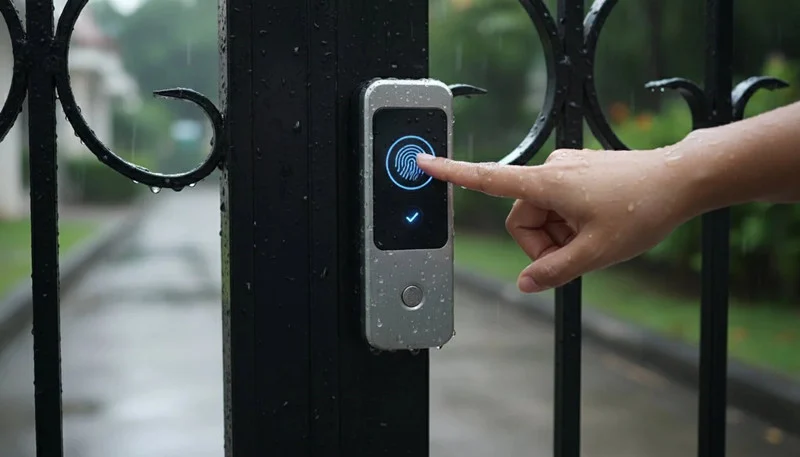
Why Outdoor Gates Need a Different Type of Lock
This is where many buyers make the first mistake. They see a smart lock designed for indoor residential use and assume it can simply be installed on an exterior metal gate. In reality, outdoor access points are much harsher environments. Rainwater enters exposed seams. Metal expands under heat. Dust affects sensors. Salt air damages finishes. Direct sun can shorten battery life dramatically. A lock that performs well on a front door may struggle badly on an exposed gate after a few months.
Outdoor gates also create a different usage pattern. A home side gate may be opened several times per day. A commercial access gate might see dozens of entries. A warehouse perimeter gate could involve drivers, supervisors, contractors, and temporary staff. An industrial gate may require permission tracking for compliance reasons. That means the lock is not just a hardware product. It becomes part of access management.
What Is an Electronic Gate Lock Outdoor System
An electronic gate lock outdoor system is an electronically controlled locking solution specifically built for external gate access rather than indoor doors. It combines physical locking hardware with digital authentication. Depending on the system, users may gain access using a PIN code, RFID credential, fingerprint verification, smartphone app, Bluetooth access, cloud authorization, or an encrypted electronic key.
The difference between a standard electronic lock and an outdoor gate system comes down to environmental engineering and use-case design. Outdoor products must resist moisture, contamination, vibration, and tampering. They also need practical access fallback methods in case of connectivity or power issues. Some systems prioritize residential convenience. Others prioritize accountability, access hierarchy, and audit records.
Types of Electronic Gate Lock Outdoor Solutions
Keypad Electronic Gate Locks
Keypad gate locks remain popular because they are simple and familiar. Users enter a PIN code, and the gate unlocks. For residential gates, small office access points, and light-duty pedestrian entries, this can work well. There is no need to carry a key, and temporary codes can be shared.
The downside is code sharing. Once multiple people know the same code, accountability disappears. Finger grease patterns on frequently used buttons can also expose common digits. If security matters beyond casual access control, keypad-only systems may become weak points.
RFID Gate Lock Systems
RFID access systems are common in apartments, offices, and gated facilities. Users tap a credential card or tag against a reader. Access feels fast and intuitive, which makes RFID attractive in higher-traffic settings.
The biggest concern is credential control. Lost cards must be deactivated quickly. Cheap RFID implementations may also be easier to clone. Better systems use stronger credential management and encrypted communication.
Fingerprint Outdoor Gate Locks
Fingerprint locks appeal to buyers who want convenience without carrying credentials. No keys. No access cards. No forgotten codes. The user simply touches the scanner and enters.
This sounds ideal until the environment becomes harsh. Outdoor fingerprint readers can struggle with dirt, rain, condensation, sunscreen residue, gloves, or scratched sensors. A protected gate entrance may support biometric use. A fully exposed industrial gate is a different story.
App Controlled Smart Gate Locks
Smartphone-controlled gate locks are attractive because they support remote access, temporary authorization, user management, and access history. For Airbnb properties, shared residential compounds, and modern homes, these features feel useful.
However, connectivity dependency introduces complexity. Bluetooth range limitations, cloud service reliability, Wi-Fi instability, and battery management all affect usability. Convenience improves, but system dependence increases.
Industrial Passive Electronic Lock Systems
For harsh outdoor environments, a different architecture exists. Passive electronic lock systems avoid relying on batteries inside the lock body itself. Instead, energy comes from the electronic credential during operation. This design reduces maintenance risk and improves reliability in exposed industrial settings where battery failure becomes costly.
This model is commonly seen in telecom, utility, logistics, and infrastructure applications where accountability matters and field maintenance access is expensive.
What Actually Matters When Buying an Electronic Gate Lock Outdoor Product
Weather Resistance
If the product listing simply says "weatherproof," that tells you almost nothing. Look for a real ingress protection rating.
| IP Rating | What It Means | Recommended Use |
|---|---|---|
| IP65 | Dust protected, water jet resistant | Covered outdoor gates |
| IP67 | Temporary immersion protection | General exposed gates |
| IP68 | High-level moisture protection | Harsh industrial outdoor environments |
For an electronic gate lock outdoor installation exposed to direct weather, IP67 or higher is usually the safer target.
Material Quality
Material failure causes many outdoor lock problems. Cheap zinc alloy with weak coatings may look fine at installation and deteriorate quickly. Stainless steel components perform better, especially near coastal environments. Hardened alloys improve anti-tamper strength.
If your environment includes salt air, industrial pollution, humidity, or agricultural chemicals, corrosion resistance becomes non-negotiable.
Power Reliability
Battery-powered locks are convenient until they are not. Battery life claims often assume ideal indoor temperatures and moderate usage. Outdoor extremes reduce actual performance.
Ask:
- How often will the gate be used?
- What happens if power fails?
- Can access still be granted?
- Is there a mechanical override?
- Does the lock require battery replacement?
Access Accountability
This matters more than buyers expect. A simple keypad may let people in, but can it tell you who entered? A shared access code creates convenience, but zero accountability.
If you manage employees, contractors, drivers, maintenance staff, or temporary users, audit trails become valuable. Good systems record:
- who accessed
- when they accessed
- which gate was opened
- whether access was successful
- whether unauthorized attempts occurred
Residential vs Commercial Electronic Gate Lock Outdoor Needs
Residential Buyers
For homeowners, convenience usually leads the buying decision. Common priorities include remote guest access, smartphone unlocking, temporary codes for deliveries, and easy daily use.
A residential buyer often values:
- simple installation
- mobile app access
- sleek design
- quick code sharing
- easy family management
If the gate sees moderate traffic and sits in a protected area, many consumer smart gate locks can perform well.
Commercial Buyers
Commercial properties care less about sleek interfaces and more about operational control. Businesses need to manage staff turnover, contractor access, after-hours permissions, and audit visibility.
A commercial access solution should prioritize:
- credential control
- user-specific permissions
- event logs
- remote management
- strong outdoor durability
Industrial Buyers
Industrial environments demand a completely different mindset. An electronic gate lock outdoor product in an infrastructure environment may need to survive years of weather exposure while supporting strict access governance.
Examples include:
- telecom compound gates
- equipment enclosures
- warehouse yard gates
- utility substations
- logistics checkpoints
In these settings, reliability usually matters more than convenience.
Common Buying Mistakes
Choosing Based Only on App Features
A flashy app does not mean the lock survives outdoors. Buyers often focus on software convenience while ignoring physical durability.
Ignoring Installation Compatibility
Not every lock fits every gate. Sliding gates, swing gates, steel frames, aluminum gates, and mesh security gates all have different installation requirements.
Underestimating User Volume
A lock designed for occasional family use may struggle in a commercial facility with dozens of daily entries.
Ignoring Maintenance Burden
A cheap battery-based solution may cost far more over time if batteries require frequent replacement or field service visits.
How to Choose the Right Electronic Gate Lock Outdoor System
Start with your environment, not your wishlist.
- Is the gate fully exposed?
- Is the location coastal?
- Do you need user tracking?
- Will temporary users need access?
- Can maintenance be performed easily?
- How critical is uptime?
Then match the lock architecture to the real use case. A residential gate and a logistics access point are completely different purchasing decisions.
FAQ
What is the best electronic gate lock outdoor option for heavy rain?
For heavy rain exposure, products rated IP67 or IP68 are usually safer. The lock should also use corrosion-resistant materials and sealed electronics. If the gate is exposed continuously, avoid lightly protected indoor-style smart locks.
Can an electronic gate lock outdoor system work without internet?
Yes. Many systems function locally using RFID, keypad codes, Bluetooth credentials, or electronic keys. Internet connectivity mainly affects remote monitoring and cloud access management.
Are fingerprint gate locks good for outdoor use?
They can work well in protected outdoor areas, but exposed environments create challenges. Dirt, rain, condensation, and sensor wear may reduce reliability over time. Always evaluate environmental exposure before choosing biometric access.
How long do outdoor electronic gate locks last?
That depends heavily on design quality, weather exposure, usage frequency, and maintenance model. A well-engineered industrial outdoor lock can last years. A lightly protected consumer smart lock used in harsh weather may fail much sooner.
Is a battery powered outdoor gate lock a bad idea?
Not necessarily. Battery systems work well in many residential scenarios. The issue appears in harsh climates, remote sites, or high-use commercial environments where battery replacement becomes inconvenient or operationally risky.
What matters most for business gate access security?
Businesses should prioritize accountability, durability, permission control, and uptime. Knowing who accessed the gate and being able to revoke access instantly often matters more than consumer convenience features.

