
Rectangle Padlock Buying Guide for Real Everyday Security
A rectangle padlock may look simple, but when you are actually trying to secure a gate, locker, cabinet, roller shutter, storage box, tool chest, or outdoor facility, simple is not the same as basic. The right rectangle padlock can make the difference between a lock that only looks secure and a lock that really stands up to weather, cutting tools, prying attempts, and years of daily use. That is why this topic deserves a more practical explanation. A lot of buyers search for terms like rectangle padlock for gate, heavy duty rectangle padlock, weatherproof rectangular padlock, or best rectangle padlock for outdoor use because they do not just want a lock. They want a lock that fits the job, lasts longer, and does not create problems later. This article breaks the topic down in a clear and grounded way, with the focus on real use cases, real selection logic, and the details that actually matter when you are spending money on security hardware.
Before you buy, it helps to be honest about one thing. Most lock problems do not happen because people bought a padlock. They happen because people bought the wrong padlock for the environment, the opening size, the attack risk, or the frequency of use. A rectangle padlock used on a damp outdoor fence in a coastal area should not be selected the same way as a rectangle padlock for a gym locker or a small indoor cabinet. Some buyers focus only on price. Others focus only on appearance. Smart buyers look at body material, shackle exposure, corrosion resistance, key system quality, and whether the lock matches the hasp or latch. Think of it like choosing tires for a vehicle. Even great tires fail when they are the wrong type for the road. The same is true for padlocks. A good rectangle padlock is not just strong on paper. It has to make sense in the place where you will actually use it.
What Is a Rectangle Padlock
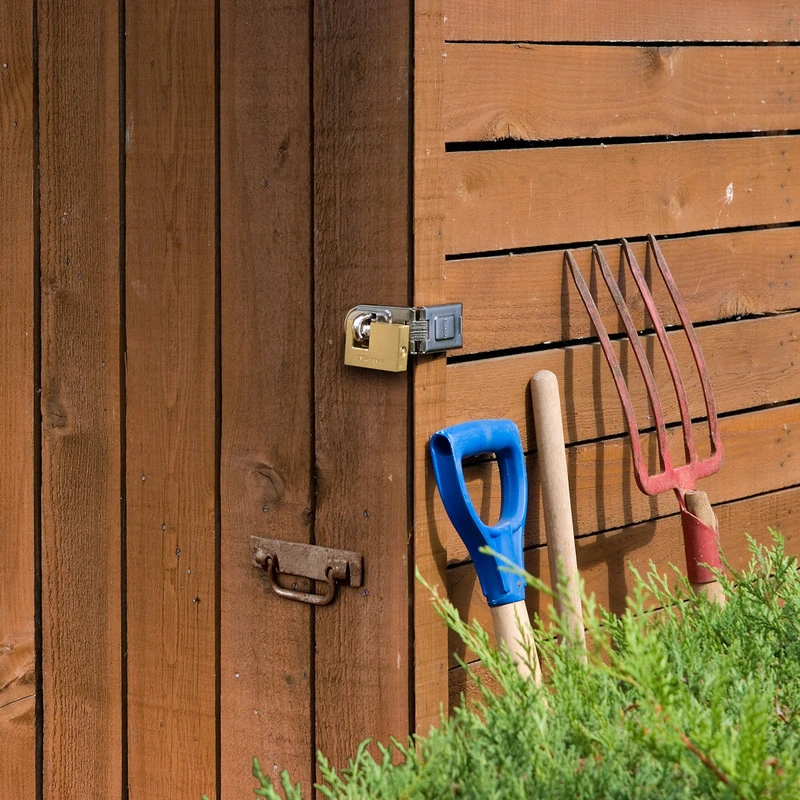
A rectangle padlock is a padlock with a rectangular body shape rather than a round or disc-shaped one. That may sound obvious, but this body design affects more than just how the product looks. In many cases, the rectangular lock body gives manufacturers more space to build a thicker housing, a stronger internal cylinder area, and a more stable locking structure. That is one reason rectangular padlocks remain so common across residential, commercial, and industrial settings. You will see them on gates, sheds, trailer boxes, school lockers, storage units, utility cabinets, and workshop doors. In other words, they are one of the most familiar locking forms because they are versatile, easy to manufacture in many security grades, and compatible with a wide range of latches and hasps.
The shape also makes rectangle padlocks easier to produce in both lightweight and heavy duty versions. A small brass rectangle padlock for an indoor locker and a large hardened steel rectangular shutter padlock for a storefront may both belong to the same general category, but they serve very different jobs. That is why searching only by the term rectangle padlock is not enough. You need to understand whether you are looking at a basic everyday rectangular lock, a weather-resistant outdoor rectangular padlock, or a high security rectangle padlock with anti-cut features. Once you understand that range, the product category becomes much more useful. Instead of thinking of rectangle padlocks as generic locks, it is better to think of them as a broad family of locks where body shape is only the starting point and security level is where the real decision begins.
Why the Rectangular Shape Still Matters
Some buyers assume shape is just a design choice, but the rectangular body matters because it affects strength, fit, and usability. In practical terms, a rectangular padlock often sits more naturally against flat surfaces and traditional latch hardware. That makes it especially common for doors, cabinets, fences, warehouse gates, and metal enclosures. On many installations, a rectangular lock body is easier to grip, easier to insert, and easier to align than locks with less conventional shapes. For people working in maintenance, logistics, warehouse operations, or field service, those small handling differences are not minor. Over time, they affect daily efficiency.
There is also a security angle here. A rectangular body can support different body thicknesses, shackle clearances, and internal locking layouts. Some rectangular padlocks are designed with partly shielded shackles, while others keep the shackle more exposed for wider compatibility. This gives buyers more freedom to match the lock to the application. For example, if you need a rectangular padlock for a storage unit latch, you might need a longer shackle. If you need one for a shutter door, you might want a compact rectangular body with very limited shackle exposure. That flexibility is one of the biggest reasons rectangular padlocks remain widely used. They are not trendy, but they are practical, and practical products usually stay relevant because they solve real problems.
Common Types of Rectangle Padlocks
Standard Rectangular Padlocks
Standard rectangular padlocks are what most people picture first. These are the common keyed or combination padlocks used on everyday property. They come in many materials, including brass, steel, laminated steel, and stainless steel, and they are available in a wide range of body widths and shackle heights. If you are searching for the best rectangle padlock for lockers, toolbox security, backyard gates, or light commercial use, you are probably starting in this category. These locks are popular because they are easy to find, relatively affordable, and flexible enough to work in dozens of scenarios.
That said, standard does not mean low quality. Some standard rectangular padlocks are perfectly fine for routine security tasks, especially indoors or in moderate-risk areas. The mistake happens when buyers expect them to perform like high security locks in harsh or high-threat environments. A small general-purpose padlock may work well on a cabinet or school locker, but it is not the right choice for a remote gate, warehouse entrance, or exposed outdoor facility. So when you hear standard rectangular padlock, think of it as an entry point, not a final answer. You still need to check the material, body strength, key cylinder quality, and shackle hardness before deciding whether it is enough for your application.
Heavy Duty and Shutter Rectangle Padlocks
If security risk is higher, heavy duty rectangle padlocks move into focus. These are often used on roller shutters, commercial doors, storage yards, industrial gates, and utility access points. In this segment, the padlock body is usually thicker, the shackle is often hardened, and the design may reduce the amount of shackle exposed to cutting tools. Buyers looking for a heavy duty rectangle padlock for outdoor gate use or a rectangle padlock for warehouse security should pay close attention here. These locks are built with the assumption that someone may actually try to attack them, not just casually open them.
What makes this category attractive is not just raw toughness. It is targeted toughness. A heavy duty rectangular shutter lock is often designed around known attack points such as bolt cutters, leverage, hammer strikes, and drilling attempts. That does not make it invincible, but it makes opportunistic attack much harder and more time-consuming. And that is really what physical security often comes down to. Good hardware buys time, increases effort, and discourages tampering. If your security environment includes public exposure, remote access points, or valuable assets behind the door, paying more for a stronger rectangular padlock is usually money well spent.
Weatherproof and Specialty Rectangle Padlocks
Another important segment is the weatherproof rectangular padlock. This is the category people should consider when the lock will face rain, dust, humidity, mud, or temperature swings. Outdoor lock failure is often less dramatic than forced entry. Sometimes the real problem is corrosion, seized cylinders, or keys that stop turning smoothly after months of exposure. A weather-resistant rectangular padlock addresses those problems through better materials, coated components, covered keyways, and improved sealing. If you are searching for the best outdoor rectangle padlock for fence gate, marine area, farm use, or utility enclosure, this is where your attention should go first.
Specialty versions may also include keyed-alike systems, long-shackle versions, closed-shackle designs, or electronic access variations for managed access environments. These are valuable when security needs go beyond one lock and one door. For example, a maintenance team may want multiple rectangle padlocks that work with the same key. A site manager may need different access levels. An outdoor operations team may need a rectangular lock body that survives regular weather exposure without constant maintenance. These are not niche concerns. In commercial and industrial settings, they are everyday buying criteria. The best padlock is rarely the one with the most dramatic product description. It is the one built for the exact routine your team actually lives with.
Best Materials for a Rectangle Padlock
Material choice is one of the first things that separates a decent rectangular padlock from the wrong one. Brass is common because it resists corrosion well and works smoothly in general indoor or mildly exposed use. Stainless steel is often the better option for outdoor and harsh environments because it handles moisture much better and offers a stronger long-term defense against rust. Laminated steel padlocks are popular for strength and cost balance, especially where people want a more robust feel without stepping into premium pricing. Hardened steel components, especially on the shackle, are important for resisting cutting attempts. When buyers search for rust proof rectangle padlock or corrosion resistant rectangular padlock, material selection is the heart of the answer.
You should also think about material as a combination, not just a label. A lock body might be brass, but the shackle material matters just as much. A stainless body is helpful, but if the internal parts are poorly protected, the product may still disappoint outdoors. This is why low-priced locks can be misleading. Two locks may look similar in product photos, but one may survive years outside while the other starts sticking, discoloring, or corroding far earlier than expected. If your lock will be used outdoors, near the coast, in agricultural settings, or in industrial yards, it is smarter to treat weather resistance as a core requirement rather than a nice bonus. Security hardware that fails from the environment is still failed hardware.
Key Features That Actually Matter
When people compare padlocks, they often get pulled toward marketing phrases like high security, premium protection, or industrial grade. Those phrases are not useless, but they do not tell the whole story. The features that matter most are much more concrete. Start with shackle hardness and exposure. A hardened steel shackle resists cutting better than a softer one. Less exposed shackle usually means fewer opportunities for tools to get a clean bite. Then look at the cylinder or keyway design. A better cylinder offers stronger resistance to picking, smoother operation, and more consistent long-term performance. If the lock is for daily access, ease of operation matters almost as much as brute strength because a lock that frustrates users often ends up being used badly or replaced too soon.
Anti-drill protection, anti-pry design, key retaining features, covered keyholes, and solid body construction also deserve attention. But here is the practical rule: do not choose features in isolation. Choose them based on actual risk. A rectangle padlock for a school locker does not need the same anti-attack package as one protecting expensive tools on a public-facing worksite. If your main threat is weather, prioritize sealing and corrosion resistance. If your main threat is theft, prioritize shackle protection and a stronger body. If your main challenge is team convenience, look at keyed-alike systems or access control compatibility. Good buying decisions come from matching feature sets to the problem you are trying to solve. That is the kind of EEAT-centered decision-making that keeps a product recommendation grounded in use, not just hype.
Rectangle Padlock vs Other Padlock Shapes
Buyers often ask whether a rectangle padlock is better than a disc padlock or another shape. The honest answer is that better depends on the installation. Disc padlocks are great when minimal shackle exposure is the top priority. They are often used on storage units because they make bolt-cutter attacks more difficult. But rectangular padlocks remain more flexible across varied hardware setups. They come in more size options, more material options, more price levels, and more body formats. That flexibility is why so many buyers still choose them even when other shapes offer certain security advantages in specific situations.
Think of padlock shape the way you would think about shoe design. Some shoes are perfect for one activity and terrible for another. Rectangle padlocks are like versatile work shoes. They may not dominate every specialized category, but they work well in a huge range of real-world applications. If you need a lock for cabinets, fences, lockers, toolboxes, shutters, trailer storage, and outdoor enclosures, a rectangular body often gives you the broadest selection. That matters when compatibility and availability are part of the decision. A great lock on paper is not helpful if it does not fit the hardware you already have or cannot be sourced consistently for larger projects.
Where Rectangle Padlocks Work Best
One reason rectangle padlocks stay popular is that they are useful in almost every environment. For homes, they work well on garden gates, sheds, side doors, cabinets, toolboxes, and lockers. For businesses, they are common on storage rooms, server cabinets, access panels, roller shutters, stock areas, and perimeter gates. In industrial settings, rectangular padlocks are used for equipment access, maintenance control, utility enclosures, and site security. Buyers looking for a rectangular padlock for gate latch, lock for outdoor cabinet, lock for trailer box, or lock for storage room door are all essentially shopping within a practical and proven product family.
They are especially useful when the installation hardware is not highly specialized. Many older doors, simple latches, and standard hasps are already built with rectangular padlocks in mind. That means you can often upgrade the lock without changing the entire mounting setup. This saves time and money. It also makes rectangular padlocks a sensible option for replacement cycles. If you are managing multiple locks across a property or business, standardizing around a rectangular format can make sourcing and maintenance easier. Instead of constantly reinventing the security setup, you can refine it by choosing stronger or more weather-resistant versions within the same familiar format.
How to Choose the Right Rectangle Padlock
Start with the use case, not the catalog. Ask where the padlock will be used, what it protects, how often it will be opened, and what kind of environment it faces. Those four questions eliminate a lot of bad options quickly. If the answer is a low-risk indoor locker, you can stay relatively simple. If the answer is an exposed outdoor gate in a theft-prone area, you need better material, a stronger shackle, and a more serious locking mechanism. If the answer is a frequently accessed commercial cabinet, smooth daily operation matters just as much as strength. This is where many buyers go wrong. They choose as if every lock is solving the same problem, but the context always changes the answer.
Next, check fit carefully. Measure shackle diameter, inner width, and inner height relative to the latch or hasp. A rectangle padlock that is too small is obviously useless, but one that is too large can also create vulnerability by leaving too much space for attack tools. Then check body material, shackle hardness, and whether the key system matches your management needs. If multiple people need access, think about keyed alike or master key options. If the site is remote, think about weather resistance and service life. The best rectangle padlock for outdoor security is not just the strongest model you can find. It is the one that fits properly, resists the right threats, and keeps working with the least trouble.
Quick Comparison Table
| Padlock Type | Best For | Main Strength | Main Limitation |
|---|---|---|---|
| Standard brass rectangle padlock | Lockers, cabinets, light indoor use | Affordable and easy to use | Not ideal for high-risk outdoor security |
| Laminated steel rectangle padlock | General gates, toolboxes, workshop use | Good strength-to-cost balance | May need better corrosion protection outdoors |
| Stainless steel rectangle padlock | Outdoor, coastal, damp environments | Strong corrosion resistance | Usually costs more |
| Heavy duty shutter rectangle padlock | Commercial shutters, gates, industrial security | Better resistance to cutting and attack | Bulkier and less flexible for small hardware |
Maintenance Tips to Make a Padlock Last Longer
Even a well-built rectangle padlock benefits from basic maintenance. This is especially true for outdoor use. Dirt, grit, moisture, and salt are slow problems, but they are relentless. If you ignore them, the lock may still look fine while the cylinder starts becoming harder to turn. A simple maintenance routine can stretch service life significantly. Clean visible dirt off the body, keep the keyway protected when possible, and use an appropriate lock lubricant instead of random oils that attract debris. For sites with heavy exposure, periodic inspection is worth doing because early signs of rust, stiffness, or body damage are much easier to address than full lock failure.
It is also smart to treat the surrounding hardware as part of padlock maintenance. A strong rectangle padlock on a weak hasp is like a strong front door with a weak frame. If the latch, hinge, or staple is loose, bent, or corroded, the system is compromised even if the lock is excellent. Check alignment, tighten mounting hardware, and make sure the padlock closes cleanly without forced positioning. Locks wear faster when they are constantly twisted into place. This is one of those practical details experienced users notice immediately. Real security is rarely about one component. It is about how the lock, hardware, environment, and daily routine all work together.
Conclusion
A rectangle padlock is still one of the most practical security choices on the market because it fits real life. It works across homes, businesses, warehouses, gates, shutters, cabinets, and outdoor installations, and it comes in enough variations to meet both basic and serious security needs. The best choice depends less on brand slogans and more on matching the lock to your environment, threat level, and usage pattern. If you need a rectangle padlock for everyday indoor protection, a standard brass or steel model may do the job. If you need a heavy duty rectangle padlock for outdoor gate security or industrial use, you should be looking at hardened shackles, stronger body construction, and better corrosion resistance from the start.
The most useful mindset is simple. Do not buy a rectangle padlock because it looks strong. Buy it because it fits your exact need better than the alternatives. That means checking the material, the shackle design, the exposure conditions, the hardware fit, and the frequency of use. Once you do that, the buying decision becomes much clearer. A good padlock should feel less like a guess and more like a tool chosen for a specific job. That is what separates a frustrating lock purchase from one that quietly does its work for years.
FAQ
1. What is a rectangle padlock usually used for?
A rectangle padlock is commonly used for gates, lockers, cabinets, toolboxes, storage units, shutters, and utility doors. Its biggest advantage is versatility. Because the rectangular body format is widely compatible with standard hasps and latches, it is often the easiest type of padlock to install or replace. The exact use depends on the lock grade. A lighter rectangular padlock may be perfect for indoor personal storage, while a heavy duty rectangular padlock is much better for commercial or outdoor security.
2. Is a rectangle padlock good for outdoor use?
Yes, but only if it is built for outdoor conditions. If you need a rectangle padlock for outdoor gate or fence use, look for weather-resistant materials such as stainless steel, corrosion-resistant coatings, covered keyways, and hardened shackles. A cheap indoor-oriented padlock may work outside for a short time, but that does not mean it is the right choice. Moisture, dirt, and temperature changes can quickly reduce performance. For outdoor use, always treat weather resistance as a requirement rather than a bonus feature.
3. What is the best material for a rectangle padlock?
The best material depends on the environment. Brass is a strong choice for general use because it resists corrosion and usually offers smooth operation. Stainless steel is better for harsh outdoor settings, especially where rain, humidity, or coastal air are common. Laminated steel works well when buyers want a strong body at a reasonable price. In many cases, the best answer is not one material alone but a good combination of a corrosion-resistant body and a hardened steel shackle for better cut resistance.
4. How do I know what size rectangle padlock to buy?
Measure the latch or hasp before buying. You need to know the shackle diameter, the inner shackle width, and the vertical clearance required for the lock to fit properly. A lock that is too small will not pass through the hardware, and a lock that is too loose can leave unnecessary room for attack tools. This is why size matters almost as much as security grade. A well-sized medium-strength lock can sometimes perform better in practice than a larger premium lock that fits badly.
5. Are all heavy duty rectangle padlocks weatherproof?
No, and this is an important distinction. A padlock can be heavy duty in terms of attack resistance but still perform poorly against corrosion if it is not designed for outdoor exposure. Some buyers assume weight equals durability in every sense, but that is not always true. A heavy lock may resist cutting well while still developing cylinder problems in wet conditions. If your application is outside, choose a model that combines physical strength with weather protection rather than focusing on one aspect alone.
6. Is a rectangle padlock better than a disc padlock?
Better is not the right word. It is more accurate to say they are better at different jobs. Disc padlocks often offer less exposed shackle, which can improve resistance to certain cutting attacks. Rectangle padlocks, on the other hand, offer broader compatibility, more size choices, and easier use across varied hardware types. If your main concern is fitting many common gate, cabinet, or door applications, a rectangle padlock is often the more flexible choice. If your setup is highly specific, another shape may sometimes be more suitable.
7. Can I use one key for several rectangle padlocks?
Yes, many manufacturers offer keyed-alike options, which allow multiple rectangle padlocks to open with the same key. This can be very useful for maintenance teams, property managers, warehouses, and businesses that want simpler key control. It reduces key clutter and helps staff work more efficiently. The main thing to confirm before purchase is whether the lock series supports keyed alike ordering and whether the security level still matches your needs. Convenience is valuable, but it should never come at the cost of choosing the wrong lock grade.
8. How often should I maintain an outdoor rectangle padlock?
For outdoor locks, a light inspection every few months is a smart baseline, and more often if the site is dusty, wet, or coastal. Check for rust, stiffness, dirt buildup, and difficulty turning the key. Use proper lock lubricant as needed and keep the surrounding latch hardware in good shape as well. If the lock is used daily, do not wait for obvious failure before acting. Small maintenance steps take very little time, but they can prevent the much bigger inconvenience of a lock that jams when you need access most.

