
Long Shackle Padlocks for Everyday Security
Long shackle padlocks are one of those small security choices that make a big difference in real life, especially when you are dealing with awkward gates, thick chains, busy warehouses, or shared storage areas. Instead of fighting with a lock that does not quite reach or twisting a chain into strange angles, a good long shackle padlock lets you lock things quickly, firmly, and with much less frustration. When you understand how long shackle padlocks work, where they shine, and where they need a little extra care, you can use them as a simple, affordable upgrade to the way you protect your home, business, and equipment.
In this article, we will walk through what makes long shackle padlocks different, why that extra shackle length matters in everyday use, how to choose the right model for your situation, and how to avoid the most common mistakes people make with these locks. The goal is not just to list features but to help you think like a security professional while still keeping things practical, conversational, and easy to act on.
What Are Long Shackle Padlocks?
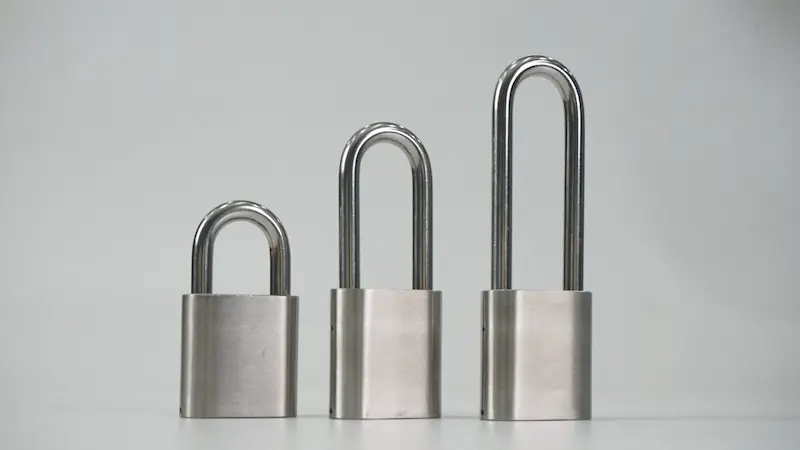
At the most basic level, long shackle padlocks are padlocks with an extended shackle compared to standard models. The shackle is the U-shaped metal loop that passes through a hasp, chain, latch, or hole to secure an item. With long shackle padlocks, that loop is taller, giving you more clearance and flexibility. This extra length is not just cosmetic; it is designed to help you lock around thicker objects, multiple items at once, or locking points that do not line up neatly. That makes long shackle padlocks especially useful for gates, fences, lockers, storage units, tool cabinets, warehouse cages, and outdoor equipment.
Unlike compact padlocks that are designed to hug closely around the hasp, long shackle padlocks leave more visible shackle above the lock body. This layout gives you more options in tight or awkward spaces but also means you need to think carefully about materials, shackle diameter, and how exposed the lock will be once installed. When chosen correctly, a long shackle padlock can offer a good balance of flexibility and security for real-world conditions.
When a Long Shackle Padlock Makes Your Life Easier
A long shackle padlock is most valuable when the locking point is not straightforward. If you have ever tried to lock a sliding gate where the holes do not align perfectly, or a storage unit with a thick latch, you already know why more shackle length can be a lifesaver. Long shackle padlocks give you extra room to pass through large eyelets, overlapping chains, or offset metal bars, so you can secure the door without bending metal or forcing the lock into place.
Long shackle padlocks are also helpful when you want to secure more than one item at a time. For example, you might run the shackle through both a toolbox handle and a fixed eye on a workbench, or through a bike frame and a rack bar, or through two doors that meet in the middle. That type of flexibility makes long shackle padlocks a common choice in shared spaces, such as apartment storage areas, community garages, school facilities, or on construction sites where equipment comes and goes but still needs basic protection when unattended.
Key Parts and Materials That Actually Matter
When you look beyond the marketing labels, the real quality of long shackle padlocks comes down to the materials used in the body and shackle, and the engineering of the internal locking mechanism. For the shackle, hardened steel or hardened alloy steel is often preferred because it offers higher resistance to cutting and sawing. Some high-end models use boron alloy shackles, which are even tougher and are a better choice when you expect determined attempts with bolt cutters.
For the padlock body, solid brass and stainless steel are widely used because they strike a balance between strength and corrosion resistance. Brass bodies are common on long shackle padlocks for outdoor sheds, garden gates, and storage units because they handle moisture better than plain steel. Stainless steel is favored in harsher environments, such as coastal areas or industrial sites where chemicals, humidity, or frequent rain could quickly corrode cheaper locks. Laminated steel padlocks, which stack multiple steel plates, can also be a good value when you need durability at a reasonable price.
Security Pros and Cons of Long Shackles
Every security choice involves trade-offs, and long shackle padlocks are no exception. The biggest advantage is flexibility. That extra shackle height gives you more options to lock around bulky hardware, thick chains, or misaligned holes, which is something a short shackle padlock simply cannot do. The downside is that a longer shackle leaves more metal exposed. More exposed shackle means more potential room for cutting tools or leverage attacks if someone is really trying to break in.
This does not mean long shackle padlocks are unsafe by nature. It just means that when you choose a long shackle padlock, you should pay more attention to shackle diameter, shackle material, and how the lock sits in the real environment. A long shackle padlock with a slim, soft metal shackle is far easier to defeat than a long shackle padlock made from hardened alloy with a thick diameter. By pairing the right lock with the right hasp, chain, or anchor point, you can reduce the exposed area and make cutting or prying much harder in practice.
How to Choose the Right Long Shackle Padlock
Choosing the right long shackle padlock starts with a simple question: what are you actually securing, and how serious are the risks if someone gets through? For low-risk situations such as a garden shed, a school locker, or a temporary fence, you may only need a mid-range brass or laminated steel padlock with a long shackle and basic key mechanism. For higher-risk environments such as commercial gates, warehouse doors, expensive tools, or fuel storage, it makes sense to invest in a high-security long shackle padlock with hardened alloy, anti-pick pins, and a more advanced cylinder.
Another key step is to measure carefully before you buy. Long shackle padlocks vary in both shackle height and diameter. Measure the thickness of the chain, hasp, or metal loops you will be locking through, then choose a shackle that is just thick enough to resist casual cutting while still fitting smoothly. If the shackle is too thin, it may be vulnerable to basic bolt cutters. If it is too thick, it will not fit through the hardware and you will end up forcing it, which is not good for either the lock or the door. Matching the lock to the job is one of the simplest ways to improve security without spending more than you need to.
Practical Use Cases at Home
For home users, long shackle padlocks shine in everyday tasks that often feel annoying with standard padlocks. Think about backyard gates where the latch and post do not meet perfectly, or metal garden storage boxes where the loop sits in an awkward recess. A long shackle padlock can reach into those tight spots and give you enough clearance to snap the lock shut without pinching your fingers or scraping the paint. You can also use long shackle padlocks on tool sheds, trailer hitches, and chains that secure lawn equipment, ladders, or bicycles.
Another common home use is for shared or rental spaces. If you rent a garage, have a shared basement storage area, or keep items in a community bike room, bringing your own long shackle padlock allows you to adapt to whatever locking hardware is already installed. Instead of relying on light-duty locks provided by the building, you can choose a long shackle padlock with better cut resistance and a key system you trust. This simple step can help protect items that are expensive to replace, such as power tools, seasonal decorations, and bikes.
Practical Use Cases for Business and Industry
In business and industrial environments, long shackle padlocks are often used wherever equipment, gates, and storage points do not share a uniform design. Warehouses use long shackle padlocks on interior cages, rolling doors, and portable containers. Factories use them to secure lockout tagout points, electrical cabinets, valves, and tool cabinets where extra shackle length helps workers run the shackle through multiple points. Construction companies use long shackle padlocks on temporary fencing, fuel tanks, and job boxes that move from site to site.
For organizations that manage many long shackle padlocks across a site, keyed alike systems can simplify operations. With keyed alike long shackle padlocks, multiple locks open with the same key, helping supervisors and security teams move quickly without juggling a large key ring. For higher-risk areas, keyed different or restricted keyway systems are preferred so that each long shackle padlock has its own unique key and key duplication is tightly controlled. This type of layered approach reflects real-world security best practice and aligns with modern expectations for access control and accountability.
How to Use Long Shackle Padlocks for Better Security
The way you install and position a long shackle padlock has a major impact on the real security it delivers. Whenever possible, aim to minimize the exposed length of the shackle once the lock is closed. Even though you chose a long shackle padlock for its reach, you can still route the shackle through the hardware in a way that reduces the space available for cutters or pry bars. For example, if you are locking a chain, pull the chain tight and position the shackle so it rests close to the padlock body rather than dangling in open air.
It is also smart to pair a good long shackle padlock with sturdy, well-designed hardware. A hardened long shackle padlock does not help much if the hasp is thin, rusted, or poorly fastened to the door. Make sure screws are hidden or protected, and avoid hasps that can be easily bent away from the door frame. For chains, choose hardened steel chains with welded links rather than lightweight chains intended only for temporary use. In many attacks, criminals will go for the weakest link, which might be the chain or hinge rather than the padlock itself.
Maintenance Tips to Keep Your Lock Working Smoothly
Even the best long shackle padlocks need basic care to deliver long-term performance, especially if they live outdoors. Dirt, moisture, and temperature changes can slowly affect the smoothness of the cylinder and the movement of the shackle. A simple maintenance routine starts with a quick visual check. Look for rust, heavy dirt buildup, or signs that the shackle is no longer returning fully when you open the lock. If the lock feels stiff, do not force it; that is your signal that cleaning and lubrication are due.
For most long shackle padlocks, a small amount of appropriate lubricant in the keyway and on the shackle can restore smooth operation. Many professionals prefer a dry or graphite-based lubricant for the key cylinder and a light, non-greasy lubricant for the shackle and locking points. After spraying or applying lubricant, insert the key and operate the lock several times to distribute it. If the lock is exposed to rain or snow, wiping it down from time to time and avoiding long periods of standing water around the lock can significantly extend its lifespan.
Common Mistakes People Make with Long Shackle Padlocks
One of the most common mistakes is treating all long shackle padlocks as if they offer the same level of security. A budget long shackle padlock with a thin, soft shackle may be fine for a garden gate but is not a good match for a high-value trailer or a warehouse door. Another mistake is assuming that any lock with a long shackle will fit every situation. Without measuring first, users sometimes buy a lock that is either too short to reach properly or so tall that it leaves an unnecessary amount of shackle exposed.
A second mistake is neglecting the surrounding hardware. People invest in a good long shackle padlock but attach it to a weak hasp or light-duty chain that can be cut quickly. Others angle the lock in such a way that the shackle is easy to grip with tools, even though a different positioning would have made attacks harder. By taking a few minutes to think through how a thief might try to defeat the lock, you can often reposition the padlock or upgrade the hasp to remove easy opportunities.
Long Shackle Padlocks vs Standard Padlocks
Standard padlocks generally keep the shackle as short and protected as possible, which is helpful for pure resistance to cutting and prying. Many high-security padlocks are designed this way, with a shackle that is recessed into the body or heavily shielded. Long shackle padlocks, on the other hand, trade some of that inherent protection for much greater flexibility in the way you can use them. The right choice depends on your environment. Where you can install a protected hasp with perfect alignment, a short shackle lock may offer the highest protection. Where hardware is already installed or constantly changing, the freedom of a long shackle padlock can be more practical.
Price differences between long shackle padlocks and standard padlocks are usually driven more by material and security level than by shackle length alone. You can find very affordable long shackle padlocks for low-risk tasks, as well as premium long shackle padlocks built for serious security. If you compare locks within the same brand and security category, the long shackle version is often priced similarly to the standard version. That means you can usually choose based on application and design rather than cost alone.
Are Long Shackle Padlocks Right for You?
Long shackle padlocks are a smart choice if you regularly deal with unusual locking points, shared spaces, or equipment that does not line up neatly with standard hasps. If you have ever found yourself stretching a chain to its limit or fighting with a lock that will not quite close, switching to a well-chosen long shackle padlock can relieve a lot of everyday irritation while still giving solid security. The key is to pick a model that matches your risk level, use it with strong hardware, and pay attention to how much shackle remains exposed once it is in place.
If you want flexible, practical security that fits real-world gates, chains, and equipment, long shackle padlocks deserve a place in your toolkit. With the right combination of hardened materials, thoughtful installation, and simple maintenance, they can protect your belongings in a way that adapts to your environment instead of forcing your setup to adapt to the lock.
Frequently Asked Questions About Long Shackle Padlocks
Are long shackle padlocks easier to cut than regular padlocks?
Long shackle padlocks can be easier to access with tools simply because more shackle is visible. However, whether they are easier to cut depends heavily on the shackle material and diameter. A long shackle padlock with a hardened alloy shackle and a thick diameter can be much more resistant than a compact lock made from mild steel. If cutting attacks are a concern, look for hardened or boron alloy shackles and consider how you position the lock so that the shackle is harder to reach with bolt cutters.
What should I measure before buying a long shackle padlock?
Before ordering a long shackle padlock, measure the thickness of the hasp, chain, or metal loops that the shackle needs to pass through, and the distance between the locking points when the door or gate is closed. These two measurements help you select a shackle diameter that fits smoothly and a shackle height that gives enough clearance without leaving unnecessary space for tools. Taking a tape measure to the gate or cabinet takes only a minute and dramatically improves your chances of getting the right lock on the first try.
Can I use long shackle padlocks outdoors all year round?
Yes, many long shackle padlocks are designed for continuous outdoor use, but you need to choose the right materials and maintain them. For permanent outdoor installations, look for stainless steel or solid brass bodies and shackles with corrosion resistant coatings. Avoid very cheap locks with thin chrome plating, as they tend to rust quickly. If your lock is exposed to rain, snow, or dust, plan to clean and lubricate it a few times a year to keep the cylinder moving freely and to prevent the shackle from seizing.
Are combination long shackle padlocks secure enough for valuable items?
Combination long shackle padlocks are convenient when multiple people need access without managing keys, such as in schools, gyms, or shared workspaces. For low to medium value items, a quality combination lock can be perfectly adequate. For high value tools, expensive bikes, or critical business equipment, most professionals still prefer a keyed long shackle padlock with a high-security cylinder. Advanced keyed cylinders offer better resistance to picking and manipulation and are often combined with stronger shackles and more robust bodies.
Is it better to buy keyed alike or keyed different long shackle padlocks?
Keyed alike long shackle padlocks are ideal when convenience is the priority and you want one key to open several locks, such as multiple gates at a small business or several storage units at home. Keyed different locks provide an additional layer of security because each padlock has its own unique key, which is useful when you want to limit access and reduce the impact if one key is lost. In many organizations, a mix of both is used: keyed alike locks for general, low risk areas and keyed different or restricted keyway locks for sensitive or high value zones.
How often should I lubricate a long shackle padlock?
As a general rule, lubricating a long shackle padlock every few months is a good starting point, especially if it is exposed to outdoor conditions or heavy daily use. If the lock begins to feel stiff, the key becomes harder to turn, or the shackle does not spring open smoothly, that is a clear sign that lubrication is overdue. After applying lubricant, work the key and shackle several times to distribute it evenly inside the mechanism so that it can reach all moving parts.
What can I do if my long shackle padlock is starting to rust?
If you notice surface rust on a long shackle padlock, cleaning it early helps prevent more serious damage. You can gently remove light rust with a soft brush or cloth and then dry the lock completely. Once clean, add suitable lubricant to the keyway and shackle area. If the rust is severe and the shackle no longer moves freely, or if you see deep pitting that might weaken the shackle, it may be safer to replace the padlock with a higher quality, corrosion resistant model rather than taking a risk on compromised metal.
Do long shackle padlocks work well with chains?
Long shackle padlocks can be an excellent match for heavy chains, especially when you want to loop a chain through large objects such as posts, gates, trailers, or equipment. The extended shackle makes it easier to lock multiple links together without leaving the lock hanging in an awkward position. For best results, pair your long shackle padlock with a hardened chain that has welded links and avoid thin decorative chains that can be cut quickly even if the padlock itself is strong.
Can I use one long shackle padlock for both home and work?
You technically can use the same long shackle padlock for both home and work, but it is usually better practice to separate them. Work environments may introduce more wear, dirt, or risk of tampering compared to home use. From an organizational point of view, many people prefer to keep business keys and home keys distinct so that access to one does not automatically grant access to the other. That said, using similar models with different keying systems can make it easier to manage without mixing responsibilities.
When should I upgrade to a high-security long shackle padlock?
You should consider upgrading to a high-security long shackle padlock when the item behind the lock would be expensive or disruptive to replace, or when you know the location has a history of theft attempts. Signs that a high-security upgrade is due include visible tool marks on existing locks, break-in reports in the area, or an increase in the value of equipment stored behind the lock. High-security long shackle padlocks with hardened alloy shackles, advanced cylinders, and strong bodies cost more upfront, but they are a small investment compared to the potential cost of lost equipment or business interruption.

