
How to Pick Padlock with Paperclip?
Many people search for how to pick padlock with paperclip because they lost a key, found an old storage box, or became curious after watching a short video online. The problem is that most online content makes padlock picking look easier and safer than it really is. A paperclip is not a magic key, and using it on any lock you do not own or do not have permission to open can create serious legal trouble. This article does not provide step-by-step lock picking instructions. Instead, it explains why the topic is so popular, what makes some padlocks vulnerable, why paperclips are poor tools, and what safe options you should consider when your own padlock will not open.
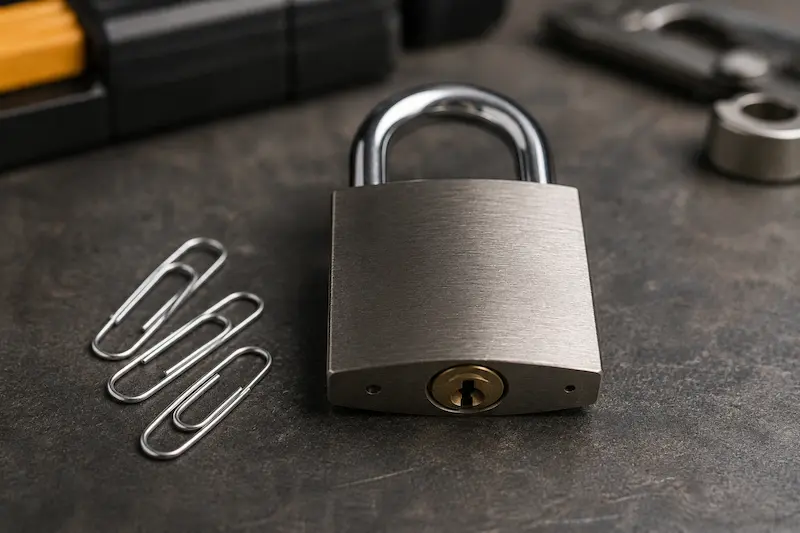
Why People Search for How to Pick Padlock with Paperclip
The main reason people search this keyword is simple: they want a fast solution with something they already have nearby. A paperclip feels harmless, cheap, and easy to find, so it naturally becomes the first object people think about when a padlock refuses to open. Maybe the lock is on a gym locker, a toolbox, a suitcase, a backyard shed, or a small cabinet. When you are standing there with no key in your hand, it is tempting to believe that a tiny piece of bent metal can solve the problem in seconds. That is why the phrase how to pick padlock with paperclip keeps appearing in search behavior.
However, search intent matters. Some users are not trying to bypass security for the wrong reason; they simply want to understand what is possible. Others are concerned about whether their own padlocks are weak. If a cheap padlock can be opened with office supplies, it may not be suitable for protecting valuable items. For buyers, facility managers, warehouse operators, and homeowners, this question is less about learning a trick and more about understanding security risk. That is the safer and more useful angle to take: instead of asking how to open a lock without authorization, ask how padlocks work and how to choose one that cannot be easily manipulated.
Can a Paperclip Really Open a Padlock?
A paperclip may affect some very simple or poorly made locks, but it is not a reliable way to open a padlock. Cheap locks often use low-precision parts, weak springs, and simple internal designs. These weaknesses may make them easier to manipulate, especially when the lock is old, worn, or poorly manufactured. But that does not mean every padlock can be opened this way. Modern padlocks from reputable brands often include better machining, tighter keyways, improved pins, stronger springs, and anti-picking features. In real life, a paperclip bends easily, lacks control, and usually cannot provide the precision needed to deal with a well-built lock.
| Padlock Type | Paperclip Risk Level | What It Means for Buyers |
|---|---|---|
| Cheap mini padlock | Higher risk | Good only for low-value items, not for real security. |
| Old or worn padlock | Medium risk | Internal wear may reduce security and reliability. |
| Standard branded padlock | Lower risk | Usually better for daily use and moderate protection. |
| High-security padlock | Very low risk | Better choice for gates, storage units, tools, and business assets. |
What Makes a Padlock Easier or Harder to Manipulate?
The real issue is not the paperclip itself. The real issue is the lock design. A weak padlock is easier to attack because its internal parts are less precise. A stronger padlock is harder to manipulate because its components are designed to resist pressure, false movement, and forced alignment. This is why two padlocks that look almost the same from the outside can perform very differently. One may be a low-cost lock made for decoration or light use, while the other may have hardened steel, tighter tolerances, and security pins inside. From the outside, both are just padlocks. Inside, they are completely different products.
If you are buying a padlock for a warehouse, jobsite, utility room, storage cage, trailer, or outdoor cabinet, do not judge only by size and price. A large lock is not always a secure lock. Some big, shiny padlocks still use weak lock cores. A smaller lock from a better brand may perform better because the lock body, shackle, and cylinder are designed as a complete security system. This is especially important for B2B buyers who need repeatable protection across many access points. When dozens or hundreds of locks are deployed across a site, a weak lock choice can become a long-term operational risk.
Why Paperclips Are Poor Lock Tools
A paperclip was designed to hold paper, not to control the internal parts of a lock. That sounds obvious, but it is exactly why online videos can be misleading. Proper locksmith tools are made from stronger, more controlled materials. A paperclip is soft, flexible, and inconsistent. When pressure is applied, it bends. When it bends, it loses shape. When it loses shape, it becomes even harder to control. This is why many people who try this on their own lock end up with a bent paperclip, a scratched keyway, and a lock that still will not open.
There is also a risk of damaging your own lock. If a piece of metal snaps inside the keyway, the problem becomes worse. Instead of dealing with a lost key, you may now have a blocked lock cylinder. That can make a locksmith visit more expensive or force you to cut and replace the lock. For homeowners and business users, this is the part most tutorials fail to mention. The cheapest-looking solution can become the most expensive one if it damages the lock, cabinet, gate, or surrounding hardware.
A Safer Way to Understand Padlock Security
If your goal is education, the safer approach is to study how locks work without trying to bypass a real lock in use. Lock mechanisms are interesting because they combine simple parts into a reliable security system. Most common padlocks use a cylinder that accepts a matching key. When the correct key is inserted, internal components align so the cylinder can rotate and release the locking mechanism. When the wrong object is inserted, the parts do not align properly, and the lock stays closed. That basic idea explains why a well-made lock can resist casual tampering.
For a business buyer, this knowledge is useful because it changes how you evaluate products. Instead of asking only “Is this padlock cheap?” or “Is the shackle thick?”, you can ask better questions. Does the lock have anti-pick features? Is the shackle hardened? Is the cylinder protected? Is it suitable for outdoor use? Does the manufacturer provide security ratings or product testing information? These questions help you avoid locks that look strong but perform poorly. In security purchasing, the lock you choose should match the value of what it protects.
What to Do If Your Own Padlock Will Not Open
If the padlock belongs to you and you cannot open it, the best first step is not to force the lock. Slow down and check the simple things first. Try to find the spare key, inspect whether the key is worn, and check whether dirt, rust, or ice is affecting the lock. If the lock is outdoors, moisture and dust can cause stiffness over time. A lock lubricant designed for cylinders may help in some cases, but avoid random oils that attract dirt and make the problem worse later. If the lock protects valuable property, calling a licensed locksmith is usually safer than experimenting with makeshift tools.
For low-value locks on items you own, replacement may be the most practical option. A basic padlock is often cheaper than the time spent trying to rescue it. For business use, however, repeated lock failure is a signal that the locking system may need improvement. If employees often lose keys, if locks rust quickly, or if access records are unclear, the issue is not just one stuck padlock. It may be a sign that your site needs better key control, weather-resistant locks, or a more structured access management system.
Better Alternatives to Paperclip Padlock Picking
When people search for how to pick padlock with paperclip, they usually want a quick fix. But quick fixes are not always the smartest fixes. A safer option depends on the situation. If it is a personal locker, contact the property manager. If it is a storage unit, contact the facility office. If it is a business gate or tool cage, check internal key management records before forcing the lock. If the lock is legally yours but cannot be opened, a locksmith can usually solve the problem without damaging surrounding hardware. This matters when the lock is attached to an expensive cabinet, trailer, gate, or electrical enclosure.
| Situation | Recommended Action | Why It Is Safer |
|---|---|---|
| Lost key for personal lock | Use spare key or replace the lock | Prevents damage and keeps the solution simple. |
| Business lock will not open | Check key records or call a locksmith | Protects company assets and avoids unauthorized access concerns. |
| Outdoor lock is stuck | Inspect for rust, dirt, or weather damage | Helps identify whether replacement is needed. |
| Repeated lost-key problems | Improve key control or upgrade access management | Solves the root problem, not just one lockout. |
How to Choose a Padlock That Is Harder to Manipulate
If this topic makes you worry about your own locks, that is actually useful. It means you are thinking like a security buyer, not just a casual user. A better padlock should resist both forced attacks and manipulation attempts. Look for a hardened shackle, a strong lock body, weather resistance, and a cylinder designed with anti-pick features. For outdoor use, corrosion resistance matters because rust can weaken both function and security. For business use, key control also matters. A strong lock is less useful if keys are copied freely or shared without records.
In many workplaces, the lock itself is only one part of the system. Warehouses, utility sites, telecom cabinets, power facilities, logistics yards, and industrial storage areas often need more than a traditional padlock. They need to know who opened what, when it happened, and whether the access was authorized. That is why many organizations move toward electronic locks, passive electronic padlocks, or access control systems when ordinary keyed locks become difficult to manage. A simple padlock may work for one shed. It may not work well for hundreds of distributed access points.
When a Traditional Padlock Is Not Enough
A traditional padlock is easy to understand, but it has several limits. Keys can be lost, copied, borrowed, or kept by former employees. If a lock is opened, there may be no record of who opened it. If a site has many locks, managers may not know which person holds which key. This becomes a real problem in industries where access control is tied to safety, compliance, and asset protection. Think about telecom sites, power cabinets, railway facilities, banking equipment rooms, or warehouse security cages. In those places, the question is not only whether a lock can resist a paperclip. The bigger question is whether access can be controlled and traced.
This is where modern locking systems create value. Passive electronic locks, for example, do not require a battery inside every lock body, but they can still support controlled authorization and access records through electronic keys. For companies managing many locations, this can reduce the risk caused by uncontrolled mechanical keys. It also helps security teams review access activity when something goes wrong. For buyers, the lesson is clear: if the asset is important, the lock should be part of a wider security strategy, not just a cheap object hanging on a hasp.
How to Protect Your Locks from Casual Tampering
The best defense against casual tampering is not one single feature. It is a combination of better lock selection, better installation, and better access habits. Start by avoiding ultra-cheap padlocks for anything valuable. Then choose locks with protected shackles, strong cylinders, and weather-resistant materials. Install the lock in a way that does not leave the shackle exposed to easy cutting or twisting. A good lock can perform poorly if it is installed on a weak latch, thin chain, or low-quality hasp. Security is only as strong as the weakest link in the setup.
You should also review how keys are handled. Many lock failures in businesses are not caused by advanced attacks. They are caused by poor key management. Someone forgets to return a key. A spare key is left in an obvious location. A contractor keeps access after a job is finished. A former employee still has a copy. These issues are far more common than dramatic lock picking scenes. If your goal is real protection, focus on daily control. A secure padlock with careless key management is like a strong front door with the key hidden under the mat.
Common Myths About Paperclip Padlock Picking
One common myth is that any padlock can be opened with a paperclip if you know the right trick. That is not true. Lock quality, internal design, wear level, keyway shape, and user skill all matter. Another myth is that lock picking is always quiet and clean. In reality, amateur attempts can scratch the lock, deform the keyway, break improvised tools, and make the lock harder to open later. A third myth is that a larger padlock is always safer. Size helps in some ways, especially against cutting, but the cylinder quality and shackle protection are just as important.
The most dangerous myth is that online tutorials can replace professional help. They cannot. A tutorial may not know your local laws, the type of lock you have, the value of the property, or whether forcing the lock will cause damage. That is why responsible advice should always separate education from unauthorized action. Learning about lock security is useful. Trying to bypass a lock without clear permission is not. If you are creating content for a security-related website, this distinction also builds trust. Readers do not just need curiosity-driven content; they need safe, practical, and responsible guidance.
Conclusion
The keyword how to pick padlock with paperclip attracts attention because it sounds simple, practical, and almost clever. But the real lesson is not that a paperclip is a reliable lock-opening tool. The real lesson is that lock quality matters, legal permission matters, and safer solutions usually exist. A paperclip is weak, imprecise, and likely to damage the lock if used carelessly. Some cheap locks may be vulnerable, but better padlocks are designed to resist casual manipulation. If your own lock will not open, use a spare key, contact the property owner, replace the lock, or call a licensed locksmith instead of risking damage.
For buyers, homeowners, and business managers, this topic should also be a wake-up call. If a lock protects something valuable, do not choose it only by price. Look at the lock body, shackle, cylinder, weather resistance, and key control process. If you manage many sites or need access records, consider whether traditional padlocks are enough or whether a controlled locking system would be safer. A good lock does not just close a door. It supports a larger security plan, reduces risk, and helps you stay in control when people, keys, and assets are spread across different locations.
FAQ
Can you really pick a padlock with a paperclip?
A paperclip may affect some very cheap or worn padlocks, but it is not a reliable or recommended method. Most modern padlocks are harder to manipulate than online videos suggest. A paperclip is soft, bends easily, and lacks the control needed for precise work. If the lock belongs to you and will not open, safer options include using a spare key, contacting a locksmith, or replacing the lock.
Is it legal to pick a padlock with a paperclip?
Legality depends on ownership, permission, intent, and local law. Opening your own lock for a legitimate reason is very different from trying to open someone else’s property. Unauthorized lock bypassing can lead to serious legal problems. If there is any doubt, do not attempt it. Contact the property owner, facility manager, or a licensed locksmith.
Why do online videos make padlock picking look easy?
Many videos use very simple locks, practice locks, or edited demonstrations. The viewer sees the successful moment but not the failed attempts before it. Some creators already know the lock they are using and have practiced on it many times. Real locks in real situations are less predictable. That is why copying a short video often leads to frustration or lock damage.
What should I do if I lost the key to my own padlock?
Start with the safest options. Look for a spare key, check whether someone else has an authorized copy, and confirm that the lock is not simply jammed by dirt or weather. If it protects valuable property, call a locksmith. If it is a low-cost lock on an item you own, replacement may be faster and cheaper than forcing it. Avoid pushing random metal into the keyway because broken pieces can make the problem worse.
What type of padlock is harder to tamper with?
A stronger padlock usually has a hardened shackle, a solid lock body, a protected or shrouded shackle design, better cylinder quality, and anti-pick features. For outdoor use, corrosion resistance is also important. For business use, key control matters just as much as lock strength. If you need to manage many locks across multiple sites, a controlled locking system or passive electronic lock may provide better visibility and access management than ordinary keyed padlocks.
Are cheap padlocks safe for outdoor gates or storage units?
Cheap padlocks are usually not the best choice for outdoor gates, storage units, trailers, sheds, or business assets. They may use weaker materials, lower-precision cylinders, and simple shackles that are easier to cut or manipulate. They can also rust quickly if used outdoors. For anything valuable, choose a lock designed for the environment and the risk level. A slightly more expensive lock can save much more by preventing theft, damage, or repeated replacement.
How can businesses reduce padlock-related security risks?
Businesses should treat padlocks as part of a complete access control process. That means choosing better locks, tracking who holds keys, removing access when employees or contractors leave, and replacing locks when key control is lost. For high-value or distributed sites, traditional mechanical keys may not provide enough visibility. Electronic or passive electronic locking systems can help by supporting authorization control and access records, which makes management easier and more accountable.

