
How to Open a Padlock with Combination Safely and Legally
If you are searching how to open a padlock with combination, the most useful answer is not a risky shortcut. It is a practical, legal, and low-damage path that helps you regain access to your own lock without turning a small problem into a broken lock, damaged property, or a security issue. Many people land on this topic because they forgot the numbers on a school locker, tool cabinet, gate lock, luggage lock, or storage unit padlock. That is a very normal problem. The good news is that there are several safe ways to deal with it, from checking model-specific opening instructions to using the manufacturer reset process, proof-of-ownership support, or a licensed locksmith. The less good news is that random trial-and-error or force usually wastes time and often ruins the lock before you get any result. This article is written for legitimate owners, facility users, maintenance teams, and buyers who want a clear and trustworthy explanation of what to do next. It focuses on real-world decision making, safe recovery, and better lock selection, while avoiding harmful or improper bypass instructions.
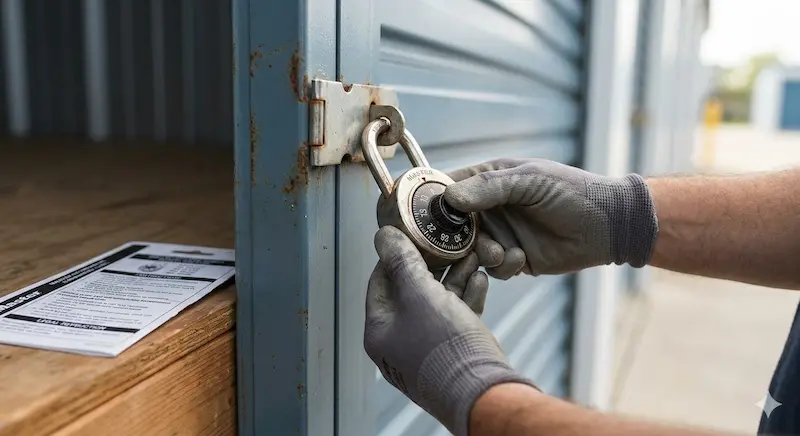
This article is intended for lawful access to locks you own or are authorized to open. If the lock protects someone else’s property or a shared facility you do not manage, the right step is to contact the owner, site manager, or a licensed locksmith.
Why people search how to open a padlock with combination
Most people do not search how to open a padlock with combination because they want a clever trick. They search because they are locked out and need a solution that works today. A forgotten code can interrupt a shipment, delay a maintenance task, block access to personal gear, or create an awkward moment in a school, gym, warehouse, or office. In business settings, it can become more than a minor inconvenience. A team may lose access to tools, spare parts, safety equipment, or controlled storage areas, and the downtime can easily cost more than the padlock itself. That is why a good response starts with context. What kind of padlock is it. Who owns it. Is it a simple three-digit combination padlock, a resettable travel lock, a locker lock issued by a school, or a branded industrial lock with a documented recovery path. Once you answer those questions, the next step becomes much clearer. The smartest approach is rarely the most dramatic one. It is usually the method that protects the asset, keeps records clean, and solves the issue without creating a second problem.
Start with the simplest legal checks before doing anything else
Before you assume the combination is lost forever, take a breath and go through the obvious checks that people often skip when they are frustrated. Start by confirming the exact lock brand and model. Many combination padlocks look similar, but their opening sequence, reset logic, and support options can be very different. Some locks require a full reset turn before entering the correct numbers. Some luggage and small dial locks can drift slightly from wear, making the numbers feel off even when the correct code is being used. Some school and gym locks are issued under a management system, which means the front desk, facilities team, or locker administrator may already have the combination on file. If the lock belongs to your company, look in maintenance records, onboarding notes, spare key logs, or procurement files. If it is a lock you bought for travel, check the product box, instruction card, old order confirmation, or even your password manager if you stored the combination there. These simple checks sound basic, but they solve a surprising number of lockout cases without damage, cost, or delay.
A quick decision table for forgotten padlock combinations
| Situation | Best first step | Why it matters |
|---|---|---|
| You know the brand and model | Check the official instructions or support page | Many locks have brand-specific opening and reset guidance |
| The lock is issued by a school, gym, or facility | Ask the administrator or site manager | They may already have the combination or a replacement process |
| The lock protects business assets | Check internal records and access logs | This avoids unauthorized handling and keeps compliance clear |
| The lock is on personal luggage or a small box | Find the original packaging or purchase record | Reset and warranty details are often tied to the model |
| The lock is old, jammed, or weather-exposed | Consider service wear, rust, or dial alignment issues | The code may be correct while the mechanism is the actual problem |
How combination padlocks work in everyday use
You do not need to become a lock engineer to handle a forgotten code responsibly, but understanding the basics helps you avoid bad decisions. A combination padlock is designed so the internal mechanism aligns only when the correct input sequence is entered. In normal use, this offers convenience because there is no separate key to carry, copy, or lose. That is one reason combination locks remain popular for lockers, gates, cabinets, cases, and temporary storage. At the same time, combination locks are not all built for the same job. A low-cost luggage padlock is not the same as a commercial locker lock, and neither one is the same as a security solution used for utilities, telecom, field assets, or critical infrastructure. This matters because people often expect one universal answer to how to open a padlock with combination, when the truth is that each lock family has its own safe recovery path. If you treat a basic travel lock like an industrial security lock, you will either get nowhere or damage something that should have been handled through proper support or replacement.
What not to do when you forget a combination padlock code
When people panic, they usually make the situation worse in one of three ways. First, they start spinning numbers randomly and lose track of what they already tested, which turns a manageable problem into a messy guessing session. Second, they use force, pry tools, or internet “hacks” that leave visible damage on the lock, the latch point, or the surface around it. Third, they involve the wrong person, such as a coworker or handyman with no authorization, which can create liability issues in a workplace or shared facility. A forgotten combination does not justify careless handling. If the lock secures inventory, equipment, medicines, electrical areas, site controls, or customer property, the right move is to follow the authorized recovery chain. Even for personal use, the best rule is simple: do not use destructive methods unless you are the lawful owner, you have exhausted non-destructive support options, and replacement is clearly acceptable. People often underestimate how quickly a damaged hasp, bent latch, or scarred cabinet door can become the most expensive part of the problem.
The safest way to recover access to your own lock
If your goal is lawful access, the safest way to recover access is to move from least invasive to most invasive solutions. Start with the official documentation. If the brand offers a user manual, reset instructions, or a support page, use that first. If the lock was installed as part of a facility system, ask the administrator whether there is an assigned code record, override process, or replacement policy. If the lock is resettable and you still have proof of ownership, some manufacturers can help verify the model and guide you through the right next steps. If the lock is physically sticking because of dirt, cold weather, or rust, a professional can tell you whether it is a combination issue or a mechanical failure. If none of those paths work, a licensed locksmith is usually the fastest and least risky option. This is not as exciting as a dramatic shortcut, but it is the approach that protects your property, keeps you compliant, and prevents damage that costs far more than the lock itself.
When a locksmith is the right answer
People often wait too long before calling a locksmith because they assume the service will be expensive or unnecessary. In reality, a professional is often the most efficient choice when the lock secures something important, when the lock is installed in a difficult location, or when the surrounding asset is far more valuable than the lock. Think about a combination padlock on a utility cabinet, a jobsite gang box, a warehouse cage, a shipping area gate, or a storage cabinet with expensive tools. In those cases, the question is not just how to open a padlock with combination. The real question is how to restore access while protecting the door, latch, frame, compliance record, and business continuity. A locksmith can also identify whether the issue is a lost code, a failed internal mechanism, misalignment, environmental wear, or a wrong operating sequence. That diagnosis matters. It prevents repeated mistakes and helps you decide whether to keep using the same lock type or upgrade to something more manageable.
How to deal with a stuck or weather-damaged combination padlock
Sometimes the real problem is not the code at all. It is the condition of the padlock. Combination padlocks used outdoors or in damp storage areas often suffer from dust, corrosion, freezing conditions, or long-term wear. In those cases, users naturally assume they forgot the numbers because the lock does not respond normally. That is why it is important to inspect the environment before assuming memory failure. Is the dial dragging. Is the lock body rusty. Has the shackle been under side pressure from a warped latch or misaligned gate. Has paint, dirt, or debris built up around the opening point. These clues tell you that the combination may still be correct while the mechanism is physically struggling. For valuable assets, it is smarter to stop there and get professional help rather than keep stressing the lock. For low-risk personal use, official maintenance guidance from the lock brand may help identify whether cleaning, lubrication, or replacement is appropriate. The key point is this: a stuck lock and a forgotten code can look similar from the outside, but they should not be handled the same way.
How to choose a better combination padlock if you keep getting locked out
A lot of lockout problems begin at the buying stage, not the opening stage. People buy the cheapest padlock on a marketplace, set a forgettable code, use it in the wrong environment, and then blame the lock when things go wrong. If you keep running into access problems, it is worth asking whether the lock type actually fits the job. For personal gym use, a simple resettable combination padlock may be fine. For a school locker, a managed locker system may be better. For tools, inventory, field equipment, maintenance zones, and industrial sites, you may want higher control, better accountability, and a more professional access method. This is where buyer intent matters. Anyone researching how to open a padlock with combination is often close to a product decision, because a bad experience with one lock usually leads directly to a search for a better one. A reliable solution should match the environment, the number of users, the value of what is being protected, and the consequences of a lockout. When those factors are ignored, the same problem comes back again and again.
What buyers should compare before choosing a new lock
| Factor | Questions to ask | Why it affects daily use |
|---|---|---|
| Use environment | Is the lock indoors, outdoors, wet, dusty, or exposed to cold? | Harsh environments increase sticking, wear, and opening failures |
| User count | Will one person use it or many people across shifts? | More users usually require better control and record keeping |
| Reset method | Is the combination easy to change and easy to document safely? | Poor reset design leads to forgotten codes and confusion |
| Asset value | What is the lock actually protecting? | Higher-value assets need stronger control than low-risk lockers |
| Recovery process | Does the brand offer clear support if the code is forgotten? | A good recovery path reduces downtime and replacement cost |
| Audit needs | Do you need to know who accessed the lock and when? | Traditional combination locks provide little or no traceability |
Why traditional combination padlocks can be a weak fit for business use
For personal and light-duty use, traditional combination padlocks can be perfectly acceptable. For business operations, they often become a management headache. A code can be shared casually, forgotten after staff turnover, written on paper, or reused across multiple locations. None of that is ideal if the lock protects valuable equipment, controlled stock, maintenance access, utility points, or sensitive work areas. The problem is not only whether someone can open the lock. The bigger problem is whether your team can manage access in a controlled and traceable way. Traditional combination padlocks are simple, but that simplicity cuts both ways. They reduce key handling, yet they also reduce accountability. If multiple people know the code, who changed it. Who last accessed the area. Who is responsible when a lockout delays work. If you are asking how to open a padlock with combination inside a commercial environment, it may be a sign that the existing lock strategy no longer fits your operational needs. That is often the right time to review electronic or managed access alternatives.
Modern alternatives for sites that need more control
Once access control becomes operational rather than personal, many organizations move beyond simple combination padlocks. Modern electronic locking options can support user authorization, audit trails, role-based access, and more consistent recovery processes. That matters in telecom, power, transportation, logistics, warehouses, utility sites, rental assets, and maintenance-heavy environments where one forgotten code should not stop work for a whole team. In these use cases, the better question is not how to open a padlock with combination after a problem occurs. The better question is how to reduce the chance of that problem happening at all. Passive electronic locking systems are especially relevant for outdoor and industrial applications because they can offer stronger control without relying on the same kind of daily code sharing that causes trouble with basic locks. For companies that manage many locations or many users, this shift can reduce both lockouts and unauthorized access while giving the business a much cleaner access process.
The most cost-effective lock is not always the cheapest lock. It is the one that protects the asset, fits the environment, and does not create recurring access problems for the people who actually use it.
How to store combinations without creating another security problem
One reason people repeatedly search how to open a padlock with combination is that they never build a good system for storing combinations in the first place. They rely on memory, use the same numbers across multiple locks, or leave the code in an obvious place nearby. None of those habits works well for long. The right approach depends on the setting. For personal use, a password manager or secure note is far better than a scrap of paper in a drawer. For family use, a controlled shared record may make sense if the lock protects something non-sensitive. For business use, combinations should be assigned, documented, and updated under a clear policy, with restricted visibility and change records. In some cases, a facility should avoid shared static combinations altogether. The goal is not simply to remember the code. The goal is to manage access in a way that stays secure even when staff change, equipment moves, or responsibilities shift. Good storage habits solve a huge percentage of future lockout problems before they start.
Practical rules for remembering and managing lock combinations
- Do not use obvious codes such as birthdays, repeated digits, or simple sequences.
- Do not reuse the same combination across many locks in different places.
- Record the combination in a secure system instead of trusting memory alone.
- Update the combination when responsibility changes hands.
- For shared business locks, define who can view, change, and approve access information.
- Replace old locks that have no reliable support path or no documented ownership history.
How to reset a combination padlock the right way after recovery
Once you regain access to your own padlock, do not stop at relief. Use the moment to fix the root cause. If the lock supports resetting, follow the official model-specific instructions exactly and choose a code that is both memorable and appropriately strong. Many lockouts happen because people rush through the reset process, skip the verification step, or choose numbers they assume they will remember later. A better approach is to set the new code, open and close the lock several times to confirm it works consistently, and then store the combination in the right place immediately. If the lock is old, rough, or inconsistent, consider whether resetting it is even worth it. A fresh lock with clearer documentation may be a smarter investment. This is especially true for locks used in operations, field service, shipping, warehousing, and shared access situations, where reliability matters more than squeezing one more year out of a tired lock. Recovery is useful. Prevention is better.
When replacement is better than recovery
Not every forgotten lock combination deserves a long rescue effort. Sometimes the right business decision is simply to replace the lock and improve the process behind it. If the padlock is cheap, old, corroded, unsupported, or installed on a low-cost item, spending time on recovery may make little sense. If the lock protects a higher-value asset but has no clear ownership trail, no documented combination record, and no proper support path, replacement is often the better long-term move as well. The same is true when the lock type no longer matches the security need. Many companies discover this only after a lockout incident exposes how informal their access control really is. In that sense, a forgotten code can be helpful. It reveals where procedures are weak. It shows whether combinations are managed carelessly. And it creates an opportunity to adopt a more suitable lock strategy. Sometimes the real answer to how to open a padlock with combination is that you should stop depending on that specific type of lock for that specific job.
How to open a padlock with combination without creating a repeat problem
The phrase how to open a padlock with combination sounds like a one-time emergency search, but in practice it often points to a recurring issue: poor access design. If you solve today’s lockout and do nothing else, the same kind of problem may happen again next month with a different employee, different locker, or different site. That is why the most useful answer is broader than opening alone. It includes lawful recovery, proper documentation, better combination handling, environment-fit lock selection, and a review of whether a combination padlock is still the right choice. For a personal locker, the answer may be a better reset habit. For a warehouse, utility point, telecom cabinet, or maintenance zone, the answer may be a controlled electronic access system. For procurement teams, the answer may be to write recovery support and user management into purchasing criteria instead of treating every padlock as the same product. A forgotten code is annoying, but it can also be a very practical signal that your current locking method needs an upgrade.
Conclusion
If you need to know how to open a padlock with combination, the safest and smartest route is to focus on legal access, official support, and low-damage recovery. Start with the lock brand, the model, the ownership record, and the environment. Check whether the issue is really a forgotten code or a worn, jammed, or weather-damaged lock. Use facility records or manufacturer guidance where possible, and do not hesitate to call a licensed locksmith when the surrounding asset matters more than the lock. Then go one step further. Fix the process that caused the lockout. Store combinations properly, reset them carefully, and review whether a basic combination padlock still fits the job. That is how you solve the immediate problem and reduce the chance of another one later. In other words, the best answer is not a shortcut. It is a better system.
FAQ
Can I recover access if I forgot my padlock combination?
Yes, in many legitimate cases you can recover access, but the right method depends on the lock brand, the model, the ownership status, and where the lock is being used. Start with the official instructions, facility records, or manufacturer support. If the lock is on something important or expensive, a licensed locksmith is usually the safest choice because they can diagnose whether the issue is the combination, the mechanism, or the installation point around the lock.
What should I do first before replacing a combination padlock?
First, confirm that you are using the correct operating sequence for that specific lock. Then check the brand, model, packaging, reset instructions, and any stored records. If the lock belongs to a school, gym, business, or facility, ask the administrator or manager whether the combination is already documented. Replacement makes sense only after you rule out a simple sequence mistake, a record-keeping issue, or a mechanical condition problem such as rust or misalignment.
Why does my combination padlock feel stuck even when I think the code is right?
A sticky or non-responsive padlock is not always a memory problem. Outdoor exposure, dust, corrosion, freezing weather, old age, or side pressure from a gate or latch can all make a lock feel wrong even when the code is correct. That is why inspection matters. If the dial drags, the shackle feels jammed, or the lock body shows wear, treat it as a possible maintenance or mechanical issue rather than assuming you forgot the numbers.
Are combination padlocks a good choice for business or industrial use?
They can work for light-duty situations, but they are often a poor fit when many users need access or when the asset is important. Shared combinations are hard to manage, easy to forget, and difficult to audit. In warehouses, utilities, telecom, maintenance operations, and multi-user environments, businesses often benefit from more controlled locking options that support authorization, accountability, and cleaner access recovery procedures.
How can I avoid forgetting my padlock combination again?
Use a secure storage method instead of memory alone. A password manager, controlled facility record, or restricted maintenance log is much better than an unmarked note or a code saved in an obvious place. Choose a combination that is not easy for others to guess, verify it after resetting, and document it immediately. If several people use the same lock, define who is allowed to know or change the combination so the system stays organized over time.
When should I stop trying and call a locksmith?
Call a locksmith when the lock protects a valuable asset, when the lock is installed on a door, gate, cabinet, or frame that could be damaged, when the lock belongs to a business or shared facility, or when weather and wear may be part of the problem. A professional can usually save time and reduce risk, especially when the cost of surrounding damage or downtime is higher than the cost of the service itself.
Is there a better alternative than a standard combination padlock?
Yes, depending on the use case. For simple personal use, a higher-quality resettable padlock with clear support may be enough. For commercial or industrial use, managed locker systems, keyed access with tighter control, or electronic locking solutions may be more suitable. The best option depends on who needs access, how often the lock is used, what the lock protects, and how important auditability is in your daily operations.

