
How to Choose the Best Lock for Your Shed Door
Securing your shed is an essential part of protecting your valuable belongings, whether it’s tools, gardening equipment, or outdoor furniture. A shed can be an inviting target for thieves, especially if it is located in a secluded area or filled with high-value items. Therefore, choosing the right lock for your shed door is a crucial decision. This guide will walk you through the various types of locks available, the factors you should consider before making a purchase, and tips on installation and maintenance to ensure your shed remains secure.
Types of Shed Door Locks
There is a wide range of locks available for securing shed doors, each offering different levels of security and convenience. Understanding the characteristics of each type will help you choose the lock that best meets your needs. The main types of shed door locks include traditional deadbolt locks, padlocks, keyed entry door handles, combination locks, and smart locks. Each type has its own advantages and disadvantages, and the right choice depends on your specific requirements and the level of security you need.
Traditional Deadbolt Locks
Traditional deadbolt locks are a highly effective option for securing shed doors. These locks are widely recognized for their durability and strength, making them a popular choice for both residential and commercial applications. Deadbolts operate by extending a solid metal bolt into the door frame, which can only be retracted with a key. This mechanism provides a high level of security, as it resists forced entry attempts such as kicking or prying.
Deadbolt locks are available in single-cylinder and double-cylinder models. Single-cylinder deadbolts are operated with a key on the outside and a thumb turn on the inside, while double-cylinder deadbolts require a key to lock or unlock the door from both sides. While double-cylinder deadbolts offer enhanced security, especially for doors with glass panels, they can pose a safety risk in emergencies since they require a key to exit.
Installing a deadbolt lock may require precise measurements and the right tools, but the effort is well worth it for the added protection. Deadbolts are particularly suited for sheds that store high-value items, as they provide a robust barrier against unauthorized access.
Padlocks for Sheds
Padlocks are among the most versatile and commonly used locks for securing shed doors. They are easy to install and replace, making them a convenient choice for many homeowners. Padlocks consist of a locking mechanism encased in a solid metal body and a shackle that loops through a hasp or chain on the shed door. They are available in various sizes and security levels, from simple, inexpensive models to heavy-duty versions designed to withstand cutting or drilling attempts.
One of the key advantages of padlocks is their portability and ease of use. They can be used to secure a wide range of items, not just shed doors, and can be easily removed or replaced as needed. Additionally, padlocks are available in both keyed and combination versions, giving you the flexibility to choose the type that best suits your needs. However, not all padlocks are created equal. Lower-end models may be vulnerable to bolt cutters, and if not weatherproof, they can rust over time, compromising their effectiveness.
To ensure maximum security, choose a padlock with a hardened steel shackle and a weather-resistant coating. These features will help protect the lock from tampering and the elements, ensuring it remains functional for years to come.
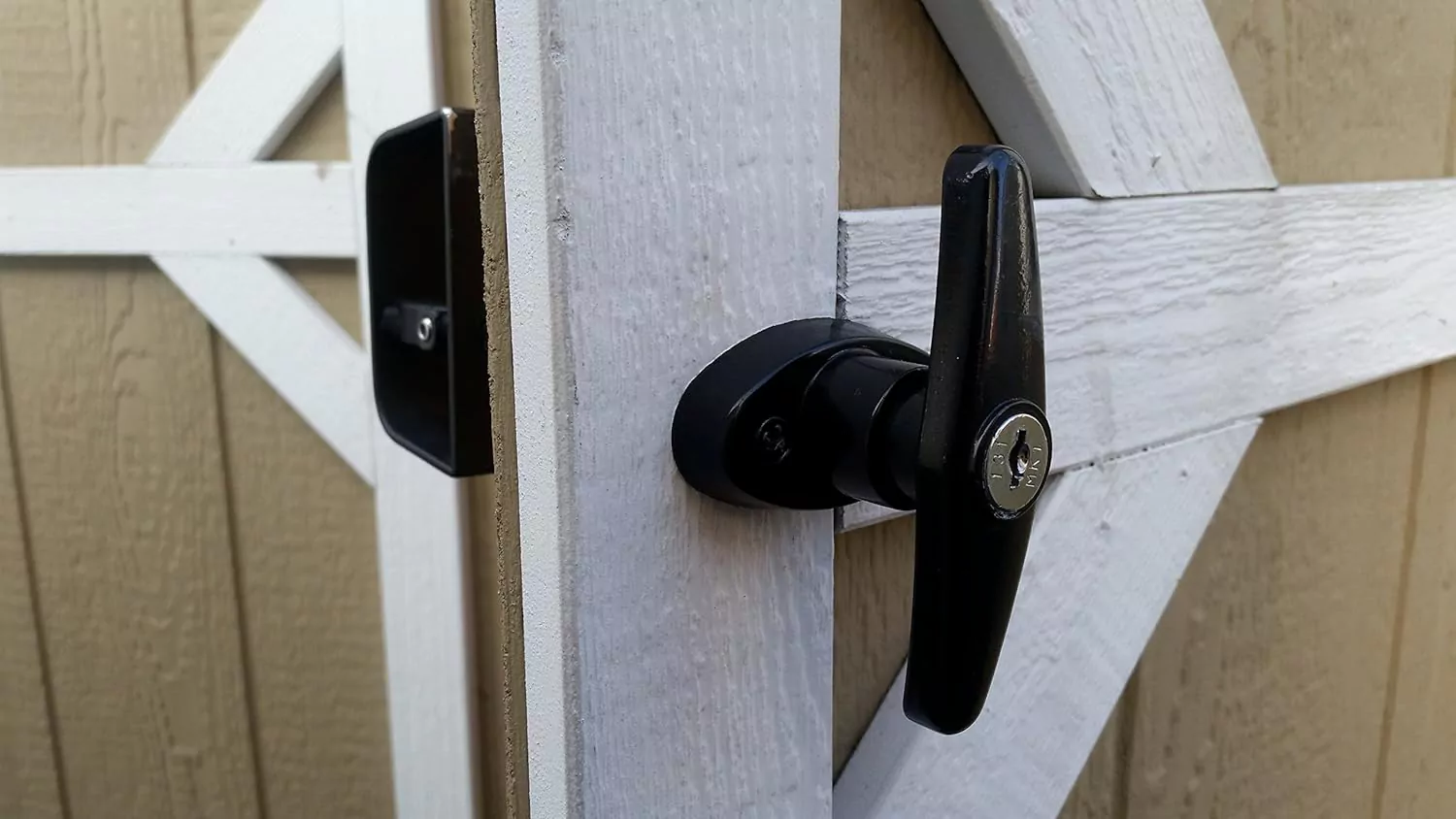
Keyed Entry Door Handles
Keyed entry door handles are another popular option for shed security. These locks combine a door handle with a keyed locking mechanism, similar to those found on many residential doors. This design offers a convenient, all-in-one solution for securing your shed, especially if you access it frequently.
The primary benefit of keyed entry door handles is their ease of use. With a single key, you can lock and unlock the door quickly, making them ideal for sheds that you access regularly. Some models also offer the option to re-key the lock, allowing you to match the key with other locks on your property for added convenience. However, keyed entry door handles may not offer the same level of security as deadbolts or heavy-duty padlocks. They are generally easier to pick or force open, so they might not be the best choice if your shed contains particularly valuable items.
Regular maintenance, such as lubricating the lock mechanism and checking for wear, is essential to keep keyed entry door handles functioning smoothly and securely.
Combination Locks
Combination locks offer a keyless solution for securing your shed, making them a practical choice for shared access scenarios, such as community gardens or sheds used by multiple people. These locks require a specific sequence of numbers to unlock, which can be easily reprogrammed if necessary.
The main advantage of combination locks is that they eliminate the need for keys, reducing the risk of losing or misplacing them. This makes combination locks particularly convenient for those who prefer not to carry keys or for situations where multiple people need access to the shed. Additionally, many combination locks are designed to be weather-resistant, ensuring they continue to function well even in outdoor conditions.
However, combination locks are not without their drawbacks. They can be vulnerable to picking or decoding, and the dials may wear out over time, making them difficult to operate. To ensure long-term reliability, it’s important to choose a combination lock with a robust build and high-quality materials.
Smart Locks for Sheds
As technology advances, smart locks have become an increasingly popular option for securing sheds. These locks can be controlled via a smartphone app, allowing you to lock and unlock your shed remotely. Some models also offer additional features, such as activity logs, temporary access codes, and integration with home security systems, making them a versatile and modern solution for shed security.
Smart locks provide a high level of convenience and flexibility. For instance, you can grant temporary access to a neighbor or a maintenance worker without needing to be physically present. Some smart locks also send notifications to your phone if someone attempts to tamper with the lock, giving you real-time updates on the security of your shed.
Despite their benefits, smart locks come with certain challenges. They are more expensive than traditional locks and require a power source, such as batteries, which need to be replaced periodically. Additionally, like any connected device, smart locks can be vulnerable to hacking, so it's crucial to choose a model with strong security features. If you’re considering a smart lock, it’s also important to ensure that your shed has a reliable internet connection for remote control and monitoring features to work effectively.
Factors to Consider When Choosing a Shed Door Lock
Selecting the right lock for your shed door involves more than just picking the first option you come across. Several important factors should influence your decision, each contributing to the overall security and functionality of your lock. By carefully considering these factors, you can ensure that you choose a lock that meets your specific needs and provides the best possible protection for your shed.
The first factor to consider is the security level required for your shed. If you store valuable items or sensitive equipment, you may need a lock with higher security features, such as a deadbolt or a heavy-duty padlock. These locks offer robust protection against forced entry, making them ideal for sheds that house expensive or irreplaceable items. On the other hand, if your shed is used for less valuable items, a simpler lock may suffice.
Durability and material are also crucial considerations. Look for locks made from strong, weather-resistant materials like stainless steel or brass. These materials are not only resistant to rust and corrosion but also provide added strength against tampering. A durable lock will withstand the elements and remain functional for years, reducing the need for frequent replacements.
Ease of use is another important factor, especially if you access your shed frequently. A lock that is easy to operate, such as a keyed entry door handle, can make accessing your shed more convenient while still providing adequate security. Additionally, consider the weather resistance of the lock, particularly if your shed is exposed to harsh conditions like rain, snow, or extreme temperatures. A weather-resistant lock will continue to function well even in challenging environments.
Finally, your budget will play a role in your decision. While higher-end locks offer better security and durability, there are also reliable options available at more affordable price points. It’s important to strike a balance between cost and security, ensuring that you choose a lock that fits your budget without compromising on quality.
How to Install a Shed Door Lock
Installing a shed door lock might seem daunting, but with the right tools and a step-by-step approach, it’s a task that most people can handle themselves. Proper installation is crucial for ensuring that your lock functions correctly and provides the intended level of security. Whether you’re installing a traditional deadbolt, a padlock, or a smart lock, following these steps will help you achieve a secure and reliable installation.
Begin by gathering the necessary tools, including a drill, screws, a screwdriver, and a measuring tape. These tools will be essential for accurately positioning and securing the lock on your shed door. Start by marking the placement of the lock on your shed door, using the lock as a template to ensure accurate positioning. Take care to measure and mark the holes precisely, as even a small misalignment can affect the lock’s performance.
Next, carefully drill holes at the marked points, making sure they align perfectly with the lock mechanism. When drilling, take your time and ensure that the holes are clean and free of debris, as this will help the screws and lock components fit securely. After drilling the holes, align the lock with the holes and secure it with screws. Make sure the lock is tightly fastened and operates smoothly. Once installed, test the lock several times to ensure it functions as expected before fully securing the shed. Remember, a secure installation is just as important as the lock itself in protecting your shed.
If you’re installing a smart lock, you’ll also need to connect it to your smartphone or home security system. Follow the manufacturer’s instructions for setting up the app and configuring the lock’s features, such as remote access and notifications. Once everything is set up, test the smart lock’s functionality to ensure that it responds correctly to commands from your phone and integrates smoothly with any other security devices you may have.
Maintenance Tips for Shed Door Locks
Like any mechanical device, shed door locks require regular maintenance to ensure they continue to operate effectively. Neglecting maintenance can lead to lock failures, which could compromise the security of your shed. By following these maintenance tips, you can keep your lock in good condition and ensure that it provides reliable protection for your belongings.
Start with regular cleaning. Dust, dirt, and grime can accumulate in the lock mechanism over time, causing it to jam or wear out prematurely. To clean the lock, use a mild detergent and a soft cloth to wipe down the exterior. For the interior mechanism, you may need to disassemble the lock slightly to remove any buildup. Be careful not to use abrasive materials or harsh chemicals, as these can damage the lock’s finish or components.
Lubrication is another key aspect of lock maintenance. Applying a graphite-based lubricant to the lock’s internal mechanism can help prevent it from sticking and ensure smooth operation. Graphite is a preferred lubricant because it doesn’t attract dust or dirt, unlike oil-based lubricants. Apply the lubricant sparingly, focusing on the keyhole, bolt, and any moving parts. Avoid using too much, as this can lead to buildup that might affect the lock’s performance.
Lastly, consider rust prevention, especially if your shed lock is exposed to the elements. Rust can weaken the lock and make it difficult to operate, reducing its effectiveness. To protect the lock from rust, apply a rust inhibitor or use a lock specifically designed to resist corrosion. Regularly check the lock for signs of rust, and address any issues immediately to prevent them from worsening. If you notice significant rust buildup, it may be time to replace the lock with a new, weather-resistant model.
Common Issues with Shed Door Locks and How to Fix Them
Even the most reliable locks can experience issues over time. Whether it’s a jammed lock, a broken key, or a misaligned door, knowing how to address these common problems can save you time and frustration. By understanding the potential issues and how to fix them, you can ensure that your shed lock remains functional and secure.
If your lock becomes jammed, it could be due to dirt buildup, lack of lubrication, or internal wear. To fix a jammed lock, start by applying a lubricant to the keyhole and gently inserting the key. Wiggle the key slightly to work the lubricant into the mechanism. If the lock remains jammed, it might need to be disassembled and cleaned. In some cases, you may need to replace the lock entirely if the internal components are too worn or damaged to function properly.
A broken key inside the lock is another common issue. If this happens, it’s important not to panic or force the key further into the lock. Use needle-nose pliers to carefully extract the broken piece from the keyhole. If the key is too far inside or if the lock is particularly complex, you may need to call a locksmith to remove it safely. To prevent this issue, avoid using excessive force when turning the key, and regularly inspect the key for signs of wear or damage.
Misaligned doors can also prevent the lock from functioning properly. If the door has shifted, the lock bolt may not align with the strike plate, making it difficult to lock or unlock the door. To fix this issue, check the door hinges for any looseness or sagging, and tighten them as needed. You may also need to adjust the strike plate by repositioning it slightly so that the lock bolt aligns correctly. In some cases, replacing the door or the frame may be necessary if the misalignment is severe.
Upgrading Your Shed Lock: When and Why
Over time, even the best locks will need to be upgraded or replaced. Whether due to wear and tear, lost keys, or evolving security needs, upgrading your shed lock can provide improved protection and peace of mind. Knowing when and why to upgrade your lock is essential for maintaining the security of your shed.
Signs that it’s time to upgrade your lock include visible rust or damage, difficulty in turning the key, or if you’ve lost your keys. If your lock is more than a few years old, it may not offer the same level of security as newer models that incorporate advanced features. For example, older locks may lack the tamper-resistant technologies found in modern locks, making them more vulnerable to break-ins.
Upgrading your lock can also provide benefits such as easier operation, enhanced weather resistance, and increased security features. For instance, newer locks may offer stronger materials, more advanced locking mechanisms, or integration with smart home systems. While there is a cost associated with upgrading, the added security is often worth the investment, particularly if you store valuable items in your shed. Additionally, upgrading your lock can provide peace of mind, knowing that your shed is protected by the latest security technology.
Enhancing Shed Security Beyond Locks
While a good lock is essential, there are additional measures you can take to enhance the security of your shed. These extra precautions can provide an added layer of protection, making it more difficult for thieves to gain access. By combining multiple security strategies, you can create a comprehensive defense for your shed.
Installing security cameras around your shed is an effective deterrent. Visible cameras can discourage potential intruders, as they know they are being monitored. Additionally, if a break-in does occur, the footage captured by the cameras can be invaluable in identifying the culprit and recovering your stolen items. Choose cameras that offer high-resolution video and night vision capabilities for the best coverage.
Motion sensor lights are another great option for enhancing shed security. These lights activate when movement is detected, startling would-be thieves and drawing attention to the area. Position the lights near the shed door and any other vulnerable entry points to maximize their effectiveness. Motion sensor lights are relatively easy to install and can be powered by batteries or connected to your home’s electrical system.
Reinforcing your shed’s doors and windows can also improve security. Consider installing a metal brace on the door to prevent it from being kicked in, and use shatterproof glass or bars on windows to make them harder to break. Additionally, ensure that the shed’s structure is sturdy and that all entry points are secure. These measures, combined with a strong lock, can make your shed a much less attractive target for criminals.
DIY vs. Professional Installation
When it comes to installing your shed door lock, you may wonder whether to tackle the job yourself or hire a professional. Both options have their advantages and disadvantages, and the right choice depends on your comfort level with DIY projects and the complexity of the lock. By weighing the pros and cons of each approach, you can determine the best course of action for your situation.
DIY installation can be cost-effective and satisfying, especially if you enjoy hands-on projects. With the right tools and instructions, installing a lock is a manageable task for most people. Additionally, doing the installation yourself allows you to work at your own pace and make adjustments as needed. However, there is always the risk of making a mistake, which could compromise the lock’s effectiveness. If you’re not confident in your ability to install the lock correctly, it may be worth considering professional help.
On the other hand, professional installation ensures that the lock is installed correctly and securely. A professional locksmith can also provide advice on the best lock for your specific needs and may offer additional services such as re-keying or lock upgrades. Hiring a professional is especially recommended for high-security locks, smart locks, or situations where precise installation is crucial. While professional installation comes with a cost, it offers peace of mind knowing that your lock has been installed to the highest standards.
Conclusion
Choosing the right shed door lock is a crucial step in securing your shed and protecting your belongings. Whether you opt for a traditional deadbolt, a versatile padlock, or a modern smart lock, it’s important to consider factors such as security level, durability, ease of use, and weather resistance. Proper installation and regular maintenance are also key to ensuring your lock provides long-lasting protection. By taking the time to choose and care for your lock, you can rest assured that your shed is well-protected.
FAQs
What is the most secure type of shed door lock?
The most secure type of shed door lock is generally a deadbolt or a heavy-duty padlock. These locks provide a strong physical barrier against forced entry, making them ideal for sheds that store valuable items. Deadbolts, in particular, are known for their durability and resistance to tampering, while heavy-duty padlocks offer flexibility and ease of use. For the highest level of security, choose a lock made from hardened steel and designed to resist cutting, drilling, and picking attempts.
Can I install a shed door lock myself?
Yes, installing a shed door lock yourself is possible with the right tools and instructions. Many locks come with installation guides that make the process straightforward. However, if you’re dealing with a high-security lock, a smart lock, or if you’re unsure about the installation process, it may be wise to hire a professional locksmith to ensure the lock is installed correctly. A professional installation can provide peace of mind and ensure that your lock functions as intended.
How often should I replace my shed door lock?
You should replace your shed door lock if it shows signs of rust, damage, or if it becomes difficult to operate. Additionally, consider upgrading your lock if it’s more than a few years old, as newer models may offer improved security features. Regularly inspecting your lock and addressing any issues promptly will help maintain the security of your shed. Replacing your lock periodically also allows you to take advantage of advancements in lock technology, ensuring your shed remains protected against emerging threats.
What should I do if my shed lock is frozen?
If your shed lock is frozen, you can try using a lock de-icer or applying heat with a hairdryer to melt the ice. Avoid using excessive force on the key, as this can cause it to break inside the lock. Once the lock is thawed, consider applying a graphite-based lubricant to prevent it from freezing again in the future. If freezing is a recurring issue, you may want to invest in a weather-resistant lock designed to withstand cold temperatures.
Are smart locks a good option for sheds?
Smart locks can be a good option for sheds, especially if you want the convenience of remote access and monitoring. These locks offer advanced features such as temporary access codes, activity logs, and integration with home security systems. However, smart locks are more expensive than traditional locks and require a power source, so it’s important to weigh these factors against your security needs. Additionally, ensure that your shed has a reliable internet connection if you plan to use a smart lock, as this is necessary for remote control and monitoring capabilities.
