
How Does a Padlock Work?
A padlock works by keeping its shackle locked inside the body until the right key, code, or authorization makes the internal parts line up. That is the simple answer. When you push the shackle down, small locking parts inside the padlock grab it and stop it from lifting out. When you insert the correct key or enter the right combination, those parts move away from the shackle, and the lock opens. It sounds basic, but inside a padlock, there is a neat little mechanical system doing a very specific job: blocking movement until permission is given.
Most people use padlocks every day without thinking about what happens inside them. You may use one on a gate, storage unit, toolbox, warehouse door, cabinet, trailer, locker, or chain. From the outside, it looks like a metal body with a U-shaped loop. Inside, though, there can be pins, springs, discs, wheels, locking balls, latches, and a rotating cylinder. Each part has a role. Some parts identify the key. Some parts hold the shackle. Some parts transfer the turning force from your hand into the release action. Once you understand that, a padlock stops feeling like a mystery and starts looking like a small, smart machine.
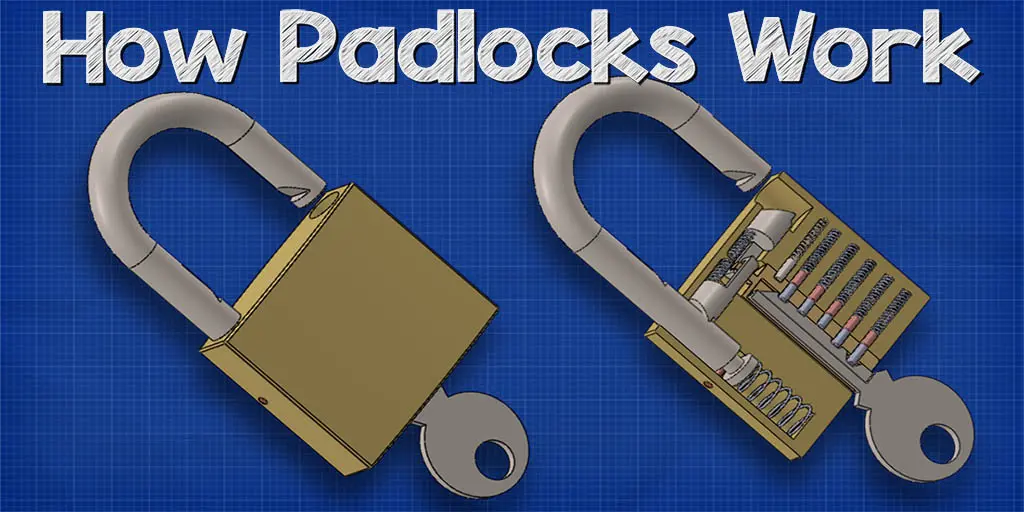
What Is a Padlock?
A padlock is a portable lock with a movable shackle. Unlike a door lock, which is fixed into a door, a padlock can be moved from one place to another. You can use it with a chain, hasp, latch, storage box, cabinet handle, or security bracket. That portability is the main reason padlocks are still so common. You do not need to redesign the whole door or install a full locking system. You just pass the shackle through the locking point, snap it shut, and the item is secured.
The basic purpose of a padlock is access control. It does not only stop a door from opening. It decides who can open it. If the lock uses a key, the person with the correct key can open it. If it uses a combination, the person with the correct code can open it. If it is an electronic or smart padlock, the person with valid authorization can open it. No matter what type you use, the working idea is similar: the shackle stays trapped until the lock receives the correct unlocking input.
The Main Parts of a Padlock
To understand how a padlock works, you need to know the parts first. A padlock is not one solid piece of metal. It is a group of parts fitted together so movement is controlled. The most important parts are the body, shackle, keyway, cylinder, locking mechanism, and internal alignment parts. In a simple lock, these parts may be basic. In a high-security padlock, they may be made with stronger materials, tighter tolerances, and anti-pick features.
The Padlock Body
The body is the main housing of the padlock. It protects the internal mechanism and gives the lock its physical strength. A padlock body can be made from brass, laminated steel, stainless steel, hardened steel, zinc alloy, aluminum alloy, or other metals. For a small indoor locker, a lightweight body may be enough. For an outdoor gate, construction site, warehouse, power cabinet, or trailer, the body needs to resist impact, drilling, corrosion, and rough weather.
A strong body matters because attackers do not always try to pick the lock. In many real situations, they attack the lock body with force. They may hit it, twist it, drill it, or try to break the area around the shackle. A well-built body helps protect the cylinder and locking parts from direct damage. Think of it like the shell of a turtle. The stronger the shell, the harder it is to reach what is inside.
The Shackle
The shackle is the U-shaped metal loop at the top of the padlock. This is the part that goes through a hasp, chain, ring, or hole. When the padlock is locked, the shackle is held inside the body. When the padlock opens, one side or both sides of the shackle release so you can remove the lock. The shackle is often the most exposed part of the padlock, so its material and shape have a big effect on security.
A long, thin, exposed shackle gives more room for bolt cutters. A short or protected shackle gives less room to grip. That is why many security padlocks use hardened steel shackles, boron alloy shackles, stainless steel shackles, or shrouded shackle designs. If you are using a padlock outdoors or in a high-risk area, do not only look at the lock body. Look closely at the shackle. In many cases, that is where real-world attacks begin.
The Keyway
The keyway is the slot where the key enters the lock. It may look like a simple opening, but it does more than guide the key. The shape of the keyway controls what kind of key can fit inside. A basic keyway is easier to copy and may be easier to manipulate. A more complex or restricted keyway makes it harder for the wrong key or tool to enter the cylinder properly.
For everyday users, the keyway is easy to ignore. For lock design, it is a critical part of security. If the keyway is too open and simple, the lock may be more vulnerable to picking or unauthorized key duplication. If the keyway is narrow, curved, or restricted, the lock can offer better key control. This is why commercial and industrial padlocks often use more controlled key systems than cheap household locks.
The Cylinder
The cylinder is the part that turns when the correct key is inserted. In a keyed padlock, the cylinder works like the decision center. If the internal parts are not aligned, the cylinder cannot turn. If the correct key lines everything up, the cylinder turns and moves the unlocking mechanism. That motion releases the shackle.
Different padlocks use different cylinder designs. A common pin tumbler padlock uses small pins and springs. A disc detainer padlock uses rotating discs. A wafer padlock uses flat wafers. The details are different, but the goal is the same. The cylinder must stay blocked until the correct key positions the internal parts in exactly the right way.
How Does a Keyed Padlock Work?
A keyed padlock works by matching the cuts of the key to the internal parts of the lock. When you insert the right key, each cut on the key lifts or positions a part inside the cylinder. When all parts line up, the cylinder can rotate. That rotation moves a cam, actuator, latch, or ball-bearing system, which releases the shackle. If the key is wrong, even slightly wrong, the internal parts block the cylinder, and the lock stays closed.
Step 1: The Key Goes Into the Keyway
The unlocking process starts when the key enters the keyway. The grooves on the sides of the key match the shape of the keyway, while the cuts along the blade interact with the internal pins, wafers, or discs. This is why a random key cannot usually enter the lock fully. Even if it enters, it still must position the inner parts correctly. The key is not just a handle for turning. It is a coded metal pattern.
Step 2: The Key Aligns the Internal Parts
In a pin tumbler padlock, the key lifts small pins to different heights. There are usually key pins at the bottom and driver pins above them. Springs push these pins downward. When no key is inside, the pins cross the shear line and block the cylinder from turning. The shear line is the boundary where the plug of the cylinder meets the outer housing. When the correct key is inserted, the gaps between the key pins and driver pins align exactly at that shear line.
This is the heart of how a keyed padlock works. The lock is not checking the whole key in a digital way. It is checking physical positions. Each pin must sit at the correct height. If one pin is too high or too low, the plug cannot rotate. This is why a key that looks similar may still fail. Mechanical locks are picky, and that is the point.
Step 3: The Cylinder Turns
Once the internal parts line up, the cylinder can turn. Your hand supplies the force, but the correct key makes that force useful. Without alignment, the cylinder stays locked in place. With alignment, the cylinder rotates smoothly and transfers motion to the locking mechanism. This small turn is what changes the lock from closed to open.
Inside the padlock, the back of the cylinder may move a cam or actuator. This part pushes the locking latch away from the shackle or pulls back the locking elements. In padlocks with ball-bearing locking, the cylinder movement allows the balls to move out of the shackle notches. Once those balls are no longer holding the shackle, the shackle can lift.
Step 4: The Shackle Opens
After the locking mechanism releases, the shackle opens. Some shackles spring upward automatically. Others need to be pulled by hand. When you close the padlock again, the shackle slides back into the body and the locking parts snap into position. That familiar click is not just a sound. It tells you the shackle has been captured by the internal locking system.
How Does a Combination Padlock Work?
A combination padlock works without a key. Instead of matching metal cuts to pins or discs, it uses a code to align internal wheels. When the correct numbers are selected, hidden gates or notches line up inside the lock. Once those gates align, a lever or fence can move into place and release the shackle. If one number is wrong, the gates do not line up, and the lock remains closed.
Inside a Combination Lock
Many combination locks have several rotating wheels. Each wheel controls one part of the code. On the outside, you see numbers. On the inside, each number position changes the location of a notch or gate. The correct code creates a clear path for the internal release part. The wrong code leaves the path blocked. It is a bit like lining up several small windows. When every window lines up, light passes through. When one is off, the path is blocked.
Are Combination Padlocks Secure?
Combination padlocks can be useful when several people need access and you do not want to manage keys. They are common on lockers, luggage, school storage, toolboxes, and light-duty gates. However, their security depends on quality. Cheap combination locks may have loose wheels, weak shackles, or easy-to-feel gates. Better combination locks use tighter parts and stronger materials. For high-value property, a high-security keyed padlock or managed access system may be a better choice.
How Does a Disc Detainer Padlock Work?
A disc detainer padlock works by rotating a set of internal discs to the correct angles. The key has angled cuts that turn each disc as it enters the lock. When all discs rotate into the correct position, their gates align. A sidebar can then drop into those gates, allowing the cylinder to turn and release the shackle. This design is often used in higher-security padlocks because it can resist some common picking methods better than basic pin locks.
Why Disc Detainer Locks Feel Different
If you have used a disc detainer padlock, you may notice that the key feels different when turning. That is because the key is not simply lifting pins. It is rotating discs. The movement can feel firm and deliberate. Many disc detainer padlocks also use a key that looks less like a standard house key. This design can improve durability and make unauthorized opening more difficult, especially when the lock also includes anti-drill plates, hardened parts, and false gates.
What Keeps the Shackle Locked?
The shackle stays locked because a latch, bolt, or ball-bearing system sits inside notches on the shackle. These notches are small cutouts that give the locking parts a place to grip. When the padlock is closed, the locking parts move into those notches. When the correct key or code is used, those parts move away. The shackle can then lift out.
Single-Locking Padlocks
A single-locking padlock holds the shackle on one side. This design is usually cheaper and simpler. It can be enough for low-risk use, such as a small cabinet, luggage zipper, or indoor locker. The downside is that one side of the shackle does most of the work. If someone cuts or forces that side, the padlock may fail more easily.
Double-Locking Padlocks
A double-locking padlock secures both sides of the shackle. This is stronger because both legs are held inside the lock body. If one side is attacked, the other side still resists opening. Double locking is common in better padlocks for gates, storage units, containers, trailers, warehouse doors, and outdoor equipment. If security matters, double locking is usually worth choosing.
Ball-Bearing Locking Systems
Ball-bearing locking systems are often found in stronger padlocks. Instead of using a simple spring latch, the padlock uses small metal balls that sit in the shackle notches. The cylinder controls whether those balls can move. This design helps resist shimming, which is a method where a thin piece of metal is pushed near the shackle to move a spring latch. Ball bearings do not behave like a simple latch, so they are harder to bypass that way.
Why Some Padlocks Are Harder to Open
Not all padlocks offer the same protection. Two locks may look similar online, but inside they can be completely different. A low-cost padlock may have a soft shackle, loose cylinder, simple keyway, and single locking. A high-security padlock may have a hardened body, protected shackle, complex keyway, double ball locking, anti-drill plates, and better key control. The difference shows up when the lock faces real pressure.
Material Strength Matters
The material of the body and shackle matters a lot. Hardened steel resists cutting better than soft steel. Stainless steel works well in wet or corrosive environments. Brass handles many outdoor conditions better than some cheap metals, though it may not be the strongest choice against heavy cutting tools. For industrial sites, outdoor gates, telecom cabinets, power facilities, and shipping areas, material choice should match the risk and environment.
Shackle Exposure Matters
A long exposed shackle is convenient because it fits more applications. But from a security point of view, it can also be easier to attack. Bolt cutters need space. The more space around the shackle, the easier it is to grip. A closed-shackle or shrouded-shackle padlock reduces exposed metal and makes cutting harder. If you are locking a valuable asset, choose the shortest shackle that still fits the job.
Cylinder Quality Matters
A strong body does not help much if the cylinder is weak. The cylinder should resist picking, drilling, pulling, and key manipulation. Higher-quality cylinders may use more pins, spool pins, disc detainer designs, restricted keyways, hardened inserts, or anti-drill protection. For normal home use, you may not need all of these features. For business or industrial use, cylinder quality can decide whether the lock is a real barrier or just a symbol.
Why Padlocks Sometimes Stop Working
A padlock can fail even when nobody attacks it. Dirt, rust, ice, worn keys, poor lubrication, bent shackles, and rough handling can all cause problems. Outdoor padlocks suffer the most because they face rain, dust, salt, temperature changes, and freezing weather. If the key becomes hard to insert or the shackle does not close smoothly, the lock is already warning you.
Rust and Corrosion
Rust can make internal parts stick. Once pins, springs, discs, or latches stop moving freely, the lock becomes unreliable. This is why outdoor padlocks should be made from corrosion-resistant materials or have proper protective covers. In coastal areas, farms, factories, and chemical environments, corrosion resistance is not a small detail. It directly affects whether the padlock can still open when you need it.
Dust and Poor Lubrication
Dust can enter the keyway and mix with oil or moisture. Over time, this creates a sticky mess inside the cylinder. Many people spray whatever oil they have into a lock, but heavy oil can attract more dust. A lock-specific lubricant or dry graphite product is often a better choice. If a padlock is used in a dusty warehouse, construction site, or outdoor yard, regular cleaning can extend its service life.
Lost Keys and Poor Key Control
A padlock can be mechanically strong but still weak in daily management. If keys are copied without records, shared between too many people, or lost without replacing the lock, security drops fast. For homes, this may be a small issue. For companies, utilities, storage yards, and facility management teams, poor key control can become a serious risk. In those settings, it may be better to use restricted keys, master key planning, or electronic access control.
How to Choose a Padlock That Works for Your Use
The best padlock is not always the biggest one. It is the one that fits the risk, environment, and access needs. Before buying a padlock, ask a few practical questions. What are you protecting? Where will the lock be used? How often will it be opened? Who needs access? Is the main risk theft, weather, key loss, or casual misuse? The answers will point you toward the right type of lock.
For Indoor Lockers and Cabinets
For indoor lockers, cabinets, and low-risk storage, a simple keyed padlock or combination padlock may be enough. The main goal is to stop casual access, not resist heavy tools. Still, choose a lock that feels solid, turns smoothly, and has a shackle that fits the hasp properly. A lock that is too small may be weak. A lock that is too large may not sit correctly.
For Outdoor Gates and Sheds
For outdoor gates, sheds, garden storage, and farm use, weather resistance becomes important. Look for stainless steel, brass, coated steel, sealed keyways, or covers that protect the cylinder. A hardened shackle is also helpful, especially if the lock is visible from the street. Outdoor locks should not only lock well on day one. They should keep working after rain, dust, sun, and cold nights.
For Warehouses and Industrial Sites
For warehouses, industrial cabinets, trailers, equipment yards, telecom boxes, power cabinets, and storage containers, choose a stronger padlock with better key control. Look for double locking, ball-bearing locking, hardened shackles, protected shackles, anti-drill features, and durable materials. If many staff members need access, also think about how keys are assigned, returned, audited, and replaced.
Keyed, Combination, or Smart Padlock?
A keyed padlock is simple and familiar. A combination padlock avoids physical keys. A smart padlock can support more flexible access control. The right choice depends on how the lock will be used. For one person, a keyed lock is usually fine. For shared access, a combination lock may be convenient. For business environments where access records and permissions matter, smart or managed padlocks can offer better control.
When a Keyed Padlock Makes Sense
Use a keyed padlock when you want reliable mechanical access and do not need many users. It is a good choice for personal storage, home gates, toolboxes, and small business use. If security matters, choose a lock with a strong cylinder and controlled key duplication. A cheap key system may save money at first, but it can create problems when keys are copied or lost.
When a Combination Padlock Makes Sense
Use a combination padlock when several people need simple access and the risk is moderate or low. It works well for lockers, temporary storage, luggage, and shared indoor spaces. The main weakness is code sharing. Once a code is passed around, control becomes weaker. If you use combination locks in a workplace, change the code when staff roles change or when too many people know it.
When a Smart Padlock Makes Sense
A smart padlock makes sense when access needs to be managed, changed, or recorded. Some smart padlocks use apps, cards, fingerprints, electronic keys, or remote authorization. These systems are useful when many users need different access rights. However, smart padlocks should be chosen carefully. Battery life, outdoor rating, audit records, emergency opening methods, and software reliability all matter.
A Simple Way to Picture How a Padlock Works
Picture a padlock as a small metal gate with a guard inside. The shackle is the gate. The locking balls or latch are the guard’s hands holding the gate closed. The key or code is the password. When the password is wrong, the guard keeps holding the gate. When the password is right, the guard lets go, and the gate opens. That is the whole idea, whether the lock uses pins, discs, wheels, or electronics.
This simple picture helps explain why every part matters. If the body is weak, someone can break the guardhouse. If the shackle is weak, someone can cut the gate. If the keyway is too simple, someone may trick the guard. If the keys are poorly managed, the wrong person may get the password. A padlock is small, but good security still depends on design, material, fit, and daily management.
Conclusion
So, how does a padlock work? It locks by holding the shackle inside the body, and it opens only when the correct key, code, or authorization moves the internal parts into the right position. A keyed padlock uses a key to align pins, discs, or wafers. A combination padlock uses numbers to align hidden wheels and gates. A stronger padlock may use double locking, ball bearings, hardened steel, protected shackles, and better key control. The outside may look simple, but the inside is a careful balance of movement and blockage.
If you are choosing a padlock, do not buy only by size, color, or price. Think about where it will be used, what it will protect, how often it will be opened, and who needs access. For a locker, a basic lock may be enough. For an outdoor gate, weather resistance matters. For a warehouse, trailer, cabinet, or industrial site, strength and key control become much more important. A good padlock is not just a metal loop. It is a small access control device that should match the real job in front of it.
FAQs About How a Padlock Works
How does a padlock lock when I push the shackle down?
When you push the shackle into the lock body, the internal locking parts move briefly and then snap into the notches on the shackle. In many padlocks, a spring helps the latch or locking parts return to the locked position. That click you hear means the shackle is now held inside the body and cannot lift out unless the lock is opened correctly.
Why does the wrong key not open a padlock?
The wrong key does not align the internal parts properly. In a pin tumbler padlock, the pins must line up at the shear line before the cylinder can turn. If one pin is too high or too low, the cylinder stays blocked. That is why a key that looks close to the right key still will not open the lock.
What is inside a padlock?
Inside a padlock, you may find a cylinder, pins, springs, wafers, discs, wheels, latches, locking balls, or cams, depending on the lock type. These parts work together to control the shackle. The exact design can vary, but the purpose is always the same: keep the shackle locked until the correct unlocking method is used.
Are combination padlocks easy to break?
Some cheap combination padlocks are easier to decode, feel, or force open because their internal parts are loose and their shackles are weak. Better combination padlocks are more secure because they use tighter wheels, stronger bodies, and better locking parts. For high-value items, however, a strong keyed padlock or managed lock system is often a better choice.
Why do outdoor padlocks get stuck?
Outdoor padlocks often get stuck because of rust, dust, water, ice, or poor lubrication. Moisture can corrode internal parts, and dirt can block smooth movement inside the keyway. To avoid this, choose a weather-resistant padlock and maintain it with proper lock lubricant. In harsh environments, stainless steel or sealed padlocks usually perform better.
Is a bigger padlock always safer?
No, a bigger padlock is not always safer. Size can help, but design and materials matter more. A large padlock with a soft shackle and weak cylinder may be less secure than a smaller lock with hardened steel, double locking, ball-bearing protection, and a restricted keyway. Always match the padlock to the risk and the place where it will be used.
What type of padlock is best for a gate?
For a gate, choose a weather-resistant padlock with a hardened shackle, double locking, and a body that resists corrosion. If the gate protects valuable property, a closed-shackle or shrouded-shackle design is a better option because it leaves less room for bolt cutters. The lock should also fit the hasp tightly so it cannot be twisted easily.
Can a padlock work without a spring?
Yes, some padlocks can work with fewer spring-driven parts, depending on the design. For example, disc detainer locks use rotating discs rather than the same spring-loaded pin structure found in many basic locks. However, many padlocks still use springs to help pins, latches, or shackles return to their normal position.

