
Choosing an industrial lock manufacturer is not simply a matter of comparing lock prices. For purchasing managers, facility managers, security teams, and industrial operators, the real question is whether a supplier can provide locking hardware that remains reliable under the actual conditions of the site. Weather exposure, corrosion, frequent operation, unauthorized key duplication, distributed assets, employee turnover, and access records can all affect the final choice. A lock that works well on an indoor cabinet may be unsuitable for an outdoor gate, electrical enclosure, telecom site, or remote utility facility. That is why an industrial lock procurement project should begin with the application, operating environment, access requirements, and expected service life before individual models are compared.
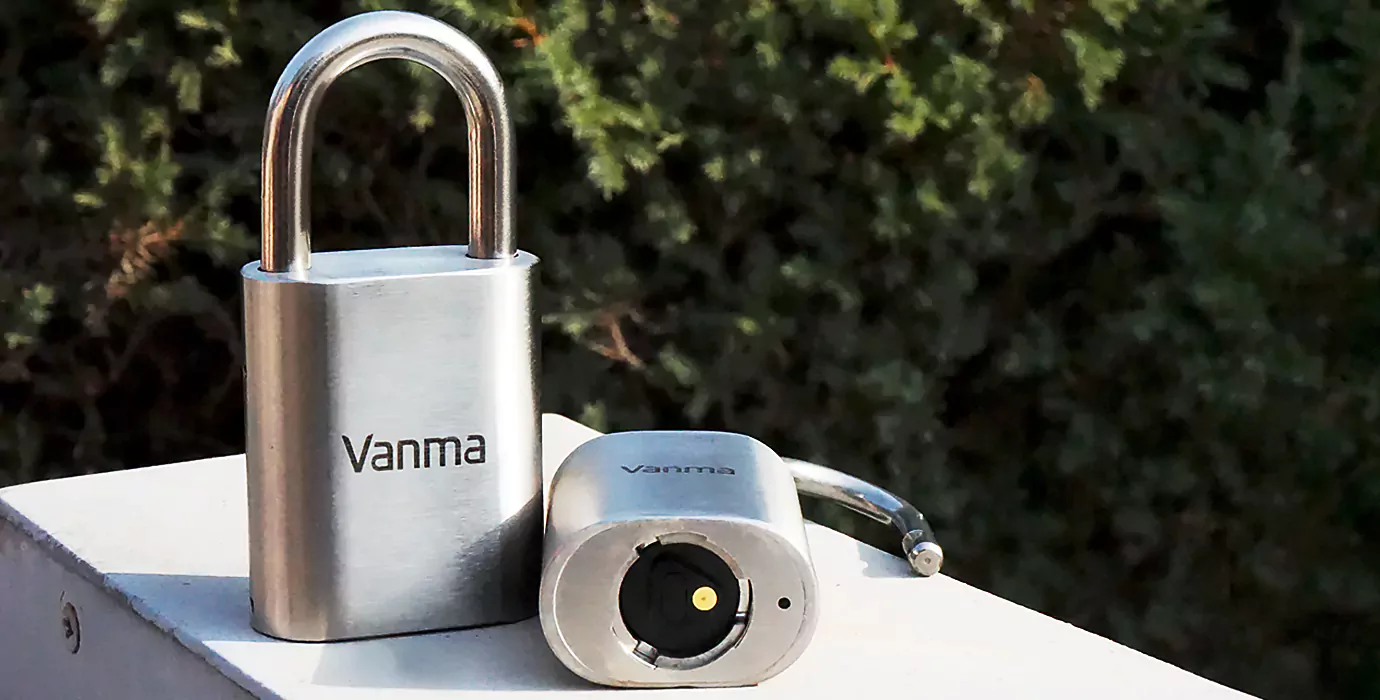
The manufacturer behind the lock matters because industrial security depends on more than the visible lock body. Material selection, cylinder design, sealing, manufacturing tolerances, key management, electronic components, software compatibility, testing, and quality control all influence how the product performs after installation. When hundreds or thousands of locks are deployed across a facility or across multiple sites, small reliability problems can become expensive operational problems.
This is particularly important when locks protect assets that employees must access regularly. A failed lock on a rarely opened storage cabinet may be inconvenient. A failed lock on electrical equipment, a telecom cabinet, a utility gate, or production machinery can delay maintenance and interrupt normal operations. Buyers should therefore evaluate an industrial lock manufacturer as a long-term hardware and security supplier rather than treating the purchase as a one-time commodity order.
A capable industrial lock manufacturer may supply several lock formats because industrial sites rarely have only one type of access point. Gates, cabinets, control boxes, equipment enclosures, storage areas, machinery, and restricted rooms can have very different mechanical and security requirements. Standardizing everything around one physical lock design is therefore not always practical.
Industrial padlocks remain one of the most flexible choices for gates, chains, storage areas, equipment, and outdoor assets. For procurement teams, the important specifications extend beyond body dimensions. Shackle material, corrosion resistance, tensile strength, key control, weather sealing, operating temperature, and frequency of use should all be reviewed. Outdoor applications may also require greater attention to dust, rain, humidity, salt exposure, and temperature changes.
Industrial cabinets and equipment enclosures often require a different lock structure from a conventional padlock. Electrical cabinets, telecom enclosures, machinery panels, control boxes, and utility equipment may have limited installation space or require specific cylinders and lock dimensions. When replacing an existing mechanical locking system, dimensional compatibility becomes particularly important because changing the cabinet itself can add unnecessary labor and project cost.
Electronic industrial locks become relevant when the security problem is not simply whether a door can be physically locked. Many industrial operators also need to control who can open an asset, when access is permitted, and whether the event can be traced later. In these situations, electronic authorization and access records can address management problems that a conventional mechanical key cannot solve efficiently.
Passive electronic locks are one option for distributed industrial environments. Instead of placing a battery and complex electronics inside every lock, certain systems transfer power and authorization through an electronic key. This architecture can be useful for outdoor or remote assets where replacing batteries in hundreds of lock points would create additional maintenance work.
The most effective way to select an industrial locking system is to define the application before requesting quotations. Sending suppliers only a general request such as "we need 500 industrial locks" leaves too many unanswered questions. A better request identifies what is being secured, where the locks will be installed, who will use them, how often they will be opened, and what environmental conditions they will face.
| Application | Typical Concern | Lock Requirement to Review |
|---|---|---|
| Outdoor perimeter gate | Rain, dust, corrosion, unauthorized entry | Weather resistance, strong construction, controlled key access |
| Electrical cabinet | Restricted maintenance access | Compact installation, authorization control, access records |
| Telecom enclosure | Remote locations and many service technicians | Key management, temporary authorization, outdoor durability |
| Warehouse or storage area | Multiple employees and changing access permissions | Access groups, traceability, convenient authorization changes |
| Industrial machinery | Controlled maintenance access | Suitable lock format, reliable operation, personnel authorization |
| Remote infrastructure | Large numbers of geographically dispersed lock points | Low lock-side maintenance and centralized access management |
Indoor industrial environments generally reduce exposure to rain and severe weather, but they can still present demanding conditions. Dust, oil, repeated operation, vibration, accidental impacts, and frequent personnel changes may affect lock selection. Manufacturing plants and warehouses may also have a large number of doors, cages, cabinets, and equipment areas, making key management a larger concern than environmental resistance alone.
Outdoor infrastructure requires closer attention to long-term exposure. Utility sites, telecom stations, perimeter gates, railway equipment, energy facilities, and remote cabinets may remain outside throughout the year. A buyer should discuss temperature range, water and dust resistance, corrosion protection, lock-body material, and expected maintenance requirements with the manufacturer before selecting a model.
Material selection has a direct effect on the useful life of an industrial lock. Stainless steel, zinc alloys, hardened steel components, protective coatings, and suitable sealing materials can each serve different purposes. The best choice depends on the environment rather than on a single material being universally superior.
For example, a lock installed inside a climate-controlled warehouse faces very different conditions from one installed near a coastal facility. Salt, moisture, chemicals, temperature fluctuations, and airborne contaminants can accelerate corrosion. Buyers should therefore ask the industrial lock manufacturer which materials are used for the body, shackle, cylinder, contacts, and other exposed components and whether those choices are suitable for the intended site.
Durability should also be considered in relation to usage frequency. A lock opened several times per shift may experience substantially more wear than a lock opened once every few months. If the project involves frequent maintenance access, tell the supplier how often the lock is expected to operate. That information can influence the recommended product.
Environmental resistance becomes a major procurement criterion whenever locks are installed outside protected indoor spaces. Water and dust ingress can affect both mechanical and electronic components, while low temperatures may change lubrication behavior and high temperatures can stress materials and electronics. Corrosion can gradually affect the body, shackle, cylinder, contacts, and moving components.
Ingress protection ratings can provide useful information, but buyers should avoid evaluating a lock from an IP rating alone. The complete application still matters. Ask whether the quoted rating applies to the exact product configuration being purchased and discuss other relevant tests, such as corrosion or salt-spray testing, when the site environment requires them.
For installations in demanding environments, request technical documentation rather than relying solely on general phrases such as "waterproof" or "heavy duty." Procurement specifications are easier to compare when suppliers provide measurable operating conditions and clearly defined product data.
Mechanical and electronic industrial locks solve different problems, so neither category should automatically be considered the correct choice for every project. Mechanical locks can be simple to deploy and may work well when the number of users and access points is small. The management burden begins to increase when organizations have many employees, contractors, sites, or keys in circulation.
| Factor | Mechanical Industrial Lock | Electronic Industrial Lock |
|---|---|---|
| Initial deployment | Usually straightforward | May require system configuration |
| Key management | Physical key distribution | Electronic authorization can simplify changes |
| Lost key response | May require rekeying or cylinder replacement | Depending on the system, credentials may be revoked |
| Access time control | Generally limited | Can support defined access periods |
| Audit trail | Normally unavailable | Available in many systems |
| Remote sites | Physical key logistics may become difficult | Can improve authorization management across distributed assets |
For buyers, the decision should be tied to the operational problem. If the only requirement is to keep a low-risk enclosure closed, a mechanical lock may be sufficient. If the organization needs to manage contractor access across hundreds of sites and determine who opened each lock, an electronic system deserves closer consideration.
Access management becomes important when the organization can no longer manage security efficiently through physical key distribution. Consider a utility operator with technicians responsible for hundreds of remote cabinets. If every technician carries a large key ring, the organization must manage which key belongs to which lock, what happens when an employee leaves, and how lost keys are handled.
An electronic industrial locking system can change this management model. Instead of assigning security solely through the physical shape of a key, permissions can be associated with users, locations, time periods, or groups of assets. This can reduce the need to replace locks simply because access permissions change.
For high-security industrial environments, ask the manufacturer how authorization is issued, updated, revoked, and recorded. Also determine what happens when network connectivity is unavailable. Some industrial sites need locks that continue to function at remote locations without requiring continuous network access at every door or cabinet.
Key management is often one of the hidden costs of a large industrial lock deployment. Mechanical keys must be issued, collected, stored, duplicated, tracked, and sometimes replaced. When a master key is lost, the security implications can extend across many locks. The cost is therefore not limited to purchasing another key.
For electronic systems, ask how a lost electronic key or credential can be disabled. Also review how access records are stored and retrieved. A useful audit trail should help security managers determine which authorized user accessed a particular lock and when the event occurred. This information can support incident reviews, maintenance verification, and internal security procedures.
Organizations with contractors should pay particular attention to temporary access. A technician may need access to a specific equipment area for several hours without receiving permanent permission to other assets. Time-limited authorization can make this process easier to control when supported by the selected system.
Customization is important when standard catalog products do not fit the existing equipment or project requirements. Industrial projects may need different shackle lengths, cylinder dimensions, lock bodies, mounting methods, materials, identification markings, or system configurations. OEM projects can add requirements involving drawings, samples, packaging, branding, and production specifications.
A buyer should clarify customization requirements early because apparently minor dimensional changes can affect tooling, minimum order quantities, lead times, testing, and price. Providing drawings, photographs, existing lock samples, cabinet dimensions, and installation details can make technical discussions more efficient.
For an electronic locking project, customization can extend beyond hardware. System integration, software deployment, data exchange, user management, and compatibility with existing operational processes may be equally important. These requirements should be discussed before a pilot deployment rather than after a large order has been placed.
A manufacturer's ability to produce a good sample does not automatically prove that it can deliver consistent quality across a large order. B2B buyers should ask how incoming materials, machining, assembly, electronic components, finished products, and packaging are controlled during production. The objective is consistency from one production batch to the next.
For larger projects, discuss expected order volume and delivery schedule before finalizing the supplier. A manufacturer may need to coordinate raw materials, production capacity, electronic components, testing, and packaging around the project timeline. If replacement locks or expansion orders will be required later, long-term model availability should also be considered.
Samples and pilot installations are especially valuable for industrial projects. They allow the procurement and technical teams to test physical fit, unlocking procedures, user workflow, environmental exposure, and software functions under real operating conditions before scaling the system.
A structured supplier questionnaire makes quotations easier to compare. Instead of asking every manufacturer only for a unit price, procurement teams can request information about the factors that affect reliability, implementation, and long-term operating cost.
- Which lock models are recommended for our specific application?
- What materials are used for the lock body, shackle, cylinder, and exposed components?
- What operating temperature range is specified?
- What environmental and corrosion testing has the product undergone?
- Can you provide technical drawings and installation dimensions?
- Can the lock design be customized for existing cabinets or equipment?
- What is the expected production lead time for our required quantity?
- How are locks and keys identified and managed?
- How are lost keys or credentials handled?
- Does the electronic system provide access records?
- Can permissions be limited by user, location, or time?
- What happens if the site has no continuous network connection?
- What technical support is available during pilot deployment and installation?
- How are replacement products and future expansion handled?
The lowest lock price does not necessarily produce the lowest project cost. Industrial buyers should consider installation, key duplication, key replacement, rekeying, maintenance, battery replacement where applicable, administrative work, software, training, downtime, and future expansion. These expenses can become significant when the deployment contains hundreds or thousands of access points.
A simple mechanical lock may have a lower initial cost, for example, but a large master-key system can create continuing administrative work. Conversely, an electronic system may require more planning during deployment but can reduce certain costs associated with changing permissions or investigating access events. The correct comparison depends on the number of locks, number of users, frequency of personnel changes, geographic distribution, and security requirements.
When requesting quotations, give each industrial lock manufacturer the same project assumptions. Comparing suppliers becomes much more meaningful when quantities, applications, environmental conditions, customization, access-management requirements, and delivery expectations are consistent.
Multi-site operations place greater pressure on lock and key management because security must remain consistent across locations. Utilities, telecom operators, transportation infrastructure, industrial groups, warehouses, and energy companies may have assets distributed across a city, region, or country. Managing separate mechanical key sets for every location can become difficult as the network grows.
For these projects, procurement teams should ask whether the proposed locking architecture can scale without creating an equally large administrative burden. Consider how new lock points are added, how employees are assigned to different regions, how temporary contractors receive access, and how permissions are removed when responsibilities change.
This is one area where passive electronic locking systems can be considered. A system such as Vanma combines passive electronic locks with programmable electronic keys and management software, allowing access permissions and unlocking records to be managed without placing a conventional battery in each passive lock. The suitability of this architecture should still be evaluated against the site's actual security procedures, environment, integration requirements, and deployment scale.
Industrial locks are used across manufacturing, utilities, telecommunications, transportation, warehouses, logistics facilities, energy sites, commercial infrastructure, equipment yards, and other environments where access to physical assets must be restricted. The lock format varies with the asset. A perimeter gate may use a padlock, while an electrical cabinet or equipment enclosure may require a dedicated cylinder or integrated lock design.
Yes, certain electronic locking systems are designed so that one authorized electronic key can operate multiple compatible locks. The important distinction is that the key should only open locks for which it has valid permission. For organizations managing many assets, this can reduce the number of physical keys carried by technicians while maintaining differentiated access rights. Buyers should confirm the authorization architecture and maximum practical deployment size with the manufacturer.
Start with the real installation environment. Tell the supplier whether the locks will be exposed to rain, dust, salt, humidity, freezing conditions, high temperatures, chemicals, or frequent contamination. Then request specifications for ingress protection, materials, operating temperature, corrosion resistance, and maintenance. Installation details also matter because an outdoor-rated lock can still perform poorly if the surrounding enclosure allows water or debris to interfere with operation.
They can be suitable when the project requires electronic authorization but wants to reduce maintenance at individual lock points. Because a passive electronic lock can receive power during operation from its compatible electronic key, there is no conventional lock-side battery to replace. However, buyers should still assess how keys are charged or maintained, how permissions are updated, how records are collected, and how the system operates when technicians work in areas with limited connectivity.
Many manufacturers offer some degree of customization, but the available scope varies. Hardware customization may involve dimensions, shackles, cylinders, mounting structures, materials, identification, or branding. Electronic projects may also involve software configuration or integration requirements. Provide the manufacturer with drawings, quantities, application details, and required functions so it can determine feasibility, tooling requirements, lead time, and minimum order quantities.
Before approving an industrial lock manufacturer, bring the technical, operational, and commercial requirements into one review. Confirm that the proposed locks physically fit the application, withstand the expected environment, support the required security workflow, and can be supplied consistently at the required scale. If electronic access management is involved, test the complete workflow rather than evaluating only the lock hardware.
- Define every major lock application and installation environment.
- Confirm dimensions and mechanical compatibility.
- Review materials, weather resistance, and operating temperature.
- Determine whether mechanical or electronic access control is appropriate.
- Review key distribution, lost-key procedures, and personnel changes.
- Confirm whether access records and time-based permissions are required.
- Ask for samples or arrange a pilot deployment where practical.
- Review manufacturing capacity, quality-control procedures, and lead times.
- Clarify customization requirements before mass production.
- Calculate lifecycle and management costs rather than comparing unit prices alone.
The right industrial lock manufacturer should fit the way your organization actually operates. For a small number of low-risk access points, the priority may be durable hardware and straightforward replacement. For a large industrial network, the decision may also involve authorization, traceability, key management, environmental resistance, customization, and long-term scalability. Defining those requirements first gives purchasing teams a much stronger basis for comparing manufacturers and selecting a locking solution that can remain practical throughout its service life.

