

How Big Is the Battery Theft Problem — and Who Does It Affect?
Lead-acid batteries are the most stolen industrial asset on earth, and the reason is straightforward: they are everywhere, they are heavy enough to be worth serious money at scrap yards, and they are almost always in locations that are either unguarded or guarded by security measures that experienced thieves have learned to ignore. A single base station battery bank can yield $400–$600 in scrap value in under five minutes of work. At scale, battery theft is organised crime.
The industries hit hardest share a common profile: large numbers of geographically dispersed assets, low staffing levels at individual sites, and backup power systems that only matter — and only reveal their absence — when the primary power source fails. By then, the theft is days old.
📡
☀️
⚡
🚆
🏢
💡
The Global Scale of Operational Risks: According to the latest data from the China Electricity Council (CEC), the rapid scaling of energy storage systems has triggered a parallel spike in operational vulnerabilities. In recent statistics, utility-scale electrochemical energy storage stations registered 1,922 unplanned outages within a single year, with an average downtime of 34.62 hours per incident. Strikingly, over 75% of these outages were traced back to equipment quality and fragmented sub-system integration. This demonstrates that as energy storage scales globally, physical asset segregation and highly frequent, chaotic maintenance operations are becoming the primary vectors for both technical faults and security breaches.
Why Mechanical Locks Are Failing to Stop Battery Theft
A mechanical lock tells you nothing after the fact
When a mechanical padlock is cut or picked, the only evidence is the damaged lock itself. There is no timestamp, no record of previous access patterns, and no way to know whether someone with a legitimate key visited the site in the hours before the theft. Post-incident investigation starts from zero every time.
Master keys create a single point of failure across entire networks
Large infrastructure operators typically use master key systems to avoid managing hundreds of individual keys. A single duplicated or lost master key exposes every site in the network. The person who duplicated it three years ago and left the company is essentially still holding a key to every battery room you operate — and you have no way to know.
Mechanical locks are straightforward to bypass
Standard padlocks can be defeated with bolt cutters, angle grinders, or picking tools in under two minutes. There is no alarm triggered, no notification sent, and no record created. For organised theft operations who know which sites to target, a mechanical padlock is a brief inconvenience — not a deterrent.
You find out too late — three to seven days too late
In unmanned deployments, battery theft is typically discovered only when the site fails during a grid outage. By then the trail is cold, the batteries are untraceable, and whatever forensic information the site might have provided has been degraded by days of weather and foot traffic. The discovery window is everything in theft investigation, and mechanical systems give you nothing to work with.
Regulatory Shifts and Physical Security Standards: Modern regulatory compliance is moving fast to eliminate these physical security blind spots. For instance, the newly enforced national standard
GB/T 51048-2025 (Standard for Design of Electrochemical Energy Storage Station)
has instituted strict mandatory revisions regarding enclosure partitioning and active physical boundaries. To comply with such rigorous grids, operations can no longer rely on standalone, unverifiable mechanical padlocks. Physical access control must be digitally unified to prevent unauthorized intrusions into critical battery container grids.
How a Battery Theft Prevention Lock System Actually Works
The core insight behind modern battery theft prevention is that “locking something shut” and “controlling access to something” are two different problems, and mechanical padlocks only solve the first one. A passive electronic lock system solves both — and adds a third capability that mechanical systems cannot provide at all: a real-time, tamper-proof record of every access event.
Here is how Vanma’s passive electronic lock system addresses each layer of the battery theft problem:
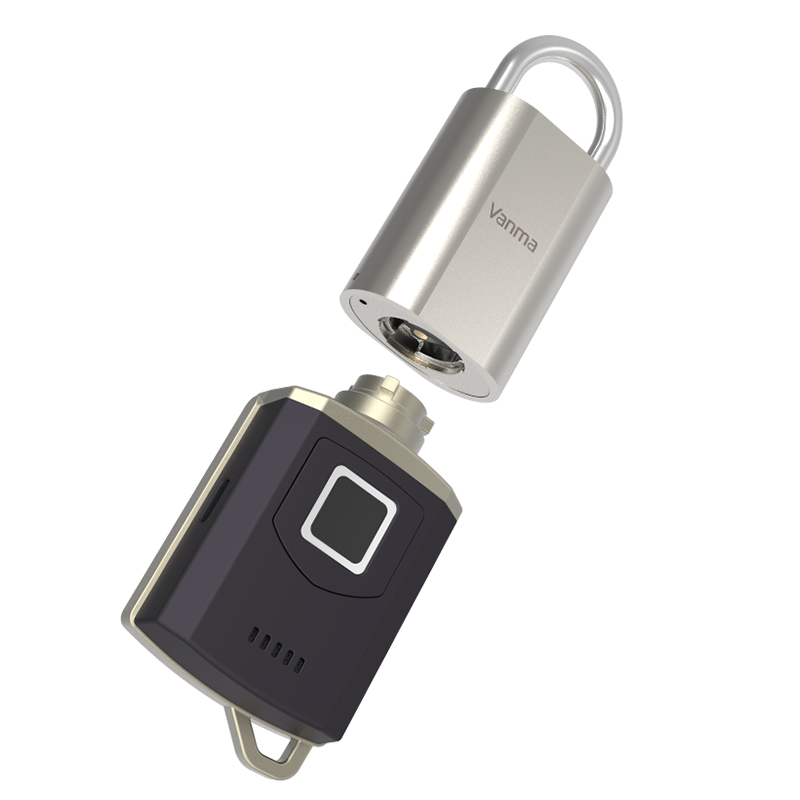
Passive Electronic Padlock
IP68 · −40°C to +85°C · no mechanical keyway · AES-256 · no battery in lock body
1. Physical hardening — no keyway, no conventional bypass
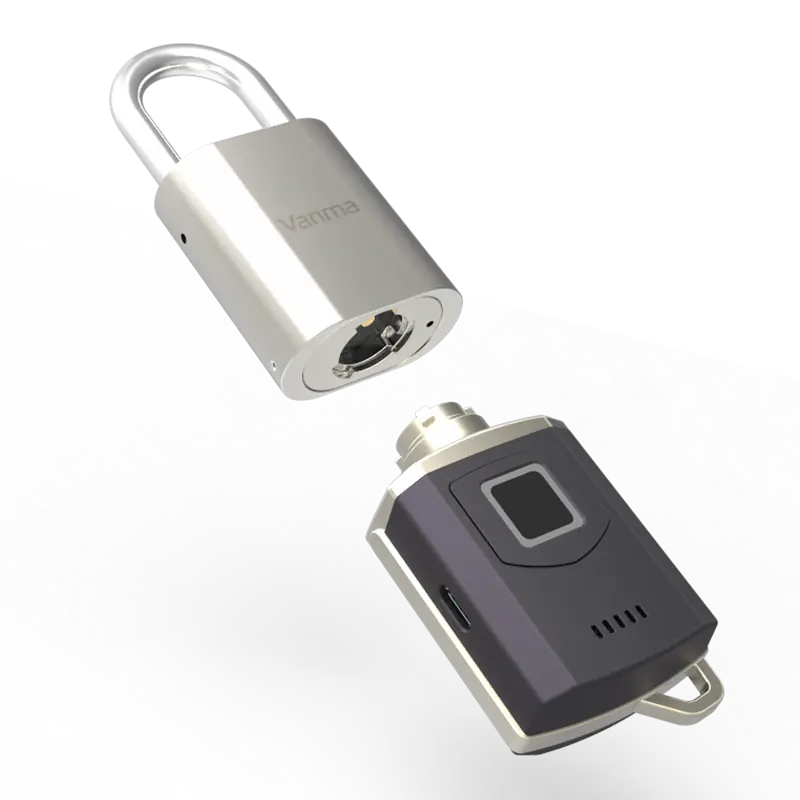
Vanma passive lock cylinders have a single electrical contact point instead of a mechanical keyhole. There is no mechanism for picking, bumping, or shimming. Standard lock-defeat tools that work on conventional padlocks simply have nothing to engage with. Combined with a hardened steel shackle, this raises the physical effort required to bypass the lock significantly above what organised theft operations typically want to invest.
2. Permission control — only the right person, at the right time
3. Automatic record — every contact logged, whether the lock opens or not
4. Real-time alert — out-of-hours access triggers immediate notification
With a Bluetooth key, access events outside authorised time windows generate immediate notifications to site administrators. An attempted access at 3am does not wait for a field engineer to return to base and plug in their key — it surfaces in real time, while there is still a chance to respond. This turns the discovery window from “days” into “minutes.”
5. Offline resilience — works without power or network at the site
This is the detail that matters most for battery room security specifically: the passive lock takes its operating power from the electronic key on contact, not from the site’s electrical supply. If the battery bank has just been stolen and the site is dark, the lock still works exactly as normal. Active electronic locks that draw site power may be inoperable precisely when you need them most.
How It Solves: The Unified "Work Ticket + Passive Lock" Blueprint
To eliminate the systemic loops that cause severe asset vulnerability—especially considering that unexpected system faults (such as PCS and inverter failures) now account for over 32% of sudden station outages, driving field crews into high-frequency, fragmented emergency maintenance—Vanma bridges the critical gap between digital enterprise compliance and physical asset isolation.
| Security Vector | Traditional Mechanical Locks | Vanma Passive Electronic Lock System |
|---|---|---|
| Access Authorization | Permanent physical keys; paper records are highly prone to human forgery, loss, or unauthorized duplication. |
Dynamic Permissions Instant time-bounded access token via mobile App linked directly to the valid work ticket. Expires automatically. |
| Subcontractor Control | No visibility or control over third-party maintenance crews. Difficult to verify who opened which cabinet. |
100% Granular Audit Trail Every unlock event is strictly bound to a verified user ID. Missing or stolen keys can be blacklisted remotely within 30 seconds. |
| Environmental Resilience | Standard padlocks rust and seize rapidly in outdoor battery enclosures exposed to extreme salt-spray or frost. |
IP68 Certified & Heavy-Duty Completely battery-free lock cylinders. Tested to withstand harsh industrial environments ranging from -40°C to +85°C. |
| IoT Core Integration | Pure physical silo. Blind spots remain completely isolated from the site’s central EMS, SCADA, or alarm systems. |
API / SDK Ecosystem Ready Seamlessly interfaces with container localized CCTV, asset management software, and national standard dispatch platforms. |
Traditional Locks vs. Active Electronic Locks vs. Vanma Passive Locks — Battery Theft Prevention Comparison
| Capability | Mechanical padlock | Active electronic lock | Vanma passive lock |
|---|---|---|---|
| Records every access attempt with timestamp | No | Yes | Yes |
| Identifies who opened the lock | No | Yes | Yes — key ID / fingerprint |
| Enforces authorised access hours | No | Yes | Yes |
| Revoke lost / ex-employee key instantly | No — replace locks | Yes | Yes — blacklist 30s |
| No mechanical keyway to pick or bypass | No | Some models | Yes — contact only |
| Works without facility power or network | Yes | No | Yes — offline-first |
| Real-time alert on out-of-hours access | No | Yes | Yes — BLE version |
| IP68 outdoor rated | Some models | Varies | Standard |
| Operates reliably at −40°C | Partial | No — battery fails | Yes |
| Integrates with asset management / NMS | No | Some | Yes — API / SDK |

Where Battery Theft Prevention Locks Are Most Needed
Telecom base stations and 5G tower battery rooms
Base station battery theft is the highest-volume application for passive electronic locks in the security space. Sites are remote, unguarded, and visited infrequently — the perfect conditions for organised theft operations. Vanma’s BK01 Bluetooth key gives field engineers the ability to access assigned sites during authorised windows, while every access event uploads in real time to the management platform. An out-of-hours access attempt surfaces as an immediate notification rather than a discovery days later when the site goes dark.
For operators managing networks across multiple regions or countries, the API integration means lock access data flows into existing network management systems (NMS) or field service platforms — no separate tool, no separate login, no separate data silo.
Solar and off-grid energy storage battery protection
EV charging stations and battery swap cabinets
Railway and public transport backup power security
Data centres and UPS battery rooms
Applications — Vanma Passive Locks Protecting Battery Assets
Colombia Cable Cabinet Security — Claro Colombia
Claro Colombia operates cable and power cabinets distributed across coastal regions of Colombia — areas where equipment theft, including internal theft by maintenance personnel , had been a persistent problem. The coastal environment also places high demands on hardware: salt air, humidity, and temperature variation are significant factors.
Vanma’s GLS cable locks and BK01 Bluetooth keys were deployed across 1,861 cabinets. The primary security gain was twofold: controlling the time windows during which cabinets could be opened, and creating a complete record of every access event tied to a named individual. Organised misappropriation requires either bypassing the lock or using an authorised key — and the latter now generates a permanent, attributable record.
Telefonica Peru — Urban Telecom Cabinet Access Control
Telefonica Peru operates a distributed network of indoor and outdoor telecom cabinets across Lima. The original workflow required engineers to collect cabinet keys from a central control centre before any site visit — a process that added significant time to every job and gave operators no visibility into whether keys were being used appropriately between scheduled visits. After deploying Vanma’s passive lock system with BK01 Bluetooth keys and L40 padlocks, site access permissions are managed digitally through the platform. Engineers hold keys assigned to their name; access to specific cabinets is granted only for the duration of a logged job. Every open and close event uploads automatically. A custom development ensured that only one user can be logged into the access app at any time — preventing credential sharing, which is one of the most common vectors for insider access abuse.How Vanma's System Specifically Deters and Detects Battery Theft
The features that matter most for battery asset protection, specifically:
No mechanical keyway — professional bypass tools are irrelevant. The single electrical contact design means that the entire category of tools used to defeat conventional padlocks — picks, bump keys, impressioning tools — simply does not apply. External thieves who cannot use an authorised electronic key cannot open the lock by conventional means.
Blacklist in thirty seconds. When a contractor’s engagement ends or an employee is terminated, their key access across every site can be revoked in under thirty seconds from the management platform. No physical lock replacement required. The key becomes inert across the entire network from the moment the blacklist is applied.
Out-of-hours access triggers immediate notification. With Bluetooth keys, access events outside the authorised time window for a specific key generate real-time push notifications to site administrators. This turns the discovery window from “days” to “minutes” — which is the difference between catching a theft in progress and finding an empty battery rack four days later.
API integration links lock events to asset records. When a lock access event can be automatically matched against a work order, a maintenance schedule, and a battery asset record in your existing management system, anomalies become visible quickly. An access event with no matching work order is a flag. An access event from a key that should have been blacklisted is an immediate alert. This kind of automated cross-referencing is simply not possible with mechanical key systems.
WHAT TO LOOK FOR IN A BATTERY THEFT PREVENTION LOCK
IP68 waterproof rating
Outdoor deployment requires full submersion protection
No mechanical keyway
Eliminates pick, bump and shimming attack vectors
Offline-first operation
Must work without site power or mobile signal
Instant key revocation
Blacklist ex-staff across all sites in 30 seconds
Real-time access notifications
Out-of-hours access triggers immediate alert
API / SDK integration
Supports integration into your own system.
Frequently Asked Questions About Battery Theft Prevention Lock Systems
Can a passive lock actually stop a determined thief?
What if the thief just cuts the shackle instead of trying to pick the lock?
How quickly will I know if someone accesses a battery room at 3am?
We have hundreds of remote sites with poor mobile coverage. Can this system work there?
How do we handle contractor access without giving them permanent keys?
Can the system integrate with our existing asset management or monitoring platform?
Conclusion
Share:
Table of Contents
Try Vanma Electronic Lock
You can contact us to request samples, and to experience the convenience of Vanma electronic locks.
Contact Us Now