
Electronic gate locks give industrial operators more control over who can enter a secured area, when they can enter, and which gate they are allowed to use. For factories, warehouses, utility facilities, telecommunications sites, logistics yards, equipment compounds, and remote infrastructure, that control can solve a problem that ordinary padlocks rarely address: physical security is only one part of gate management. The organization also needs a practical way to issue access, remove access, manage contractors, investigate incidents, and maintain control when gates are spread across a large geographic area. The right electronic locking system turns the gate from a simple mechanical barrier into a manageable access point without necessarily requiring a fully wired access control installation.
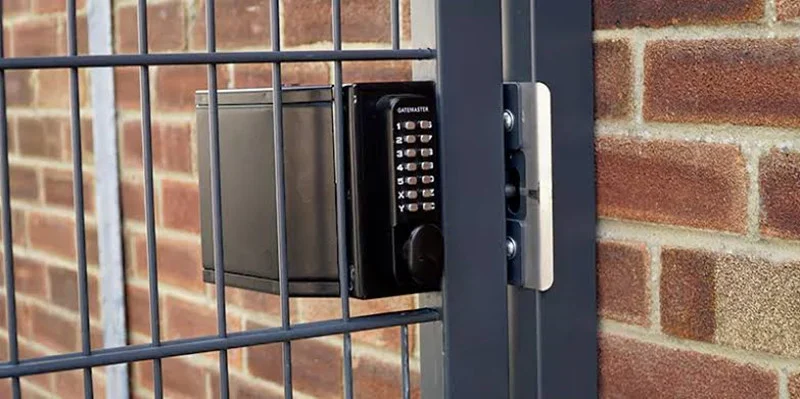
Electronic gate locks are locking devices that use an electronic credential or authorization process instead of relying only on a conventional mechanical key. Depending on the system design, the credential may be a PIN, card, smartphone, fingerprint, electronic key, or another approved device. The lock can then determine whether the credential has permission to open that particular gate.
For industrial buyers, the important point is that "electronic" does not describe just one type of product. Some gate locks require permanent electrical wiring. Others contain batteries inside the lock body. Passive electronic locks take another approach: the lock itself can remain without a battery, while an authorized electronic key supplies power and exchanges credential information during unlocking. These architectures have very different implications for installation, maintenance, outdoor reliability, and multi-site management.
A procurement team should therefore avoid comparing electronic gate locks only by lock body size or purchase price. The more useful question is how the complete access process will operate after deployment. Consider who issues credentials, how quickly permissions can be changed, whether unlocking events can be reviewed, what happens when a credential is lost, and how maintenance teams reach gates that may be far from a power supply.
Most industrial electronic gate locking solutions combine several layers. The physical lock secures the gate. A credential identifies the user. Authorization data determines which gates that person may open. Management software or an application may be used to create users, assign permissions, adjust time periods, and review records. In networked systems, communication equipment may connect the gate directly to a central platform.
This separation between the physical lock and access authority is valuable for businesses with changing personnel. A mechanical key proves only that someone possesses the correct piece of metal. An electronic credential can potentially carry rules about the individual, allowed locations, working hours, or authorization period. That makes electronic gate access particularly useful when employees, maintenance contractors, security personnel, and external service teams need different levels of access.
Electronic gate locks are most useful where a gate protects more than an ordinary entrance. Industrial gates often control access to machinery, inventory, electrical infrastructure, hazardous areas, communications equipment, fuel storage, vehicle yards, or other assets that require accountability. In these environments, organizations frequently need stronger access management without installing readers, controllers, cabling, and power supplies at every individual gate.
Factories and warehouses commonly have several perimeter access points serving different groups. Employees may use the main entrance, logistics teams may enter through loading areas, contractors may need temporary access to maintenance gates, and security teams may require access across the whole perimeter. If all these gates use conventional keyed padlocks, key distribution can become difficult to control as the site grows.
Electronic gate locks can reduce that problem by linking access rights to named users or managed credentials. When a contractor finishes a project, the administrator can remove the authorization instead of collecting every copied key or replacing a cylinder because the key was never returned. The value increases further at organizations operating several warehouses or plants under the same security policy.
Remote infrastructure creates a different challenge. A telecommunications cabinet, electrical substation, pumping station, solar facility, or unmanned equipment compound may be located far from staffed buildings. Providing continuous electrical power and network communication to every gate can add installation work that is difficult to justify, especially when the gate is opened only occasionally.
This is one reason passive electronic gate locks are considered for dispersed infrastructure. Because the locking point does not have to depend on its own internal battery or permanent gate-side power supply, organizations can retain electronic authorization while reducing some of the field maintenance associated with battery replacement and local wiring. The exact suitability still depends on lock design, environmental specifications, operating procedures, and the required access control functions.
The biggest difference is not simply electronic versus mechanical construction. It is the ability to manage access after the lock has been installed. Mechanical gate locks are familiar, inexpensive, and suitable for many locations, but their security depends heavily on control of physical keys. Once a key is copied or lost, the organization may have limited visibility into who still possesses access.
Electronic gate locks can make access more specific. A credential can be assigned to a person instead of being treated as an anonymous key. Permission may be restricted to selected gates, and some systems support defined access periods or recorded unlocking activity. This is particularly useful for sites where security managers need to answer questions such as "Who was authorized for this gate on Tuesday?" or "Does this former contractor still have access?"
| Buying Factor | Mechanical Gate Lock | Electronic Gate Lock |
|---|---|---|
| User identification | Usually tied to possession of a physical key | Can be linked to an individual electronic credential |
| Changing access | May require retrieving keys or replacing cylinders | Permissions can often be changed administratively |
| Temporary contractors | Physical keys must be issued and returned | Time-limited or temporary authorization may be available |
| Access records | Normally unavailable | Supported systems may retain unlocking records |
| Remote sites | Simple to install but difficult to manage centrally | Passive systems can combine electronic control with limited gate-side infrastructure |
For B2B procurement, useful security features are those that improve control during everyday operation. A long list of functions has little value if administrators cannot manage credentials efficiently or field personnel cannot operate the lock under real site conditions. Start with the organization's access policy, then evaluate whether the lock system can enforce it.
A company with a single warehouse gate may need only straightforward credential control. A utility operator with hundreds of dispersed sites may need user groups, time-based permissions, audit records, temporary authorization, credential revocation, and integration with existing management processes. These requirements should be documented before quotations are compared.
Individual authorization helps separate access rights by job responsibility. A maintenance technician may need access to equipment areas but not fuel storage. A regional supervisor may need several sites. A temporary contractor may need only one gate for three days. Electronic authorization can make these distinctions easier to administer than distributing multiple mechanical keys.
Audit capability is another important consideration. When the selected system records unlocking activity, security personnel can use those records during routine reviews or incident investigations. Buyers should ask where records are stored, how they are transferred, how long they remain available, and what information is captured. The answer varies considerably between standalone, networked, and electronic-key-based systems.
Lost credentials are a practical test of any access system. With a traditional master-key structure, one missing key may create uncertainty about several locks. Electronic systems can offer a more controlled response because the lost credential can be removed from the authorization structure rather than automatically requiring replacement of every affected lock.
Temporary access is equally important in industrial environments. Vendors, inspectors, service contractors, and emergency maintenance teams may need entry without becoming permanent credential holders. When evaluating electronic gate locks, ask how temporary authorization is issued, whether it can expire automatically, and whether emergency access can be granted without undermining normal approval procedures.
Outdoor durability should be treated as a primary specification, not an optional feature. Gate locks may experience rain, dust, humidity, freezing temperatures, high summer heat, salt-laden air, mud, repeated impact, and long periods without attention from maintenance personnel. An electronic lock that performs well on an indoor office door may be a poor choice for an exposed industrial perimeter.
Buyers should compare ingress protection, operating temperature, lock body material, corrosion resistance, shackle or bolt construction, connector protection, and the design of exposed electronic interfaces. For coastal facilities, ports, chemical plants, and other corrosive environments, material selection deserves particular attention. Stainless steel components, protected contacts, sealed structures, and tested corrosion resistance may be more important than features intended mainly for indoor convenience.
Mechanical strength also matters. Electronic authorization does not compensate for a weak gate, exposed hinge, thin mounting plate, or lock body that can be attacked easily. The gate, lock, mounting hardware, frame, hinges, and surrounding structure should be reviewed as one physical security assembly.
The power architecture can have a major effect on total project cost. Wired electronic gate locks can work well at controlled entrances where power and communications are already available. They can support centralized operation and immediate system communication, but trenching, cabling, conduit, controllers, weatherproof enclosures, and commissioning may increase installation complexity at remote gates.
Battery-powered electronic locks reduce the need for fixed wiring, but the battery becomes part of the maintenance plan. This may be reasonable when there are only a few locks or when technicians visit each location frequently. Across hundreds of remote gates, however, battery inspection and replacement can become a recurring operational task.
Passive electronic locks use a different model. The lock has no conventional internal battery and receives operating power from an authorized electronic key during access. For locations where running cable is difficult and maintaining batteries in every gate lock would be inconvenient, this architecture can be useful. The electronic key becomes an important managed component, so buyers should also evaluate its charging, credential storage, security, durability, and administration process.
| System Type | Typical Strength | Procurement Consideration |
|---|---|---|
| Wired electronic lock | Direct connection to powered access control infrastructure | Check cabling distance, civil work, network availability, and installation cost |
| Battery-powered lock | Electronic access without permanent wiring | Plan battery replacement intervals and field maintenance |
| Passive electronic lock | Electronic authorization without a lock-side battery | Evaluate electronic key management, authorization workflow, and data synchronization |
Electronic gate locks can form part of a broader access control strategy, but buyers should confirm the actual integration method rather than assuming every electronic lock operates like a wired door reader. Some systems are centrally networked in real time. Others synchronize information through a mobile application, electronic key, management station, or periodic data transfer.
For security managers, the main objective should be consistent policy across different types of openings. A headquarters building may use wired readers while remote substations use passive electronic locks. The technologies do not have to be physically identical, but administrators should still be able to apply clear rules for who receives access, who approves changes, how access is revoked, and how records are reviewed.
When integration is required, ask manufacturers about available software interfaces, APIs, database export options, user synchronization, and communication requirements before selecting hardware. Integration should be treated as an engineering requirement during procurement rather than something to solve after hundreds of locks have already been installed.
Correct lock selection begins with a site survey. Gate construction varies considerably between chain-link gates, steel swing gates, sliding gates, equipment cages, utility enclosures, and heavy industrial perimeter doors. The locking point must accommodate alignment changes, outdoor movement, available mounting space, and the way personnel actually approach the gate.
- Check gate thickness, frame geometry, latch position, and available mounting clearance.
- Confirm whether the gate is exposed directly to rain, dust, salt spray, heat, or freezing conditions.
- Determine how many users require access and how frequently personnel change.
- Identify whether the gate has electrical power or network connectivity nearby.
- Decide whether access records are mandatory for security or compliance procedures.
- Review emergency access requirements and procedures for credential failure.
- Check whether the lock must fit an existing hasp, chain, cylinder format, or custom enclosure.
Pilot testing is useful for larger deployments. Installing several locks at representative locations allows the purchasing and security teams to evaluate real gate alignment, employee training, authorization procedures, software administration, weather exposure, and routine maintenance before committing to a full site rollout.
The lowest unit price does not always produce the lowest operating cost. Electronic gate locks are often installed because an organization wants better control across many access points, so lifecycle cost should include installation labor, wiring, battery servicing, credential replacement, software management, administrator time, lock replacement, and travel to remote locations.
Consider a utility company with dozens of unmanned compounds. Sending technicians to replace batteries may cost far more in labor and travel than the battery itself. At another facility, installing power cable across an active yard may cost more than the locks. A passive electronic design may reduce those particular expenses, while a continuously networked entrance may justify a wired solution because real-time control is operationally important.
Maintenance planning should also cover cleaning, inspection of locking surfaces, corrosion checks, electronic contact condition, mechanical wear, credential devices, software administration, and spare parts. Before purchasing, ask how failed locks are serviced, whether cylinders or electronic modules can be replaced separately, and how long key components are expected to remain available.
A useful comparison should start with operating conditions rather than a feature checklist. Two electronic locks may appear similar in a catalog but be intended for very different environments. One may suit a protected commercial entrance, while another is designed for exposed utility gates that remain outdoors for years. Purchasing teams should therefore build the specification around their own sites.
A practical request for quotation can include the number of gates, gate types, outdoor conditions, minimum operating temperature, corrosion exposure, number of users, contractor access requirements, authorization workflow, audit requirements, expected unlocking frequency, power availability, software requirements, and existing access control infrastructure.
For projects involving passive electronic gate locks, also ask how authorization is written to the key, whether one key can operate multiple lock types, how permissions expire, how lost keys are handled, how opening records are retrieved, and what happens if a worker arrives at a remote location without an updated credential. These operational details often matter more than minor differences in lock appearance.
| Procurement Question | Why It Matters |
|---|---|
| Is the lock designed for continuous outdoor exposure? | Industrial gates may face weather conditions far beyond typical indoor lock environments. |
| How are users added and removed? | Frequent personnel and contractor changes can create significant administrative work. |
| Can permissions be limited by gate or time? | Different teams may require different access scopes. |
| Are unlocking events recorded? | Records can support investigations, audits, and access reviews. |
| What power source does the lock require? | Power architecture affects installation and long-term maintenance. |
| What happens when a credential is lost? | The recovery procedure directly affects security and operational disruption. |
| Can the system scale across multiple sites? | Centralized organizations may eventually manage hundreds or thousands of locks. |
Yes, provided the product is specifically designed for the environmental conditions at the site. Industrial buyers should not assume that every electronic lock is suitable for exposed gates. Check ingress protection, corrosion resistance, operating temperature, mechanical strength, sealing, and mounting requirements. A lock used on an indoor commercial door faces very different conditions from one installed at a coastal substation or outdoor logistics yard.
The answer depends on the lock architecture. A wired electronic gate lock normally depends on a local power source, although system designs may include backup power. Battery-powered locks operate from an internal battery and therefore require a battery maintenance plan. Passive electronic locks can operate without a permanent power supply in the lock itself because the authorized electronic key provides the necessary power during unlocking. This can make passive systems practical for remote gates where permanent electrical infrastructure is limited.
Some passive electronic locking systems are designed so one managed electronic key can operate multiple authorized locks. The important word is "authorized." Carrying one key does not mean the user automatically receives access everywhere. The management system can determine which locks that credential is permitted to open. For organizations with many gates, cabinets, equipment enclosures, or utility assets, this approach can reduce the number of physical keys employees need to carry while preserving differentiated access rights.
Electronic authorization can make contractor access easier to control because permission can be assigned according to location and working period. Instead of issuing a mechanical key that may remain valid indefinitely, the organization can provide the contractor with access appropriate to the job. Depending on the system, that authorization may expire automatically or be removed when the project ends. Where audit records are supported, the security team may also be able to review contractor unlocking activity.
Neither architecture is automatically better for every project. Passive electronic locks are attractive when gate-side batteries and wiring would create maintenance or installation problems. Battery-powered products may be appropriate when the required features are available in a standalone device and battery servicing is easy. Wired locks may be the better match for heavily used entrances requiring direct connection with existing access control infrastructure. The correct choice depends on location, usage frequency, maintenance resources, communication requirements, and security policy.
Test the complete operating process rather than only the lock mechanism. Confirm physical fit, outdoor performance, credential issuance, permission updates, failed-access behavior, unlocking speed, user training requirements, record retrieval, emergency procedures, and administrator workload. For a multi-site rollout, a small field pilot can reveal installation and management issues that are difficult to identify from drawings or product specifications alone.
The most suitable electronic gate locks are the ones that match the site's physical environment and access management process. Industrial security rarely depends on a lock alone. It depends on knowing who should have access, limiting that access appropriately, protecting the physical gate, responding quickly when personnel change, and maintaining the system without creating unnecessary field work.
For facilities with permanent power and centralized infrastructure, wired gate access may be appropriate. For smaller standalone installations, battery-powered products may be sufficient. For remote industrial gates, utility compounds, telecommunications sites, warehouses, and dispersed assets where lock-side power and battery maintenance are difficult, passive electronic gate locks provide another practical architecture to evaluate. Comparing these options against real operating conditions will give purchasing managers and security teams a much clearer basis for selecting a system that remains manageable long after installation.

