
Electronic Key Locks – Digital Security for Everyday Life
Electronic key locks replace the jangling rings of metal keys with encrypted credentials that live on cards, phones, or even fingertips. By shifting from purely mechanical tumblers to microcontroller-driven authentication, they give users tighter control over who comes and goes while stripping away many of the hassles of traditional locking hardware. In a world where convenience and cybersecurity increasingly overlap, these locks offer a bridge—melding physical security with the agility of modern software. This article explores their anatomy, advantages, and the best practices that keep them resilient against both crowbars and hackers.
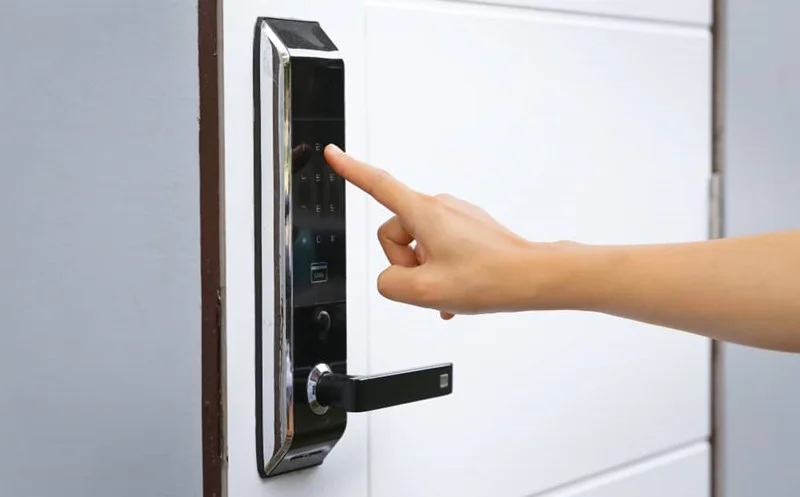
What Makes an Electronic Key Lock Different?
Unlike a conventional cylinder that trusts the unique cuts on a metal blade, an electronic key lock trusts mathematics. When you present a credential—be it a PIN, RFID badge, or Bluetooth token—the lock’s microcontroller runs it through a cryptographic algorithm, compares the result to a secure database stored in non-volatile memory, and only then energizes a miniature motor to retract the bolt. This digital handshake happens in milliseconds, yet it involves layers of hashing, randomization, and tamper checking that are impossible to duplicate with a metal file.
Core Components
Microcontroller. Acting as the lock’s brain, this embedded chip stores user permissions, executes encryption routines, and monitors every interaction for anomalies. Higher-end models include physical mesh shields or potting compounds to discourage prying eyes and soldering irons.
Power Source. Residential deadbolts usually draw from four AA lithium batteries that provide 12 months or more of service, while commercial mortise locks may be hard-wired to low-voltage transformers with super-capacitor backup. Some passive electronic systems harvest energy directly from the smart key, eliminating batteries altogether.
Authentication Interface. This is the human touchpoint: a glass-top keypad, an RFID antenna hidden behind stainless steel, a rugged fingerprint sensor, or a Bluetooth radio tucked inside the housing. Many locks combine two interfaces so building managers can issue temporary PINs while employees still badge-in for speed.
Types of Electronic Key Locks
Choosing the right lock is less about price tags and more about workflow. Hotels lean toward RFID for quick guest turnover, tech offices crave biometric assurance, and smart homes often land on Wi-Fi locks that chat with voice assistants. Each technology carries distinct trade-offs in convenience, scalability, and attack surface.
PIN Code Locks
PIN locks present the simplest upgrade path from metal keys: drill nothing, wire nothing, just bolt on a keypad-equipped deadbolt. Users punch in a 4- to 10-digit code—often chosen to be memorable yet unique—and the lock logs both successful and failed attempts. Owners can create dozens of codes for relatives, cleaners, or delivery drivers, then delete them remotely once they’re no longer needed.
RFID & Key Card Locks
Radio-frequency identification uses embedded antennas to transmit a credential when a card slips within a few centimeters of the reader. Because cards are cheap, clone-friendly for managers, and swipe quickly, RFID dominates hotels, hospitals, and multi-building campuses. Smart chips use rolling codes and mutual authentication to thwart off-the-shelf skimmers.
Biometric Locks
Biometric readers validate the person, not the object they carry. Capacitive sensors map ridge patterns on a fingertip, optical scanners read iris patterns, and infrared arrays detect vein geometry beneath the skin. Accuracy depends on sensor quality and software calibration, but modern units routinely recognize authorized users in under half a second while rejecting spoofs fashioned from photos or silicone prints.
Mobile Bluetooth & Wi-Fi Locks
Bluetooth Low Energy lets your phone become a digital key that never leaves your pocket; Wi-Fi connects the lock to cloud dashboards so you can check status from across the planet. While wireless radios introduce new cybersecurity considerations, they also unlock features like geo-fencing, time-limited access links, and voice-assistant integration.
How Electronic Key Locks Work
Operation boils down to four stages: credential presentation, cryptographic validation, actuator release, and audit logging. Advanced models employ secure enclaves—dedicated processor zones isolated from the main firmware—to keep secret keys safe even if attackers compromise the outer layers of software. An accelerometer may detect brute-force impacts, triggering lockdown or silent alarms to a monitoring center.
Fail-Safe vs Fail-Secure Designs
Fail-safe locks unlock during a power loss to guarantee safe egress, fulfilling fire codes in interior corridors. Fail-secure locks stay locked when power drops, protecting assets in storerooms and server racks until an authorized key holder arrives with a mechanical override. Selecting the wrong mode can turn a minor outage into a security nightmare or a life-safety hazard.
Benefits Over Mechanical Locks
Beyond keyless convenience, electronic locks deliver granular control and forensic insight. Administrators can grant a vendor access only on Tuesdays between 9 a.m. and noon, then pull detailed logs to verify compliance. Lost keys no longer spark an expensive re-key; access simply disappears from the database. Over time, organizations recoup the premium price through lower maintenance, fewer break-ins, and data-driven policy enforcement.
Potential Drawbacks
No technology is perfect. Batteries eventually die, firmware needs patches, and users may still pick embarrassingly weak PINs. If the lock links to the cloud, that server must stay online and properly secured. Decision-makers should weigh these factors alongside the undeniable convenience gains, opting for models with strong encryption, local fallback credentials, and robust vendor support.
Security Best Practices
Choose locks certified to at least ANSI/BHMA Grade 2 for physical endurance and boasting AES-128 or AES-256 encryption for data security. Turn on automatic firmware updates and require two-factor authentication for administrative portals. Finally, train occupants: even the strongest lock falls to a shoulder-surfing attacker if users blurt out their codes.
Key Markets & Use Cases
Smart homes use electronic deadbolts to automate morning routines—turning off alarms, adjusting thermostats, and unlocking doors in one tap. Warehouses secure loading bays with badge-readers that feed entry data straight into time-and-attendance software. Critical infrastructure—like telecom towers—deploys passive electronic cylinders powered by the key itself, ensuring operability in rain-soaked, battery-hostile environments.
Installation & Maintenance Guide
Most retrofits involve little more than a screwdriver: remove the interior escutcheon, slide in the smart chassis, and tighten two mounting screws. After pairing the lock with its mobile app, set a reminder to swap batteries every nine months or sooner if winter temperatures plummet. For enterprise setups, schedule quarterly firmware audits alongside fire-door inspections.
Cost Breakdown
Entry-level smart deadbolts hover around USD 100, while multi-credential, ANSI Grade 1 commercial locks can exceed USD 800. Cloud management subscriptions run USD 2–5 per door each month, but those fees often include 24/7 phone support, detailed reporting, and unlimited credential issuance—features that can offset labor costs in facilities with high staff turnover.
Future Trends
Expect artificial intelligence to crunch access logs, flag anomalies, and dynamically tighten or loosen permissions based on behavioral risk scores. The emerging Matter standard promises smoother interoperability among smart-home brands, letting a single voice command lock the door, arm the alarm, and lower the blinds, regardless of manufacturer silos.
Choosing the Right Electronic Key Lock
Start by mapping doors by priority: perimeter, interior critical, and low-risk interior. Match each category to the appropriate ANSI grade and credential type. Verify that the lock’s backset, latch style, and door thickness fit existing hardware, and test wireless signal strength before finalizing a Wi-Fi model. Lastly, scrutinize the vendor’s security track record—regular vulnerability disclosures and fast patch cycles signal a culture of transparency.
Common Myths Debunked
Myth 1: “Electronic locks open themselves in power outages.”
Reality: Only fail-safe models unlock without current; fail-secure variants remain locked and rely on batteries or physical overrides.
Myth 2: “A hacker can crack any smart lock in seconds.”
Reality: While no system is invulnerable, modern locks use encryption schemes that would require astronomical computing resources to brute-force. Human error—like sharing PINs—is the real weak point.
FAQs
1. Can I install an electronic key lock without professional help?
Yes, most residential models are engineered for DIY installation and include video tutorials within their companion apps. However, if your door uses a mortise latch or you need to tie multiple locks into an enterprise access-control platform, hiring a certified locksmith ensures warranty compliance and optimal performance.
2. How often should I replace the batteries?
For typical household use—10 to 15 unlocks per day—fresh lithium batteries last nine to twelve months. Heavy-traffic commercial entries may need new cells every three to six months. Always heed low-power alerts promptly to avoid lockouts.
3. What if someone steals my phone that controls the lock?
Immediately log into the lock’s web dashboard from another device and revoke that phone’s credential. Many apps offer remote wipe features that automatically invalidate keys when the handset is reported lost, ensuring the thief gains no advantage.
4. Are electronic locks weather-resistant?
Look for an IP rating: IP65 indicates full dust protection and water jets resistance, suitable for exposed gates. In colder regions, choose models certified down to –30 °C and consider a weather shield to block driving snow.
5. Do electronic key locks integrate with smart-home systems like Alexa and Google Home?
Many locks ship with native Alexa skills or Google Home actions, enabling voice status checks and routine triggers. For privacy, voice assistants typically require a spoken PIN before unlocking, preventing accidental or unauthorized commands.
