
Casino Cash Security and Key Management: Why Your Keys Are the Weakest Link in the Vault


This scene plays out in casinos every single day. The cameras are watching every square inch of the gaming floor. The chip trays get counted to the dollar. And yet the keys that open the cash room, the chip vault, and the count room get passed from hand to hand with less accountability than a set of house keys at a vacation rental.
Casino cash security key management is one of those problems that operators know about but rarely treat as the urgent issue it actually is. This article makes the case that it should be — and walks through what a real fix looks like.
Why Casino Cash Security Key Management Is a Bigger Risk Than Most Operators Admit
The Amount of Cash Moving Through a Casino Each Day Is Staggering
Let’s start with scale, because scale changes everything when it comes to risk. U.S. commercial gaming revenue hit a record $66.5 billion in 2023, according to the American Gaming Association. A significant portion of that flows through physical cash — through cages, count rooms, chip vaults, and armored transport. A large Vegas property can process several million dollars in cash transactions in a single day.
The point isn’t to be alarmist. It’s to say that when the cash volume is this high, casino cash security key management deserves the same level of attention as surveillance systems and armored counting equipment — not an afterthought.
Far More People Have Keys Than Most Managers Realize
Here’s a question worth asking: right now, how many people have physical access to your casino’s cash areas? Include everyone — cage supervisors, cashiers, security, maintenance staff who need access for equipment repairs, managers who hold master keys “just in case.”
The honest answer at most properties is: more than you think, and less documented than you’d like.
The ACFE’s 2024 Report to the Nations found that more than half of all occupational fraud cases occurred because of a lack of internal controls or an override of existing ones. That’s not a technology problem — that’s a people-and-process problem. And in a casino, physical key access is one of the most obvious gaps in the internal control chain. When multiple people share the same physical key, you’ve already lost the ability to know who did what, and when.
The Real Cost of Weak Casino Cash Security Key Management
Internal Theft Outpaces External Robbery — By a Lot
Hollywood loves a good casino heist. Ocean’s Eleven made it look like the risk came from the outside. In reality, the data tells a different story.
Internal fraud is far more common, far harder to detect, and far more expensive than external theft in most commercial environments. The ACFE’s 2024 report found that the median loss per fraud case globally was $145,000, and that the typical case went undetected for about 12 months before anyone caught on (ACFE, 2024). That 12-month window matters enormously in a cash-heavy environment like a casino, where a patient, methodical employee can cause significant damage before any anomaly shows up in the numbers.
The Association of Certified Gaming Compliance Specialists has documented multiple real-world cases of casino cage fraud where internal theft went undetected for extended periods specifically because there was no way to match a suspicious transaction to a specific person’s physical access (ACGCS). The cash discrepancy existed. The evidence that something happened was there. But without an access log, the circle of suspects was too wide to narrow down.
That’s what poor casino cash security key management actually costs — not just the money that walks out the door, but the investigative dead ends that follow.
Regulatory Exposure Is a Risk Most Operators Underestimate
In Nevada, the Gaming Control Board’s Minimum Internal Control Standards (MICS) require licensed casinos to maintain written systems of internal control that cover cash handling, cage operations, and access to sensitive areas. These aren’t suggestions. They’re baseline requirements, and a failure to maintain adequate access records can surface during a routine audit as a compliance deficiency.
That matters because the licensing consequences of repeated or serious internal control failures can be severe. A fine is the optimistic outcome. License suspension or revocation is the worst case — and for a property generating millions per day, even a short suspension is catastrophic.
The regulatory argument for investing in casino cash security key management isn’t just about avoiding punishment. It’s about having a documented, defensible record of access that satisfies auditors and demonstrates the kind of internal control that regulators actually want to see.
Why Traditional Keys Keep Failing Casino Cash Security
Keys Get Copied, Shared, and Lost — and Nobody Notices Until It's Too Late
Battery-Powered Electronic Locks Introduce Their Own Problems
Casino cash areas are used constantly. A cage might see dozens of authorized access events per shift. High-frequency use drains batteries faster than in a typical office environment. A lock that dies at 3 a.m. on a Saturday — when the cage is busiest and the nearest maintenance person is 20 minutes away — creates pressure to override the system or prop the door, which defeats the entire purpose.
There’s also the maintenance burden. A large property might have dozens of electronic locks across its cash and chip storage areas. Keeping track of battery status, replacing them on schedule, and responding to failures is an ongoing cost that adds up quickly.
How Passive Electronic Lock Systems Strengthen Casino Cash Security Key Management


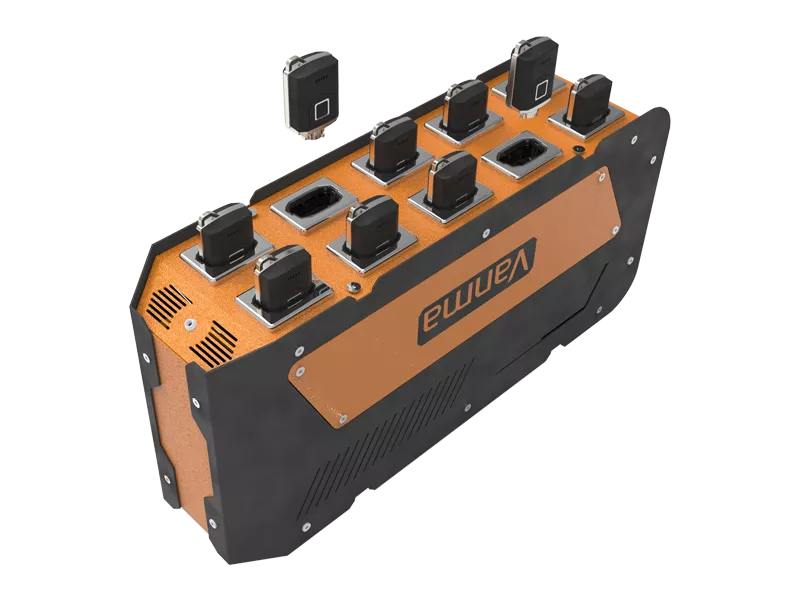
Electronic Key
Passive Lock
Management Software
Smart Key Locker
- Infrared sensing
- IP65
- Basic Electronic Lock
- Bluetooth Electronic Lock
- Fingerprint Electronic Lock
- Stainless steel lock body
- No wire require
- IP68
- Audit trail
- Lost key management
- Authorization management
- Reminder of forgetting lock
- Prevent nauthorized access
- Access Trail
- Key charging
Every Key Has an Identity — and Every Action Gets Logged
The result is a log that shows exactly who opened each lock, at what time, and in which location. That log is stored in the key and syncs to a management platform once the key returns to a docking station or comes within range of a networked hub. Every access event is documented automatically, without relying on anyone to fill in a sign-out sheet or remember to log a transaction.
For casino cash security key management, that log is the piece that’s been missing from the mechanical key system. It doesn’t change who has access — it just makes every use of that access visible and permanent.
No Battery in the Lock Means No Dead Lock at 3 a.m.
Because Vanma’s lock has no internal battery, there’s nothing to die mid-shift. The lock is passive until a key touches it. That design makes it well-suited to the 24/7 operating reality of a casino, where the cage doesn’t close and the count room doesn’t take a night off.
Maintenance burden also drops considerably. The lock itself has no electronics to service. The key — which is what carries the battery and the firmware — gets charged and maintained centrally, typically through a key cabinet that manages charging and updates automatically.
Dual Authorization for the Highest-Stakes Zones
One of the features that maps most directly onto casino regulatory requirements is dual authorization. Vanma locks can be configured to require two separate keys — held by two different people with different permission levels — to open a single lock. Neither key works alone.
This directly addresses one of the standing requirements in many gaming jurisdictions: that access to high-value areas like count rooms and chip vaults requires at least two authorized personnel to be physically present. With a passive electronic lock, that requirement is enforced at the hardware level, not just the policy level. You can’t waive it. You can’t forget it. It’s simply how the lock works.
A Lost Key Doesn't Mean a Compromised Lock
Building a Casino Cash Security Key Management System That Actually Holds Up
Start by Mapping Every Access Point in Your Cash Flow Path
Before changing anything, get a complete picture of where your current system actually has gaps. Walk the cash flow path from the point cash enters the building to the point it leaves in an armored vehicle — cage windows, cash drawers, count rooms, chip vaults, storage areas, armored car holding areas. At each point, ask: who currently has access here? How is that access documented? What would you see in the records if something went wrong tonight?
Most casinos find that the answer to the last question gets uncomfortable pretty quickly. That discomfort is useful — it shows exactly where the audit trail breaks down.
Match the Lock Type and Authorization Level to the Risk Level of the Area
Not every door in a casino cash operation carries the same risk, and the controls don’t need to be identical across all of them. A useful approach is to think in tiers:
High-value, high-risk areas — count rooms, chip vaults, main cash storage — warrant dual-authorization locks, biometric key verification, and a complete log of every entry and exit. These are the areas where a single unauthorized access could mean a significant loss.
Operational cash areas — cage windows, cashier stations, cash drawers — need access logging and individual key assignment, so that any discrepancy can be traced to a specific person and timeframe without ambiguity.
Support areas — equipment storage, maintenance access, server rooms adjacent to cage operations — benefit from tiered access with time-restricted permissions, so a contractor who needs access during installation doesn’t retain that access indefinitely.
Make the Audit Log a Daily Management Tool, Not a Post-Incident Resource
What This Looks Like When It's Working
Let’s be straight about what a passive electronic lock system actually delivers and what it doesn’t.
It won’t stop a determined, sophisticated insider who understands the whole system. No access control does. What it does is eliminate the low-effort, opportunistic theft that makes up the vast majority of internal fraud cases — the kind where someone tested whether the gap existed, found that it did, and kept pushing.
It also provides the documentation infrastructure that regulators expect to see. When an auditor from a gaming control board asks for access records for a specific area on a specific date, being able to produce a complete, tamper-resistant log in minutes is a fundamentally different experience than trying to reconstruct events from sign-out sheets and shift notes.
Casino cash security key management isn’t the most visible part of a casino’s security operation. But it’s often the part where the gap between what operators think they have and what they actually have is widest. Closing that gap doesn’t require a complete overhaul of existing infrastructure — it requires replacing the one component that was never built to do the job being asked of it.
Share:
Table of Contents
Try Vanma Electronic Lock
You can contact us to request samples, and to experience the convenience of Vanma electronic locks.
Contact Us Now