
Access control systems are pivotal components in ensuring the security and integrity of sensitive information and physical spaces within organizations. They empower businesses to regulate and monitor access to resources effectively, safeguarding against unauthorized entry or data breaches. Understanding the various types of access control systems is crucial for businesses seeking to fortify their security measures and protect their assets.
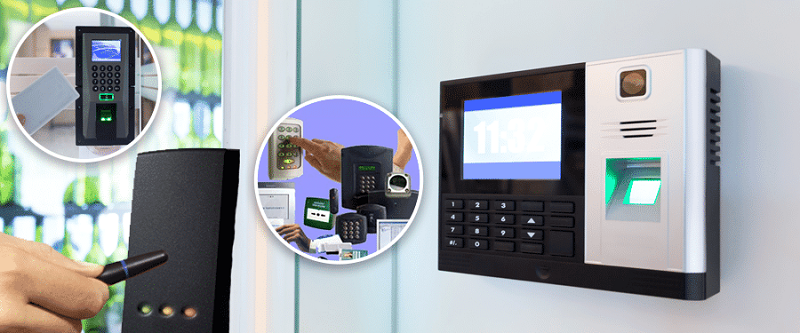
Access control systems serve as gatekeepers, determining who can enter a given space or access specific information. They encompass both physical access control, such as door locks and keycards, and logical access control, governing digital resources like computer systems and databases.
Access control systems are security mechanisms that regulate the entry of individuals or entities into physical locations or the retrieval of digital information. They utilize authentication methods to verify the identity of users and authorization protocols to grant or deny access based on predefined rules and permissions.
Access control systems play a pivotal role in maintaining confidentiality, integrity, and availability of resources within organizations. By restricting access to authorized personnel only, these systems mitigate the risk of unauthorized data breaches, insider threats, and physical security breaches.
Discretionary Access Control (DAC) is a model where access rights are determined by the owner of the resource. In DAC systems, individuals have the discretion to grant or revoke access permissions to their resources. This model is commonly used in small-scale environments where trust between users is assumed.
In DAC systems, each resource owner defines who can access their resources and what level of access they have. Users have the freedom to share resources with others at their discretion.
Pros:
- Flexibility: Owners have control over their resources and can modify access rights as needed.
- Simplicity: DAC systems are straightforward to implement and manage, making them suitable for smaller organizations.
Cons:
- Lack of central control: Since access decisions are left to individual users, it can lead to inconsistencies and security vulnerabilities.
- Limited scalability: DAC systems may struggle to accommodate larger organizations with complex access requirements.
Mandatory Access Control (MAC) is a model where access rights are centrally controlled by the system administrator. In MAC systems, access decisions are based on security labels assigned to users and resources, which determine their level of clearance.
MAC systems enforce access controls based on predefined security policies set by the system administrator. Users and resources are assigned security labels, and access is granted or denied based on the clearance level of the user and the sensitivity level of the resource.
Pros:
- Centralized control: MAC systems provide a centralized mechanism for enforcing access policies, ensuring consistent security across the organization.
- Enhanced security: By strictly enforcing access controls based on security labels, MAC systems minimize the risk of unauthorized access and data breaches.
Cons:
- Complexity: Implementing and managing MAC systems can be complex and resource-intensive, requiring careful planning and administration.
- Limited flexibility: MAC systems may be less flexible than other models, as access decisions are based solely on predefined security policies.
Role-Based Access Control (RBAC) is a model where access rights are assigned based on the roles and responsibilities of users within the organization. In RBAC systems, access permissions are associated with specific roles, and users are assigned to these roles based on their job functions.
RBAC systems simplify access control by grouping users into roles and assigning permissions to these roles. Users inherit the access rights associated with their assigned roles, streamlining the management of access permissions.
Pros:
- Simplified administration: RBAC systems reduce administrative overhead by centralizing access control around predefined roles.
- Granular control: RBAC allows organizations to fine-tune access permissions based on job roles and responsibilities, ensuring users have the access they need without granting unnecessary privileges.
Cons:
- Role explosion: As organizations grow, the number of roles and associated permissions may proliferate, leading to complexity and potential security risks.
- Role creep: Without proper oversight, users may accumulate unnecessary roles and permissions over time, increasing the risk of privilege misuse.
Each type of access control system has its unique strengths and weaknesses, making them suitable for different use cases and environments.
Control granularity: DAC systems offer fine-grained control over access rights, while MAC systems enforce strict access controls based on predefined security labels. RBAC provides a balance between granularity and simplicity by organizing access permissions around predefined roles.
Administration overhead: DAC systems are easy to administer but may lack central control, while MAC systems offer centralized control at the cost of complexity. RBAC strikes a balance between centralized control and ease of administration.
Scalability: DAC systems may struggle to scale with growing organizations due to their decentralized nature, while MAC and RBAC systems offer more scalability and flexibility in larger environments.
DAC: Suitable for small-scale environments with limited access requirements, such as home networks or small businesses.
MAC: Ideal for environments with stringent security requirements, such as government agencies or financial institutions, where centralized control and strict enforcement of access policies are paramount.
RBAC: Well-suited for organizations with dynamic access requirements and diverse user roles, such as large enterprises or educational institutions, where role-based access control simplifies administration and ensures granular access control.
Before implementing an access control system, organizations should consider various factors to ensure it aligns with their security needs and operational requirements.
Security requirements: Assess the sensitivity of the resources being protected and the level of security required to safeguard them effectively.
Scalability: Consider the scalability of the access control system to accommodate future growth and evolving access requirements.
Integration: Evaluate the compatibility of the access control system with existing infrastructure and systems to ensure seamless integration.
Usability: Prioritize user experience and ease of administration to minimize operational overhead and maximize productivity.
As technology continues to evolve, access control systems are poised to undergo significant advancements to address emerging security challenges and meet evolving user needs.
Biometric authentication: The widespread adoption of biometric technologies, such as fingerprint scanning and facial recognition, offers more secure and convenient authentication methods.
Blockchain-based access control: Blockchain technology holds promise for enhancing the security and transparency of access control systems by providing decentralized and tamper-proof audit trails.
Artificial intelligence (AI) and machine learning: AI-powered access control systems can analyze user behavior patterns and detect anomalies in real-time, bolstering security and threat detection capabilities.
Convergence of physical and logical access control: The integration of physical and logical access control systems will enable seamless access management across both digital and physical spaces.
Zero-trust security model: The adoption of a zero-trust security model, where access is never implicitly trusted and is continuously verified, will become increasingly prevalent to combat sophisticated cyber threats.
Context-aware access control: Access control systems will leverage contextual information, such as user location and device posture, to make more informed access decisions and adapt dynamically to changing security conditions.
In conclusion, access control systems play a crucial role in safeguarding organizational assets and ensuring the confidentiality, integrity, and availability of resources. By understanding the different types of access control systems and their respective strengths and weaknesses, organizations can implement robust security measures tailored to their specific needs and environment.
Q: What are some common authentication methods used in access control systems?
A: Common authentication methods include passwords, biometrics (such as fingerprint or facial recognition), smart cards, and two-factor authentication (2FA).
Q: How do access control systems enhance security in physical spaces?
A: Access control systems restrict entry to authorized personnel only, preventing unauthorized individuals from gaining access to sensitive areas or assets.
Q: Can access control systems be integrated with other security systems?
A: Yes, access control systems can be integrated with other security systems, such as surveillance cameras and intrusion detection systems, to provide comprehensive security coverage.
Q: What role does encryption play in access control systems?
A: Encryption helps secure data transmission and storage within access control systems, ensuring that sensitive information remains protected from unauthorized access or interception.
Q: How can organizations ensure compliance with regulatory requirements when implementing access control systems?
A: Organizations can ensure compliance with regulatory requirements by implementing access control policies and procedures that align with industry standards and legal mandates, such as GDPR or HIPAA.
