
Industrial Lock and Security: What Should You Check?
Industrial lock and security decisions directly affect asset protection, operational continuity, and site accountability. If you manage a warehouse, utility cabinet network, telecom enclosure, industrial gate, or equipment room, the wrong lock does more than create inconvenience. It increases the risk of unauthorized access, lost keys, damaged assets, delayed maintenance, and weak control over who entered a restricted area and when. That is why most B2B buyers are no longer looking at locks as simple hardware items. They are evaluating industrial lock and security as part of a larger risk-control system.
For purchasing managers, facility operators, and security teams, the real question is not just which lock looks strong on paper. The practical question is which industrial locking solution fits the site, survives the environment, supports daily workflows, and reduces long-term security problems. In this article, we will look at what buyers should check before choosing industrial lock and security solutions, where these systems are typically used, how mechanical and electronic options compare, and which factors have the biggest impact on long-term value.
Why Industrial Lock and Security Matters
The Cost of Weak Physical Security
Weak physical security creates operational risk faster than many companies expect. A poorly selected lock on an outdoor cabinet, a shared mechanical key for multiple access points, or a low-grade gate lock in a high-traffic area can expose a site to theft, tampering, service interruption, and compliance issues. In industrial environments, one vulnerable access point can affect much more than a single door or enclosure. It can disrupt power distribution, expose network infrastructure, compromise stored materials, or create safety issues for staff and contractors.
This is why industrial lock and security should be assessed as a business decision, not just a hardware purchase. A lock that costs less upfront may lead to more maintenance calls, more key duplication risk, and less visibility over access activity. Over time, the cost of poor control is often higher than the original purchase price.
Why Industrial Sites Need More Than Standard Locks
Industrial sites operate under different conditions than homes or light commercial buildings. Locks may be exposed to dust, rain, salt spray, vibration, frequent access, or even remote off-grid environments. Access may involve employees, contractors, vendors, and emergency service teams. In these settings, standard consumer-grade locks often fall short. Industrial lock and security products need stronger materials, better corrosion resistance, higher tamper resistance, and a more controlled approach to access authorization.
Where Industrial Lock and Security Solutions Are Used
Gates, Fences, and Perimeter Access
Perimeter access points are one of the most common applications for industrial lock and security. These include yard gates, chain-link fence doors, loading area barriers, and restricted outdoor compounds. The priority here is usually a mix of physical strength and convenient authorized access. Buyers should consider shrouded shackles, hardened materials, strong hasp compatibility, and weather resistance. If multiple teams need controlled entry, access management becomes just as important as brute-force resistance.
Cabinets, Panels, and Utility Enclosures
Electrical cabinets, telecom enclosures, control panels, distribution boxes, and roadside utility cabinets require a different type of lock selection. In these applications, size compatibility, enclosure fit, tamper resistance, and resistance to corrosion are often more important than the large visible form factor used on gates. Cam locks, swing handle locks, and managed electronic access systems are often used here. The right choice depends on how critical the enclosure is and how many field staff need access.
Warehouses, Storage Rooms, and Equipment Areas
Inside industrial buildings, locks may be used on storage cages, tool rooms, server spaces, maintenance rooms, chemical storage, and equipment areas. In these spaces, the goal is not only to stop unauthorized entry but also to create cleaner internal control. This is especially important when multiple shifts, subcontractors, or temporary teams use the same facility. Industrial lock and security in these locations should support accountability and reduce the problem of uncontrolled key sharing.
Main Types of Industrial Lock and Security Solutions
Industrial Padlocks
Industrial padlocks remain one of the most widely used solutions because they are versatile, easy to deploy, and suitable for many outdoor and indoor applications. They are often used on gates, storage units, fence access points, equipment locks, and chain-secured assets. When evaluating an industrial padlock, buyers should look beyond the body shape. Important factors include body material, shackle hardness, shackle protection, anti-cut performance, anti-corrosion properties, and whether the lock integrates with a keyed-alike or managed key system.
Cam Locks and Swing Handle Locks
Cam locks and swing handle locks are common for cabinets, lockers, enclosures, and panel doors. These locks are selected for fit as much as security. A lock may appear strong, but if it does not match the panel cutout, compression requirement, or enclosure design, installation becomes inefficient and performance may suffer. Buyers should confirm dimensions, rotation direction, sealing performance, and material quality, especially for outdoor utility applications.
Gate Locks and Heavy-Duty Door Locks
Gate locks and heavy-duty door locks are designed for more demanding perimeter and entry-point use. These products are often installed where larger doors, metal gates, storage yards, or external access barriers need a stronger and more durable locking method. They may be paired with latch systems, reinforced hardware, or access management components. For buyers, the key issue is how the lock works as part of the full door or gate assembly, not as an isolated component.
Passive Electronic Locks and Managed Access Systems
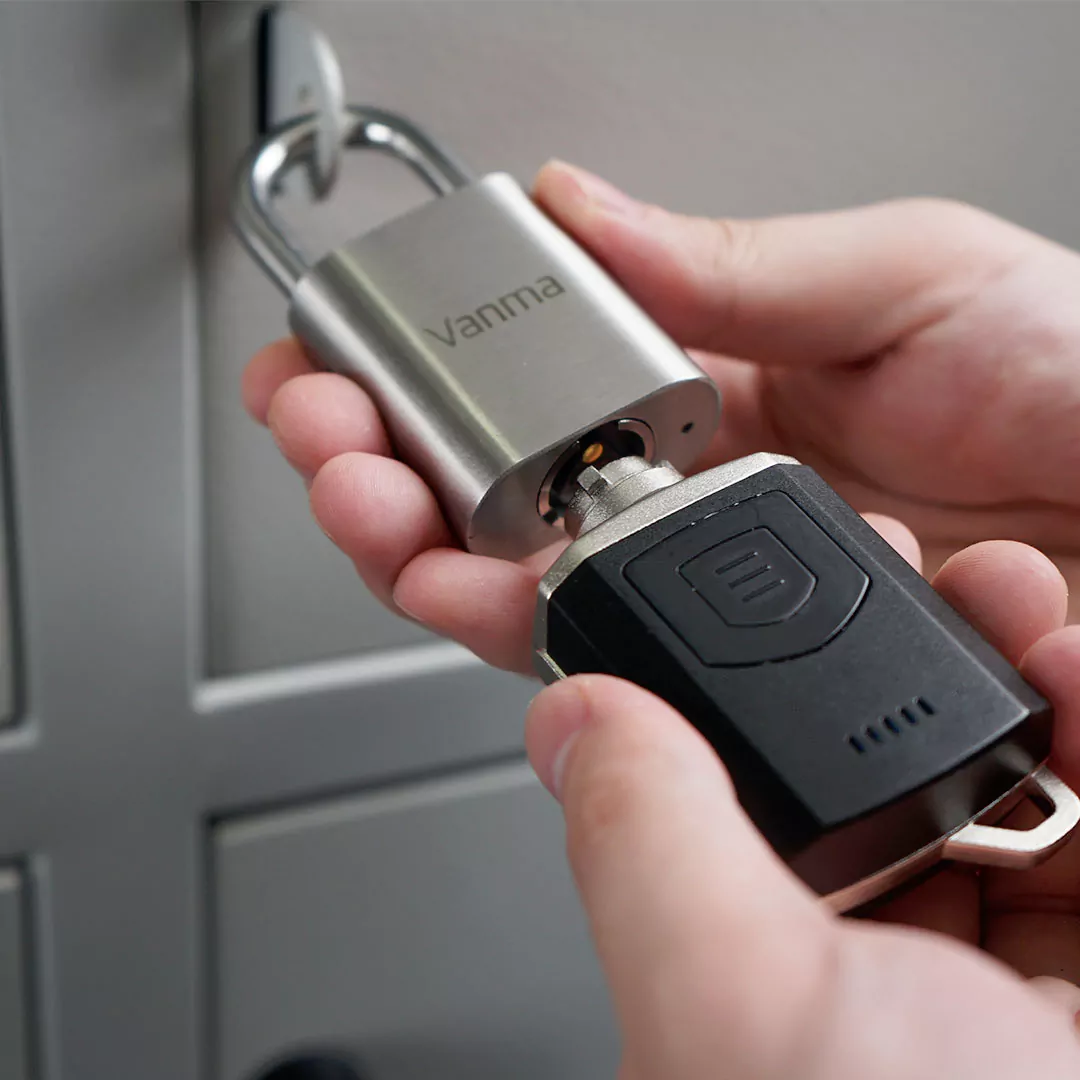
Passive electronic locks are becoming more attractive in industrial environments because they combine strong physical locking with controlled authorization and auditability. In many systems, the lock itself does not rely on an internal battery. Instead, a smart key or authorized credential provides power during unlocking. This approach is useful for outdoor cabinets, utility sites, telecom networks, and distributed infrastructure because it reduces battery maintenance while improving access control. For companies managing many locking points, passive electronic lock systems can help reduce lost-key problems, support time-based permissions, and create a clearer record of access events.
What Buyers Should Check Before Buying
Material Strength and Weather Resistance
Durability should be checked first because industrial locks often fail from environmental exposure before they fail from forced attack. Stainless steel, zinc alloy, and hardened steel are commonly used materials, but the right material depends on the application. Coastal sites, chemical plants, roadside cabinets, and humid outdoor locations need stronger corrosion resistance than indoor storage rooms. Ask about salt spray performance, water ingress protection, dust resistance, and operating temperature range. A lock that performs well in a clean warehouse may not hold up at a remote outdoor station.
Access Control and Accountability
Security is not only about keeping people out. It is also about allowing the right people in under controlled conditions. That is why access control should be part of any industrial lock and security evaluation. Buyers should consider whether the site needs individual user permissions, temporary access, contractor access, access by shift or time window, or audit records. If several teams share the same lock, accountability becomes weak unless there is a better access management method in place.
Key Management and Scalability
Key management becomes a major issue as the number of locking points increases. A few standard padlocks are easy to handle. Hundreds of locks across multiple sites are not. If the operation is expanding, buyers should think ahead. Will the system be easy to scale? Can it reduce rekeying work? Can it support centralized authorization? Will it create confusion when staff turnover happens? Industrial lock and security choices should support operational growth, not become harder to manage every year.
Ease of Installation and Maintenance
A technically strong lock is still a poor purchase if it is difficult to install or requires constant service. Buyers should check installation requirements, compatibility with existing hardware, service intervals, spare parts availability, and routine inspection needs. In industrial settings, a product that reduces maintenance calls often delivers higher value than one that only looks stronger in a catalog.
Mechanical vs Electronic Industrial Lock and Security
When Mechanical Locks Still Make Sense
Mechanical locks are still a good fit for many industrial applications. If access is limited to a small number of trusted users, if the site is simple, or if the budget is tight, a high-quality mechanical solution may be enough. Good industrial mechanical locks offer solid physical protection and straightforward use. They are often preferred where digital infrastructure is unnecessary or where a simple lock-and-key workflow is practical.
When Electronic or Passive Electronic Locks Add Value
Electronic and passive electronic systems add value when access needs to be controlled more precisely. If your team struggles with lost keys, shared keys, unclear responsibility, or widely distributed assets, upgrading the lock alone may not solve the real problem. In these cases, a managed industrial lock and security system can improve efficiency as well as protection. The advantage is not only stronger control. It is also better visibility. You can define who can unlock which point, when access is allowed, and in some systems, review access history later. For utilities, telecom operators, transport sites, and multi-location industrial networks, that level of control can make a meaningful difference.
How to Compare Cost Beyond the Unit Price
Initial Cost vs Lifecycle Cost
The unit price of a lock is only part of the cost picture. B2B buyers should evaluate lifecycle cost, including maintenance, replacement frequency, rekeying, service downtime, and administrative work. A cheaper lock that corrodes early or creates frequent key issues may cost more over two or three years than a higher-quality product. This is especially true for large deployments, outdoor applications, and sites with many authorized users.
Hidden Costs of Lost Keys, Delays, and Security Gaps
Hidden costs often come from weak control rather than broken hardware. Lost keys can trigger urgent replacements. Shared keys can create security blind spots. Delayed access to critical infrastructure can slow repair work. Security incidents can damage both assets and confidence. When comparing industrial lock and security options, buyers should consider how well the system helps prevent these indirect costs. In many cases, that is where the real return on investment appears.
Common Buying Mistakes
Choosing by Price Alone
Price matters, but it should not be the main filter. A low-cost lock may appear attractive during sourcing, but if it fails early, creates access confusion, or does not match the application, the savings disappear quickly. Industrial environments punish weak products faster than office or residential settings do.
Ignoring Site Conditions
A lock that works well indoors may perform poorly outdoors. A product suited for dry climates may not hold up in coastal or dusty environments. One of the most common buyer mistakes is selecting based on appearance or basic specifications without matching the product to the actual site condition. Always review where the lock will be installed, how often it will be used, and what environmental exposure it will face.
Overlooking Audit Trails and Access Records
Many companies focus on physical strength but overlook traceability. If multiple people can access a critical point and no one can verify who unlocked it, security remains incomplete. In some sectors, that may also affect internal compliance or contractor control. Auditability is not necessary for every site, but for critical assets, it is often worth serious consideration.
Best Practices for Implementation
Standardize Locking Points
Standardization makes maintenance, replacement, and training easier. If possible, reduce unnecessary variation in lock types across similar applications. Standardizing industrial lock and security points helps simplify purchasing and improves long-term control.
Define User Permissions
Access should match roles. Maintenance staff, contractors, supervisors, and external service teams should not always receive the same level of access. Clear permissions reduce risk and make access management more practical, especially across larger industrial sites.
Build a Maintenance and Review Process
Even strong industrial locks need routine review. A practical process should include inspection for corrosion, wear, alignment, key performance, and signs of tampering. If electronic or passive electronic solutions are used, authorization settings and access records should also be reviewed regularly. Security performs best when hardware and process are managed together.
Buyer Checklist for Industrial Lock and Security
- Confirm the application: gate, cabinet, enclosure, room, or equipment area.
- Check environmental exposure: rain, dust, salt spray, chemicals, or temperature extremes.
- Review the required security level and tamper resistance.
- Decide whether simple key access is enough or managed authorization is needed.
- Evaluate key control, auditability, and future scalability.
- Compare lifecycle cost, not only unit price.
- Make sure installation and maintenance are realistic for your team.
Conclusion
The best industrial lock and security solution is the one that fits the site, supports the workflow, and lowers long-term risk. For some companies, that will mean high-quality mechanical locks with strong materials and better key control. For others, especially those managing many assets or distributed facilities, it may mean moving toward a more controlled and accountable access system. Either way, buyers should check durability, access requirements, scalability, and total operating cost before making a decision. When those factors are evaluated properly, industrial lock selection becomes much easier and far more effective.
FAQ
What is the best industrial lock and security setup for outdoor use?
For outdoor use, the best setup usually combines strong physical protection with weather resistance. Buyers should look for corrosion-resistant materials such as stainless steel or well-finished zinc alloy, along with good sealing performance and proven resistance to dust and moisture. The right choice also depends on the access pattern. A remote utility cabinet may benefit from a passive electronic lock, while a yard gate may only need a heavy-duty weather-resistant padlock with controlled key access.
Are electronic locks better than mechanical locks for industrial sites?
Not always, but they are often better when access control and accountability are important. Mechanical locks are still useful for simple applications with limited users. Electronic or passive electronic systems become more valuable when multiple teams need access, when key loss is a recurring problem, or when the company wants clearer control over who accessed a site. The better option depends on the site’s complexity, risk level, and management needs.
How can companies reduce key management problems?
The first step is to stop treating keys as informal shared tools. Companies can reduce problems by standardizing lock groups, using controlled authorization, limiting duplicate keys, and assigning access by role. For larger operations, managed lock systems can help further by reducing uncontrolled copying and giving the business a more structured way to issue, revoke, and review access.
What should buyers look for in a lock for cabinets and enclosures?
Buyers should check fit, material quality, sealing performance, and resistance to tampering. It is also important to confirm compatibility with the cabinet or enclosure cutout and door design. In industrial environments, cabinet locks need to perform consistently even when exposed to vibration, humidity, and repeated service access. A poor fit or low-grade material usually creates problems earlier than expected.
How often should industrial locks be inspected?
Inspection frequency depends on usage and environment, but a scheduled review is a good practice for all industrial sites. Outdoor locks, high-traffic access points, and critical infrastructure should be checked more often than lightly used indoor locks. Routine inspections should cover wear, corrosion, alignment, ease of operation, tampering signs, and any change in access needs. A simple inspection plan can extend product life and reduce avoidable failures.
