
How Should Buyers Compare Industrial Locks for Projects?
Industrial locks should be selected around the way a facility actually operates, not simply around the price, shape, or strength of a lock on a product sheet. For purchasing managers, facility managers, security teams, contractors, utility operators, and industrial site owners, the bigger question is whether a locking system can protect critical access points while remaining manageable over years of daily use. A factory gate, telecom cabinet, electrical enclosure, warehouse door, equipment box, and remote utility station may all need different levels of physical resistance, environmental protection, access control, and maintenance support. That is why a practical industrial locks purchasing process should begin with the application, the people who need access, the surrounding environment, and the consequences of unauthorized entry. Once those factors are clear, comparing lock materials, key systems, electronic credentials, audit capabilities, and lifecycle cost becomes much more useful.
Why Industrial Locks Need a Different Buying Approach
Industrial locks are expected to work in places where ordinary residential locking hardware may fail quickly or become difficult to manage. Think about a padlock installed on an outdoor utility gate. It may stay exposed to rain, dirt, dust, freezing temperatures, strong sunlight, vibration, salt, and repeated handling for years. Now compare that with a lock on an indoor office door. Both products are called locks, but the operating conditions are completely different. Industrial buyers therefore need to look beyond basic locking and unlocking. Mechanical strength, corrosion resistance, key control, access frequency, installation compatibility, maintenance requirements, and the availability of replacement parts all affect whether a lock remains reliable after deployment.
Access management is another reason industrial locking projects need more careful planning. A small warehouse may have five authorized employees and a few restricted areas, while a telecom operator or utility company may manage hundreds of technicians and thousands of remote cabinets. In the second situation, even a strong mechanical lock can create an operational problem if staff must carry large numbers of keys or return to a central office whenever access requirements change. For this reason, the best industrial security locks are not always the products with the heaviest bodies. They are the products that match the physical risk and the access-management model of the organization.
Where Are Industrial Locks Commonly Used?
Industrial locks are used anywhere a business needs to restrict access to equipment, infrastructure, materials, control systems, or operational areas. The exact locking requirement changes significantly from one site to another, so procurement teams should first group access points by application rather than trying to standardize everything around one lock. A loading-yard gate, for example, may require resistance to cutting and leverage, while an electrical cabinet inside a controlled building may be more concerned with preventing unauthorized employees from opening the enclosure. Understanding these differences helps buyers avoid both under-specifying and over-specifying the hardware.
Industrial Locks for Manufacturing Plants and Warehouses
Manufacturing plants often need several industrial lock types within the same facility because the security risks are not uniform. Perimeter gates may require heavy-duty padlocks or industrial gate locks, while electrical panels, PLC cabinets, machine control boxes, chemical storage areas, tool rooms, spare-parts stores, and maintenance rooms may need cabinet locks, cam locks, handle locks, or managed electronic locks. In a busy plant, the question is not only who can enter the building. Security managers also need to control who can access individual pieces of equipment and restricted operational zones.
Warehouse operations create similar challenges, especially when multiple departments, shifts, temporary workers, maintenance contractors, and logistics providers share the same site. A traditional key system may work well at first, but key control becomes harder as the organization expands. When a key is lost, managers need to know which doors or cabinets it can open, whether it may have been copied, and whether locks need to be rekeyed. These administrative costs are easy to overlook when comparing industrial locks by unit price alone.
Industrial Locks for Utilities and Telecom Infrastructure
Utilities and telecom operators usually place greater emphasis on distributed access management because their assets are spread across large geographic areas. Electrical cabinets, substations, transformer enclosures, telecom base stations, roadside cabinets, fiber distribution boxes, pumping stations, and other remote infrastructure may be visited by technicians who cover different regions and responsibilities. If every site relies on a different mechanical key, technicians can end up carrying large key rings or requesting access from a central office before routine maintenance can begin.
This is where industrial locks with controlled credentials can become useful. Instead of treating every lock as an isolated mechanical device, organizations can treat access as a permission that is assigned to a person. Depending on the locking system, a technician may be authorized for specific locations, specific time periods, or specific groups of equipment. For remote infrastructure projects, this can reduce the operational dependence on large numbers of physical keys and make lost-credential management more practical.
Industrial Locks for Energy and Transportation Sites
Energy and transportation facilities often combine harsh environmental exposure with strict access-control requirements. Oil and gas facilities, railway equipment rooms, renewable energy installations, distribution networks, depots, outdoor service cabinets, and remote technical compounds may remain unattended for long periods. When these locations are far from permanent staff, a lock failure can mean more than a minor maintenance inconvenience. It can delay a technician, prevent emergency access, or leave important equipment unsecured until replacement hardware arrives.
For these projects, environmental durability should be evaluated as seriously as forced-entry resistance. Buyers should ask what materials are used in the lock body, shackle, cylinder, internal components, seals, and contact areas. They should also consider water exposure, dust, industrial contaminants, salt, temperature variation, and the expected maintenance interval. A lock that performs well in a clean indoor warehouse may not be the right industrial lock for a coastal power installation or outdoor railway cabinet.
What Types of Industrial Locks Should Buyers Compare?
The industrial locks market includes several product categories, and each solves a different type of access problem. Instead of asking which lock type is generally best, buyers should ask which format fits the asset, security level, installation space, and access process. In many industrial projects, the final specification includes more than one type of lock because gates, doors, cabinets, and equipment enclosures have different mechanical requirements.
| Industrial Lock Type | Typical Applications | Key Purchasing Considerations |
|---|---|---|
| Industrial padlocks | Gates, hasps, storage cages, equipment yards, outdoor enclosures | Shackle strength, body construction, corrosion resistance, key control |
| Industrial cabinet locks | Electrical cabinets, control panels, machinery enclosures, telecom boxes | Mounting dimensions, panel thickness, latch design, environmental exposure |
| Cam locks | Equipment cabinets, access panels, small industrial enclosures | Cylinder size, cam length, rotation direction, key management |
| Gate and door locks | Factory entrances, restricted rooms, fenced compounds, equipment areas | Door construction, latch engagement, forced-entry risk, access frequency |
| Electronic industrial locks | Controlled rooms, cabinets, sites requiring managed access | Credential management, power source, software, event records |
| Passive electronic locks | Remote infrastructure, utilities, telecom sites, distributed cabinets | No lock-side battery, permission management, electronic key control, audit needs |
Mechanical Industrial Locks
Mechanical industrial locks remain a sensible choice when access rights are stable, the number of users is limited, and the organization does not need detailed access records. A well-made mechanical padlock or cabinet lock can provide years of service when its materials and construction match the operating environment. Mechanical systems are also straightforward to understand, which can simplify installation and training for facilities that already have established key-control procedures.
The challenge usually appears when the number of locks and users begins to grow. Suppose one maintenance department is responsible for 300 cabinets across several sites. A master-key system may reduce the total number of keys, but administrators still have to issue, record, collect, replace, and sometimes rekey physical keys. If an employee leaves without returning a key, the company must decide whether the risk is acceptable or whether affected cylinders should be replaced. At scale, the cost of managing keys can become as important as the original cost of the industrial locks themselves.
Electronic Industrial Locks
Electronic industrial locks are generally considered when a company wants more flexible control over who can access protected assets. Instead of relying entirely on the physical shape of a mechanical key, electronic credentials can be linked to individual users or groups. In practical terms, that can make it easier to change permissions when technicians move between departments, contractors finish a project, or temporary access is required for maintenance work.
However, buyers should compare electronic industrial locks carefully because different products use very different architectures. Some locks require internal batteries. Others need wiring or network connections. Some work offline, while others depend on software or communication infrastructure. The procurement team should ask how the lock is powered, what happens when communication is unavailable, how emergency access is handled, how credentials are issued, and what maintenance will be required after hundreds of locks have been installed.
Passive Electronic Industrial Locks
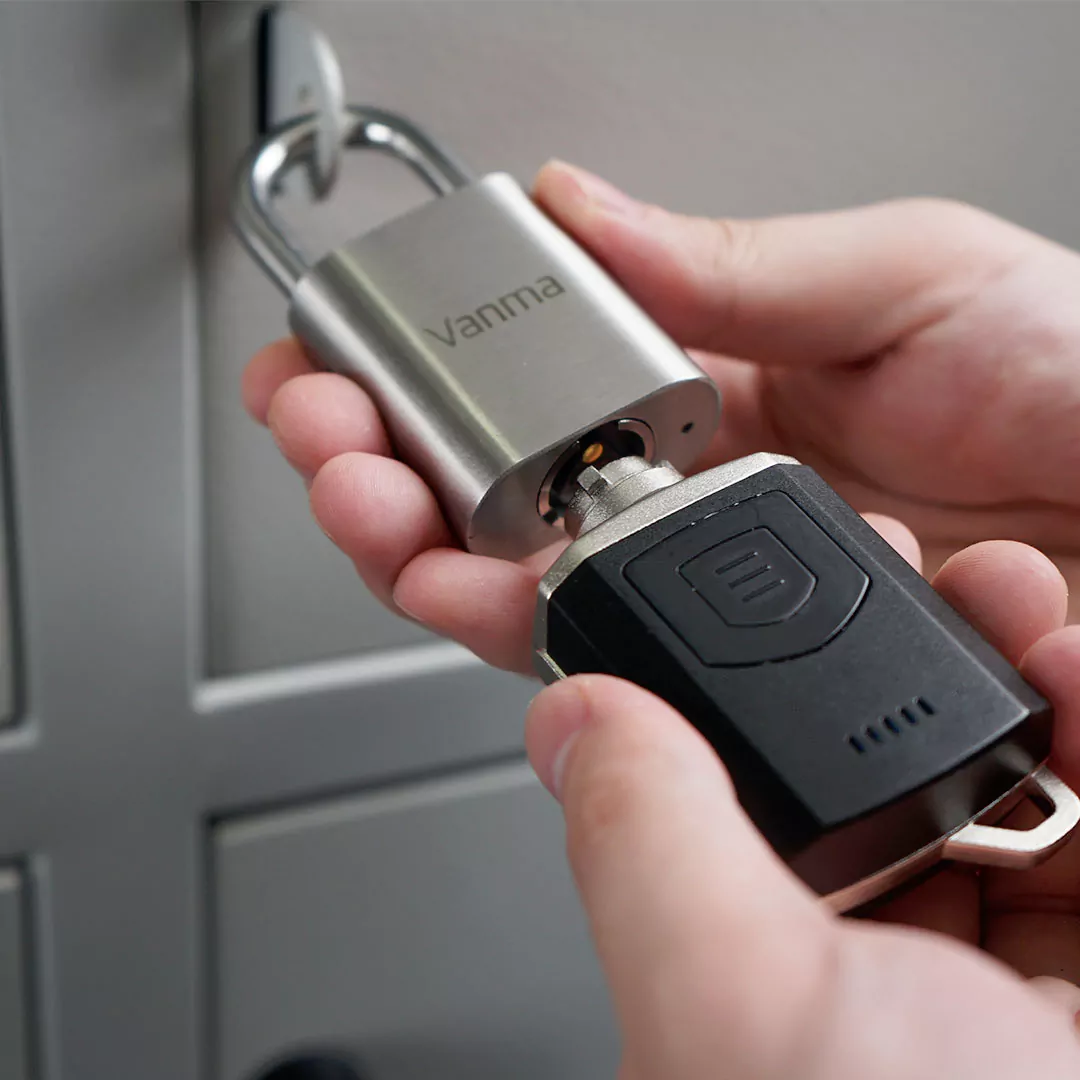
Passive electronic industrial locks can be particularly relevant when an organization wants electronic permission control without placing a battery or continuous power supply inside every lock. In this type of architecture, the electronic key or another authorized device supplies power when the lock is operated. For geographically distributed assets, eliminating lock-side battery replacement can reduce one of the recurring maintenance tasks associated with conventional electronic locking systems.
This approach can suit telecom cabinets, utility infrastructure, outdoor enclosures, equipment rooms, and other locations where running new wiring would be expensive or impractical. It can also support retrofit projects because existing mechanical locking points may sometimes be upgraded without major changes to the surrounding infrastructure. Buyers should still verify the exact operating process, credential management method, access-record capability, software requirements, and mechanical compatibility before deciding that a passive electronic lock is appropriate for a large project.
How Should You Compare Industrial Locks Before Buying?
The most effective way to compare industrial locks is to create a requirement list before requesting quotations. When buyers start with supplier catalogs, they often end up comparing whatever specifications manufacturers choose to highlight. Starting with the operating requirement reverses that process. The procurement team can define what the lock needs to withstand, who needs to use it, how access changes are handled, how long the hardware should remain in service, and what maintenance resources are available. Suppliers can then be compared against the same set of requirements.
Start With the Real Security Threat
A stronger lock is useful only when it addresses the type of attack that is realistically expected at the site. Outdoor perimeter locks may face cutting, prying, hammering, drilling, or other forms of physical attack. Indoor equipment cabinets may face a different problem: employees or contractors opening equipment that is outside their authorized work scope. Remote utility assets may face both problems at the same time. Defining the threat first helps buyers decide whether to prioritize shackle protection, cylinder security, credential control, access records, or a combination of these factors.
The surrounding hardware must also be considered. Installing a high-security industrial padlock on a thin, exposed hasp does not create a high-security access point. The strength of the door, hinge, latch, enclosure, mounting bolts, and hasp should be reviewed together with the lock. In industrial security, the weakest part of the access point often determines the actual resistance to forced entry.
Check Materials and Corrosion Resistance
For outdoor industrial locks, material selection can determine whether the lock remains usable after several seasons of exposure. Buyers should ask exactly which materials are used rather than accepting broad descriptions such as heavy duty or weather resistant. Stainless steel, zinc alloys, plated steel, hardened steel, engineering plastics, seals, and protective coatings each behave differently under moisture, salt, dust, and temperature changes. The right combination depends on the operating environment and expected service life.
Environmental testing can provide useful evidence when it relates to the intended application. Depending on the product, buyers may ask about ingress protection, salt-spray testing, operating temperature, cycle testing, corrosion testing, or other relevant durability information. The objective is not to collect certificates simply because they look impressive in a tender document. The important question is whether the available test data gives confidence that the industrial locks can survive the conditions they will actually face.
Evaluate Key Control and Credential Management
For many large industrial sites, key management becomes the real security issue long before the lock body wears out. A useful assessment should start with simple questions. How many people currently have keys? How many locks can each key open? Can keys be duplicated without authorization? What happens when a contractor leaves? How much does it cost to rekey an area after a key goes missing? How long does it take to deliver a replacement key to a remote technician? These questions reveal whether the existing locking method is creating unnecessary risk or administrative work.
Mechanical keyed-alike and master-key arrangements can reduce the number of keys employees carry, but they also concentrate access. If one master key is lost, many locks may be affected. Electronic credential systems approach the problem differently by allowing permissions to be associated with authorized users. Depending on the system, administrators may be able to change or cancel permissions without replacing the physical lock. For organizations with frequent employee changes or temporary contractors, that difference can significantly affect long-term operating costs.
Decide Whether You Need Access Records
Audit capability matters when managers need to understand who opened a protected point and when the access occurred. This can be useful for sensitive electrical rooms, telecom cabinets, maintenance equipment, remote utility stations, regulated infrastructure, and assets where service activity needs to be verified. An access record can support incident investigation, maintenance management, contractor accountability, and internal security reviews.
Buyers should not assume that every electronic industrial lock provides the same audit information. Ask what events are recorded, where the data is stored, how records are downloaded, how long they are retained, and whether the system can identify individual users. If audit data is one of the reasons for moving away from mechanical locks, these functions should be verified during product evaluation rather than after deployment.
Confirm Retrofit Compatibility Before Bulk Orders
A lock can meet every security requirement and still create a failed installation if its dimensions do not match the existing hardware. This is particularly important for industrial cabinet locks, cam locks, handle locks, padlocks, and retrofit electronic cylinders. Procurement teams should confirm panel thickness, mounting-hole size, cam dimensions, latch depth, shackle diameter, vertical clearance, horizontal clearance, door thickness, operating direction, and the available space around the access point.
For large industrial lock projects, a pilot installation is usually worth the extra time. Testing a small number of units on real cabinets, gates, and doors can reveal problems that are difficult to identify from drawings. Technicians may find that a key is awkward to insert while wearing gloves, that the lock body interferes with another component, or that the existing hasp does not provide enough clearance. Finding those issues before ordering hundreds or thousands of units can prevent expensive rework.
What Matters Most for Outdoor Industrial Locks?
Outdoor industrial locks need to remain secure and operable after prolonged exposure, so environmental durability should be treated as part of security rather than as a secondary feature. A corroded cylinder that cannot be opened by an authorized technician is an operational failure, even if nobody has attempted to break the lock. Likewise, a lock that becomes difficult to operate after dust and water enter the mechanism can increase maintenance time and encourage workers to bypass security procedures.
When specifying outdoor industrial padlocks or cabinet locks, consider rainfall, humidity, freezing conditions, direct sunlight, dust, mud, coastal air, industrial chemicals, and temperature variation. Also look at how the access point is positioned. A lock protected by an enclosure roof may experience very different conditions from a padlock hanging directly in the weather. Matching the lock specification to the actual exposure level can produce better value than simply choosing the most expensive option available.
How Should Industrial Lock Durability Be Evaluated?
Durability should be measured against how the lock will be used, not just how it performs when new. Industrial locks may be opened several times per day, exposed to rough handling, or left untouched outdoors for months between maintenance visits. These different usage patterns affect which tests matter most. For frequently used locks, operating-cycle performance and wear may be important. For remote outdoor locks, corrosion resistance and environmental sealing may matter more. For high-risk perimeter applications, physical attack resistance deserves additional attention.
Experienced procurement teams usually ask suppliers for specific information instead of relying on marketing descriptions. What is the material grade? Has the lock undergone cycle testing? What temperature range is specified? Is there corrosion-test information? Which component normally wears first? Can cylinders or parts be replaced separately? What maintenance is recommended? Detailed answers make it easier to judge whether a supplier understands industrial applications or is simply selling a general-purpose lock under an industrial label.
Industrial Locks and Total Lifecycle Cost
The cheapest industrial locks are not necessarily the least expensive option over the life of a project. Unit price is only the visible cost at the beginning. Installation labor, replacement keys, lost-key incidents, rekeying, technician travel, downtime, lock replacement, battery maintenance, software charges, spare parts, training, and administrative time can all influence the real cost of ownership. These factors become especially important when a project contains hundreds or thousands of access points.
Consider a remote infrastructure network. A mechanical lock may have a low purchase price, but a lost master key could require rekeying a large number of sites. A battery-powered electronic lock may offer better credential control but create recurring battery-replacement work. A passive electronic industrial lock may cost more initially but remove lock-side battery maintenance and allow permissions to be managed electronically. None of these options is automatically the best. The better choice depends on how frequently access changes, how far apart the sites are, how expensive field visits are, and what level of control the operator requires.
Maintenance Planning for Industrial Locks
Industrial locks should have a maintenance plan before they are installed, especially when the hardware protects critical infrastructure. Waiting until a lock becomes difficult to open can create emergency replacements, unplanned technician visits, and unnecessary downtime. Maintenance frequency should be based on environmental exposure, operating cycles, asset importance, and the manufacturer's recommendations rather than using one schedule for every location.
Routine inspections can include checking lock movement, latch alignment, shackle wear, corrosion, mounting hardware, seals, keyway condition, electronic contacts where applicable, and signs of attempted tampering. Facilities with many locks can also benefit from standardizing approved models for similar applications. Standardization reduces the number of spare parts technicians need to carry and makes training easier, but it should still allow different lock families for outdoor gates, equipment cabinets, restricted rooms, and remote infrastructure.
What Should You Ask an Industrial Lock Supplier?
A supplier should be able to answer technical and operational questions clearly before a large industrial lock order is placed. Procurement teams are not simply buying metal hardware; they are selecting components that may remain in service for years. Supplier consistency, documentation, replacement support, and the ability to reproduce the same specification across repeat orders can therefore matter almost as much as the original product design.
- What materials are used in the lock body, shackle, cylinder, and internal components?
- Which industrial environments is the lock designed for?
- What corrosion, environmental, cycle, or strength tests are available?
- Can the lock be supplied in keyed-different, keyed-alike, or master-key configurations?
- How are duplicate keys controlled?
- Can a lost electronic credential be disabled without replacing the lock?
- Are individual access records available where electronic management is used?
- What happens if the electronic key, network, or management software is unavailable?
- Can the lock retrofit existing cabinets, doors, gates, or enclosures?
- Are drawings and installation dimensions available before ordering?
- Can samples be supplied for a pilot installation?
- What spare parts and replacement components are available?
- What is the expected production lead time for repeat orders?
- Can the supplier maintain the same specification across future batches?
- What technical support is available after installation?
For a small order, some of these questions may seem excessive. For a large industrial project, they can prevent costly mistakes. A lock that performs well during a sample test but cannot be supplied consistently six months later can create standardization problems. Likewise, a product with strong mechanical specifications but poor documentation may increase installation time across multiple sites. The supplier should therefore be evaluated as part of the security solution, not simply as a source of individual locks.
Should You Standardize Industrial Locks Across a Facility?
Standardization can make industrial lock management easier, but using one lock everywhere is rarely the best approach. A better strategy is to standardize by application. For example, a company might approve one industrial padlock family for outdoor gates, one cabinet lock design for indoor electrical panels, and one electronically managed solution for remote infrastructure. This reduces purchasing complexity while still allowing each risk level to receive appropriate protection.
Standardization can also improve spare-parts management, technician familiarity, procurement forecasting, and key administration. When every department purchases different hardware independently, the facility can gradually accumulate dozens of lock types with different keys, dimensions, maintenance requirements, and suppliers. Consolidating around a smaller number of approved industrial locks can reduce this complexity, provided the selection process begins with real application requirements rather than a desire to use one product everywhere.
Industrial Locks FAQ
What Makes Industrial Locks Different From Regular Locks?
Industrial locks are generally selected for tougher operating conditions, higher security risks, more complex access requirements, or specialized equipment. A residential lock usually protects a relatively predictable indoor access point, while industrial locks may be installed on outdoor gates, machinery, electrical cabinets, telecom enclosures, storage compounds, control rooms, or remote infrastructure. Because of this, industrial buyers often pay closer attention to mechanical strength, corrosion resistance, mounting compatibility, key management, environmental performance, service life, and the ability to support large numbers of users and access points.
What Are the Best Industrial Locks for Outdoor Use?
The best industrial locks for outdoor use are the ones matched to the specific environment rather than simply labeled weatherproof. Buyers should consider lock-body materials, shackle materials, corrosion protection, sealing, drainage, operating temperature, keyway protection, and exposure to salt or industrial contaminants. A coastal telecom cabinet, for example, may need a different material specification from a factory gate located in a dry inland environment. Ask suppliers for relevant environmental test information and evaluate the surrounding door, cabinet, or hasp at the same time.
Are Keyed-Alike Industrial Locks a Good Idea?
Keyed-alike industrial locks can be practical when the same authorized employees need access to many similar points. One key can reduce the number of keys technicians carry and make daily work faster. The tradeoff is that losing one key may affect multiple locks. Before choosing a keyed-alike system, buyers should consider how keys are issued, whether duplicates are controlled, how quickly a lost key can be reported, and what rekeying would cost if the key is compromised. For large or frequently changing workforces, electronic permission management may provide more control.
When Are Passive Electronic Industrial Locks Worth Considering?
Passive electronic industrial locks are worth considering when an organization needs controlled electronic access across many locations but wants to avoid batteries or permanent wiring at each lock point. This can be useful for telecom infrastructure, electrical distribution equipment, remote utility cabinets, outdoor technical enclosures, and other distributed assets. Because permissions can be linked to electronic credentials, organizations may gain more flexibility than with conventional mechanical keys. Buyers should still compare software management, audit functions, credential procedures, emergency access, retrofit dimensions, and the long-term availability of compatible keys and locks.
Do Industrial Electronic Locks Need an Internet Connection?
Not necessarily. Some industrial electronic locking systems operate locally or offline and synchronize information later, while others use networked or cloud-based management. The right architecture depends on the application. A remote site with unreliable communication may need a system that can authorize access without maintaining a live internet connection at the lock. Before purchasing, ask exactly which functions require connectivity, how permissions reach the credential, how access records are collected, and what happens when the network is unavailable.
How Long Should Industrial Locks Last?
There is no single service-life figure that applies to every industrial lock because wear depends on usage, environment, material quality, maintenance, and exposure to physical attack. A lock opened several times per day in a dusty manufacturing plant may wear differently from a remote outdoor cabinet lock opened only once per month. Instead of choosing a replacement interval based solely on age, industrial operators should perform periodic inspections and replace locks when corrosion, excessive wear, damaged seals, unreliable operation, compromised cylinders, or physical damage begins to affect security or usability.
How Often Should Outdoor Industrial Locks Be Maintained?
Maintenance frequency should reflect the site's environmental conditions and access frequency. Locks exposed to salt, heavy dust, moisture, chemicals, freezing conditions, or frequent operation may require more regular inspection than locks installed inside clean facilities. Maintenance should follow the manufacturer's instructions because using the wrong lubricant or cleaning method can sometimes attract contaminants or damage internal components. For critical sites, creating a documented inspection schedule can help identify developing problems before a technician arrives and discovers that a lock cannot be opened.
Should Industrial Lock Buyers Choose Mechanical or Electronic Locks?
The decision depends mainly on the number of access points, number of users, frequency of permission changes, need for audit records, maintenance resources, and site distribution. Mechanical industrial locks remain practical for stable, smaller access systems where strong physical security is the main requirement. Electronic systems become more attractive when organizations need to change access rights frequently or identify individual users. Passive electronic locks can be useful when electronic management is needed but maintaining batteries at each lock would be inconvenient. A mixed system is also common because not every access point needs the same level of management.
What Happens if an Industrial Master Key Is Lost?
The impact depends on the design of the master-key system and how many locks the missing key can operate. In a large mechanical system, losing a high-level master key may create significant exposure because multiple areas can be affected. The organization may need to assess whether cylinders should be rekeyed or replaced. This is one reason procurement teams should consider lost-key procedures before deployment. In electronically managed systems, a lost credential may be disabled or removed from the authorization structure, depending on the product architecture.
How Can Buyers Test Industrial Locks Before a Large Order?
A pilot installation is one of the most practical ways to evaluate industrial locks before bulk procurement. Request samples and install them on the actual gates, cabinets, panels, or equipment that will be used in the project. Ask technicians to operate the locks under normal working conditions, including while wearing gloves or carrying tools if that reflects real field work. Check alignment, clearance, operating force, key access, installation time, and compatibility with existing hardware. If the application is outdoors, a longer sample period can also provide useful information about exposure and usability.
What Information Should Be Included in an Industrial Lock RFQ?
A useful industrial lock RFQ should include the application, required quantity, installation environment, lock dimensions, door or cabinet details, required keying method, expected access frequency, user-management requirements, environmental conditions, testing requirements, and any need for samples or custom configurations. For electronic systems, the RFQ should also describe the number of users, number of lock points, permission-management expectations, audit requirements, software environment, and integration needs. Clear project information allows suppliers to recommend suitable products instead of quoting a generic lock that may not fit the application.
Choosing Industrial Locks as Part of a Security System
The right industrial locks should reduce security risk without creating unnecessary work for the people responsible for operating the site. Mechanical strength matters, but long-term performance depends on much more than resistance to physical attack. Environmental durability, mounting compatibility, key or credential control, access records, maintenance workload, supplier support, and lifecycle cost all influence whether a locking solution remains practical after the initial installation.
For B2B buyers, the most reliable approach is to define the application first, compare products against measurable requirements, test samples on real equipment, and consider how the locking system will be managed several years from now. A factory with a small number of stable access points may be well served by durable mechanical industrial locks. A telecom, utility, railway, or distributed industrial operation may benefit from electronically managed access because key control becomes a larger operational issue. When the selection process reflects the actual site rather than a generic specification, industrial locks become a more effective part of the facility's overall access-control strategy.
