
Electronic Keyless Door Locks: Why the Future Is Now
Picture the moment you step onto your front porch with arms full of groceries, the rain coming down in sheets, and instead of fumbling for a metal key you simply tap a code, present a fingerprint, or let your phone silently handshake with the lock. The bolt retracts, the door swings open, and you glide inside without missing a beat. That friction-free entry isn’t just a clever trick; it is the logical next step in the centuries-old evolution of access control, replacing vulnerable brass keys with encrypted digital credentials that are harder to duplicate, easier to manage, and infinitely more versatile.
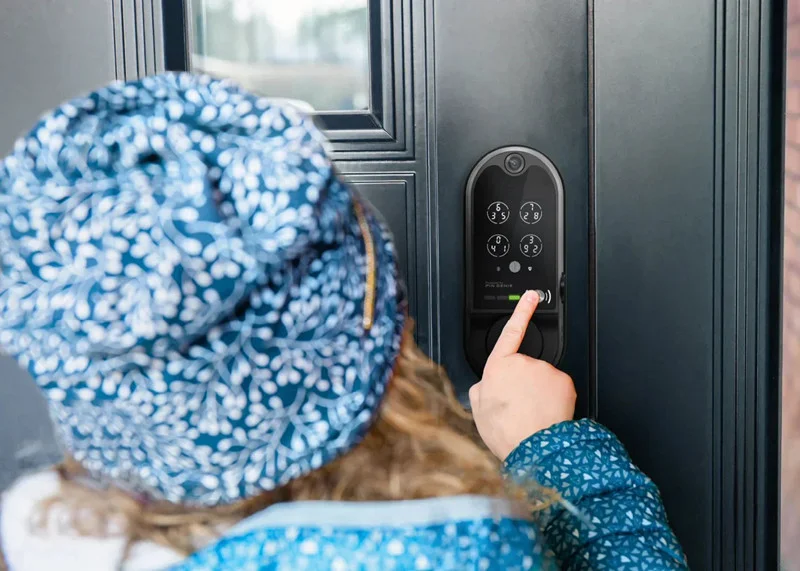
Understanding Keyless Technology
Keyless locks trade jagged pieces of metal for streams of data that travel by radio waves, capacitive touch, or biometric patterns. These streams are protected by modern encryption algorithms that scramble information every time a credential is used, making digital copies virtually useless to would-be intruders. Whether it’s Near-Field Communication embedded in a slim plastic card, Bluetooth Low Energy signals emitted by your smartphone, or Wi-Fi packets routed through a cloud server, each protocol is engineered to validate identity in milliseconds while logging every successful—or failed—attempt for later review. In short, the humble house key of yesterday has been upgraded into a sophisticated security token that lives on your fingertip or in your pocket computer.
From Mechanical Keys to Digital Credentials
A mechanical key relies on fixed grooves that line up tumblers inside a cylinder, a design that has barely changed since the 19th century and is easily defeated by picking or unauthorized duplication. Digital credentials, by contrast, are dynamic. A one-time PIN can expire after two hours, an RFID badge’s serial number can be revoked remotely, and a biometric template can be re-enrolled if an employee leaves the company. This fluidity gives property owners unheard-of control: access can be granted, limited, or withdrawn in real time without swapping out hardware or re-cutting keys.
RFID, Bluetooth, Wi-Fi, and Z-Wave Protocols Explained
Radio-frequency identification (RFID) and its cousin NFC excel in close-range, low-power exchanges; a simple tap from a key-card opens the door but cannot be activated from across the street. Bluetooth Low Energy stretches that distance to roughly 10 meters, allowing auto-unlock as you approach with arms full. Wi-Fi pushes reach globally, letting you verify your front door from the beach and trigger a lock for the dog sitter. Z-Wave and Zigbee operate on mesh networks beloved by smart-home enthusiasts because every additional device expands signal coverage, ensuring a stable, secure backbone that doesn’t crowd your regular Wi-Fi bandwidth.
Core Components of an Electronic Keyless Lock
Under the sleek exterior faceplate lies a miniature marvel of engineering: a motorized deadbolt driven by a low-draw gearbox, an array of sensors that confirm whether the latch fully extended, a secure microcontroller that conducts credential handshakes, and a battery compartment designed to power hundreds of cycles on a single set of lithium cells. Many models hide a physical keyhole behind a removable panel or provide a 9-volt jump port as an emergency override, balancing the convenience of new technology with the reassurance of old-school redundancy.
Smart Lock Body & Deadbolt
The lock chassis is typically forged from zinc alloy or stainless steel to withstand brute-force attacks and harsh climates. A precision stepper motor moves the bolt in and out with far less torque than a human wrist yet does so more smoothly because friction points are carefully engineered. Some premium units use hardened steel anti-saw pins and free-spinning collars to frustrate drilling attempts, bringing commercial-grade toughness to residential doors.
Credential Reader & Sensor Suite
Capacitive touchpads light up only when fingertips approach, conserving power and eliminating button wear. Optical or ultrasonic fingerprint scanners capture sub-dermal ridge patterns that resist spoofing with silicone molds. Inside, accelerometers detect violent kicks, tamper switches sense unauthorized plate removal, and magnetic reed sensors verify that the bolt is seated, alerting you immediately if a door is left slightly ajar.
Power Supply & Emergency Backup
Four AA lithium batteries often deliver six to twelve months of life, thanks to sleep-mode electronics and efficient motors. As cells near depletion, most locks chirp, flash LEDs, and push phone notifications. Should you ignore the warnings, an external USB-C or 9-volt terminal provides temporary power—think of it as a jump-start for your front door—long enough to enter a code or present a fingerprint.
Major Types of Electronic Keyless Door Locks
Keyless locks are not a monolith; they come in several flavors designed to solve distinct user problems. A home-owner may want a sleek touchscreen with hidden key backup, while a hotelier prioritizes RFID cards that reset at checkout. Below are the five dominant categories, each with strengths tailored to specific scenarios.
PIN Code Touchpads
Touchpads use capacitive glass or weather-sealed silicone buttons to register a numeric pass-code. Because codes are infinitely reprogrammable, you can issue a unique sequence for the housekeeper that works only Tuesdays between 9 a.m. and noon, then delete it as easily as sending a text. Advanced models randomize “ghost” digits on the display so fingerprints cannot reveal commonly pressed numbers.
Biometric Fingerprint Locks
Biometric locks leverage the uniqueness of human physiology. Modern sensors scan in three dimensions, mapping pores and ridge depth to thwart 2-D prints. Enrollment takes seconds, yet the digital template stored inside the lock cannot be reverse-engineered into an actual fingerprint, preserving user privacy. With sub-second recognition speed, they’re ideal for busy entryways where every second counts.
RFID & NFC Card Systems
RFID and NFC rely on passive tags that harvest power from the lock’s reader field, meaning the cards themselves never need batteries and can survive a washing machine spin. Hotels favor this technology because a front-desk encoder can wipe and reissue cards in seconds, and lost tags can be black-listed immediately, tightening security without replacing hardware.
Smartphone-Enabled Bluetooth Locks
Bluetooth models pair with a mobile app that becomes your digital keychain. Geofencing triggers auto-unlock within a preset radius, and API integrations let property managers automate guest access straight from booking platforms like Airbnb or Vrbo. Shared keys can be time-boxed down to the minute, with real-time push alerts whenever they’re used.
Wi-Fi Connected Cloud Locks
Wi-Fi locks maintain a constant handshake with cloud servers, facilitating voice commands via Alexa or Google Assistant and pushing video snapshots from an integrated doorbell cam. Because they stand alone, no hub is required; however, they typically consume batteries faster. Still, the advantage of checking lock status from the airport lounge outweighs the need for a mid-year battery swap for most users.
Benefits That Go Beyond Losing Keys
While eliminating lost-key headaches is reason enough for many, electronic keyless locks quietly deliver far-reaching benefits. They reduce the cost of rekeying after tenant turnover, provide timestamped audit trails for compliance-driven industries, and integrate with broader smart-home or building-management systems for unified control. Convenience, security, and operational efficiency converge in a single device no thicker than your thumb.
Convenience and Remote Access
Imagine a plumber texting that he arrived early while you are twelve miles across town. Instead of racing home or hiding a key under the mat, you pull out your phone, grant a one-time code, and watch as the lock records his entry and exit. Convenience here isn’t mere comfort—it translates into real savings on travel time, missed deliveries, and emergency locksmith fees.
Enhanced Security Features
Rolling encryption means every transaction generates a new cryptographic key, thwarting replay attacks. Integrated accelerometers trigger 100-decibel sirens at the first sign of brute force, and auto-lock schedules re-secure the door after a user-defined interval, so the morning school rush no longer risks leaving the house unlocked all day.
User Management and Audit Trails
Digital platforms allow administrators to label, group, and filter credentials by employee role or family member, then export access logs to CSV for compliance audits. These time-stamped records satisfy insurance providers and reduce liability by proving exactly who entered and when, a level of granularity traditional locks can never match.
Energy Efficiency and Smart-Home Synergy
Keyless locks speak the same language as thermostats and lighting systems, enabling scenes like “Away” that dim bulbs, lower the HVAC set-point, and arm the alarm the instant the deadbolt slides shut. The cumulative effect can shave double-digit percentages off utility bills while delivering an effortless, automated lifestyle.
Common Concerns & How Manufacturers Address Them
Skeptics often raise three objections: battery life, hacking potential, and weather durability. Each worry is valid yet thoroughly mitigated by thoughtful engineering and industry-standard certifications that impose rigorous testing regimens before a product ever reaches store shelves.
Battery Life & Power Failures
Leading locks advertise—and achieve—up to one year on a single set of batteries under typical use. High-efficiency motors draw power only during the two-second actuation window, and deep-sleep microcontrollers sip microamps the rest of the time. Audible beeps, flashing LEDs, and app notifications begin weeks, sometimes months, before depletion, giving ample time for a swap.
Hacking, Encryption, and Data Privacy
Modern locks employ 128- or 256-bit AES encryption, the same cipher endorsed by governments for classified data. Communication sessions use rolling codes and mutual authentication so neither the lock nor the phone trusts the other until cryptographic fingerprints align. For added peace of mind, many brands undergo third-party penetration testing and publish security white papers detailing their defensive layers.
Weather Resistance & Durability
IP65 or better weatherproofing protects against dust ingress and low-pressure water jets, while operating-temperature ranges of –20 °C to 60 °C ensure functionality from Canadian winters to Middle-Eastern summers. Silicone gaskets seal vulnerable seams, and conformal coatings shield circuit boards from corrosion, guaranteeing longevity even on wind-blown beachfront properties.
Selecting the Right Lock for Your Door
Choosing a keyless lock is less about price tags and more about aligning features with lifestyle. City dwellers in shared apartments may prioritize slim retrofit shells that preserve existing handles, whereas suburban families might favor keypad-fingerprint hybrids for quick child access after school. Commercial facilities look for ANSI/BHMA Grade 1 hardware, multi-door cloud dashboards, and native integration with fire alarm panels.
Compatibility with Door Material & Thickness
Most consumer locks fit doors 1⅜ in. to 2 in. thick with 2⅜ in. or 2¾ in. backsets. Hollow-core doors require longer through-bolts, while metal frames may need a drill-bit rated for stainless steel. Always measure twice before purchasing to avoid last-minute surprises during installation.
Residential vs. Commercial Requirements
Residential buyers value aesthetics and smartphone convenience, whereas commercial buyers emphasize audit trails, lockdown modes, and multi-credential flexibility. An office might mandate dual authentication—RFID plus PIN—during after-hours shifts, a feature unnecessary on a single-family home but critical for securing sensitive inventory.
Integrations with Existing Smart-Home Platforms
If your household already runs on Apple HomeKit, Google Home, or Amazon Alexa, confirm the lock’s certification status. Z-Wave enthusiasts should check compatibility with hubs like SmartThings or Hubitat. A unified ecosystem ensures that voice commands, automation routines, and status dashboards work seamlessly from day one.
Installation: DIY vs. Professional
Replacing a standard deadbolt with a keyless unit usually takes no more than 20 minutes and a Phillips screwdriver, yet door material, existing bore size, and local fire codes can complicate matters. A professional locksmith or handyman ensures correct alignment, firmware updates, and secure Wi-Fi pairing, making the extra cost worthwhile for many first-time adopters.
Step-by-Step DIY Overview
1) Remove the old strike plate and bolt, noting backset length. 2) Insert the supplied motorized bolt and fasten with included screws. 3) Mount the exterior keypad, feeding the ribbon cable through the bore. 4) Attach the interior escutcheon, connecting the cable to the control board. 5) Install batteries, download the app, and follow the pairing wizard to enroll your first credential.
When to Call a Locksmith
If your door features a mortise lock, multipoint latching, or sits within a fire-rated assembly, professional installation preserves code compliance and warranty coverage. Locksmiths carry specialized jigs for square-corner chiseling and can calibrate auto-relock timing to match door-closer speed, preventing bolt misalignment.
Best Practices for Ongoing Maintenance
Keyless locks, like smartphones, benefit from regular software and hardware check-ups. Schedule quarterly inspections to wipe smudges that could reveal PIN patterns, update firmware to patch vulnerabilities, and confirm that batteries still deliver the rated voltage under load. A few minutes of care extends service life and keeps security at peak level.
Firmware Updates & Credential Hygiene
Enable auto-update in the companion app so critical patches install while you sleep. Review the credential list monthly, deleting expired guest codes and disabling ex-employee access tokens. Good credential hygiene is the digital equivalent of collecting spare keys after a tenant moves out.
Cleaning Sensors and Keypads
Use a soft microfiber cloth lightly dampened with lens-safe cleaner to remove oils that can blur fingerprint scanners or fog touchscreen glass. Harsh solvents degrade gaskets and void warranties, so stick with alcohol-free formulas and gentle pressure.
Scheduled Battery Replacements
Even if low-battery alerts haven’t sounded, replace cells every twelve months or at daylight-saving time changes. Lithium batteries perform consistently across temperature extremes and leak far less than alkaline alternatives, safeguarding internal electronics.
Top Brands to Watch in 2025
The marketplace is crowded, yet a handful of manufacturers consistently rise to the top for reliability, security certifications, and user-friendly apps. August’s invisible retrofit design preserves historic door hardware. Yale’s Assure 2 line debuts Matter readiness, promising seamless cross-platform control. Schlage Encode Plus integrates Apple Home Key, letting you tap an Apple Watch to unlock. U-Tec’s Ultraloq series offers a rare six-in-one credential mix—fingerprint, keypad, smartphone, NFC, mechanical key, and voice command—making it a Swiss Army knife of access control.
Real-World Case Studies
A 120-unit apartment block in Chicago replaced brass keys with Bluetooth locks tied to a cloud dashboard. Maintenance tickets for lockouts fell 30 %, and new-tenant credential provisioning shrank from 15 minutes to 60 seconds. Meanwhile, a boutique design studio integrated keypad locks with Google Workspace, auto-suspending credentials when employee email accounts deactivate, thereby reducing administrative overhead and tightening security in one stroke.
Future Trends in Electronic Keyless Security
Artificial intelligence is poised to inject behavioral analytics into the humble door lock, flagging anomalies such as repeated failed fingerprints at odd hours or unlocking patterns inconsistent with a user’s historical behavior. On the interoperability front, the Matter standard aims to unify disparate ecosystems under one secure umbrella, ensuring that a lock purchased today will converse effortlessly with tomorrow’s smart devices, shortening the technology adoption curve for consumers and businesses alike.
Conclusion: Making the Keyless Leap
Electronic keyless door locks fuse digital intelligence with mechanical resilience, turning entryways into data-rich touchpoints that enhance convenience, savings, and peace of mind. Whether you’re a homeowner tired of spare-key hide-and-seek, a landlord juggling tenant turnovers, or a facilities manager accountable for regulatory audits, transitioning to keyless access pays dividends from day one and future-proofs your property for the connected decade ahead.
FAQs
Do electronic keyless locks function during power outages?
Yes. The vast majority run on battery power independent of the home’s electrical grid. Even if Wi-Fi features drop offline, local PINs, RFID cards, or fingerprints continue working, ensuring uninterrupted access.
How long do the batteries truly last under normal use?
With eight to ten daily cycles, quality lithium batteries generally last six to twelve months. Frequent status checks, harsh weather, and heavy motorized latches can shorten that window, so keep a spare set on hand and heed low-battery alerts promptly.
Are smart locks vulnerable to hackers?
While no device is invulnerable, reputable brands employ military-grade AES encryption, rolling codes, and mutual authentication to minimize risk. Statistically, forced entry through an unlocked window or brute-force kick-in remains a far more common threat than sophisticated cyber intrusion.
Will a keyless lock fit my existing door without extra drilling?
Most consumer models are designed for standard 2⅛ in. bore holes and common backsets, making them drop-in replacements. Measure door thickness and strike placement before purchasing; adapter kits are available for atypical dimensions.
What happens if my phone dies or I forget the code?
Redundancy is built in. Many locks include a hidden mechanical key, a fingerprint scanner, or an external power port that briefly energizes the keypad. Some apps also allow trusted contacts to unlock remotely if you’re truly in a bind.
